Facilities
 Tickets and guided tours
The castle operates as a hotel. Access to the observation tower and guided tours must be arranged with reception (tel. 601 440 931). A guide can be booked for organised groups.
 Parking
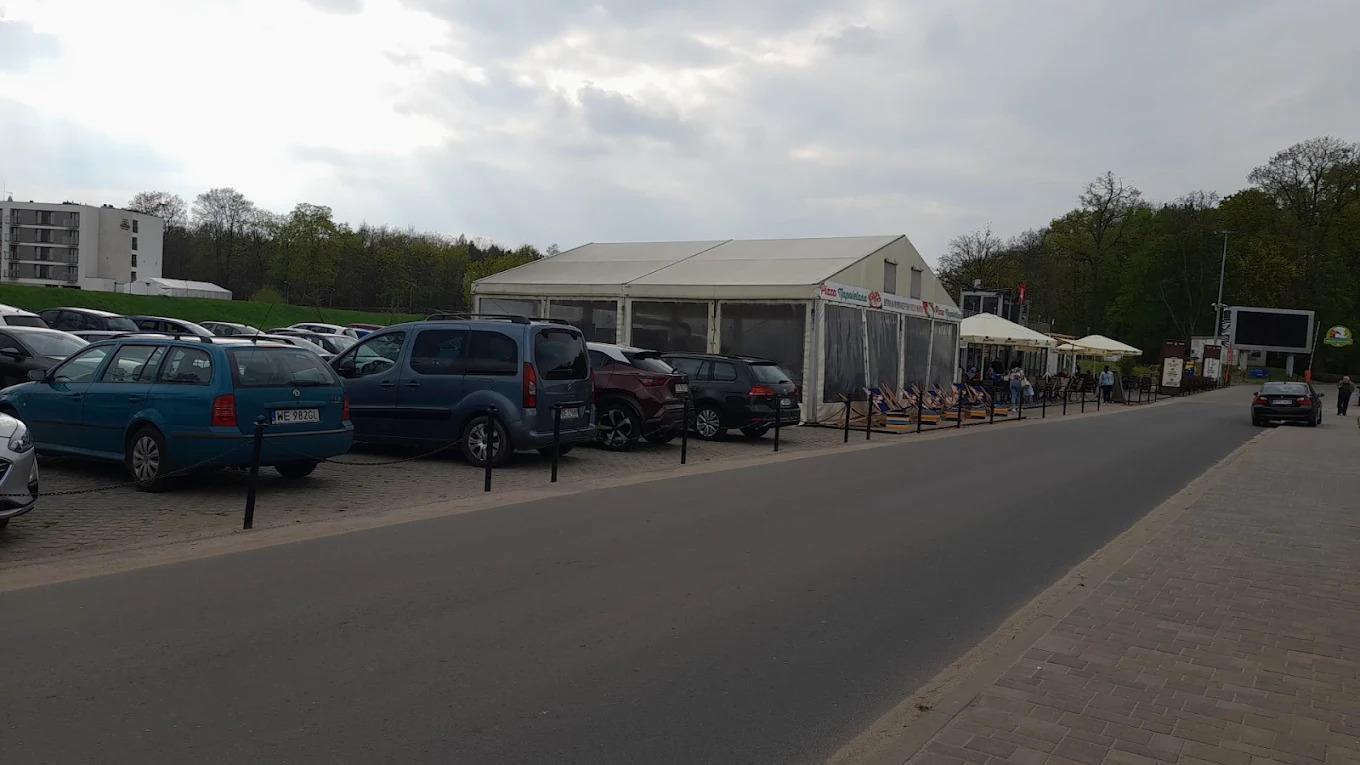
Car parks are located near the castle and the Uniejów Spa; it is advisable to check the parking rules at reception.
 Restaurant
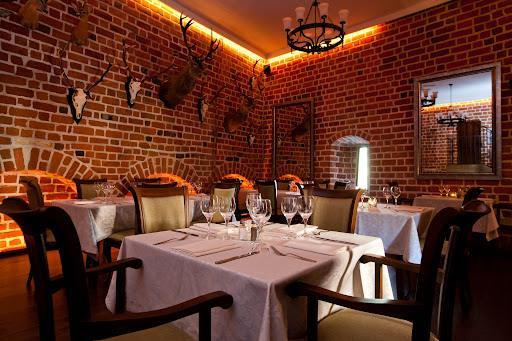
The castle is home to the Herbowa Restaurant (tel. 791 34 05 95), which features the Herbowa, Damy, Myśliwska and Legendy dining rooms.
 Hotel
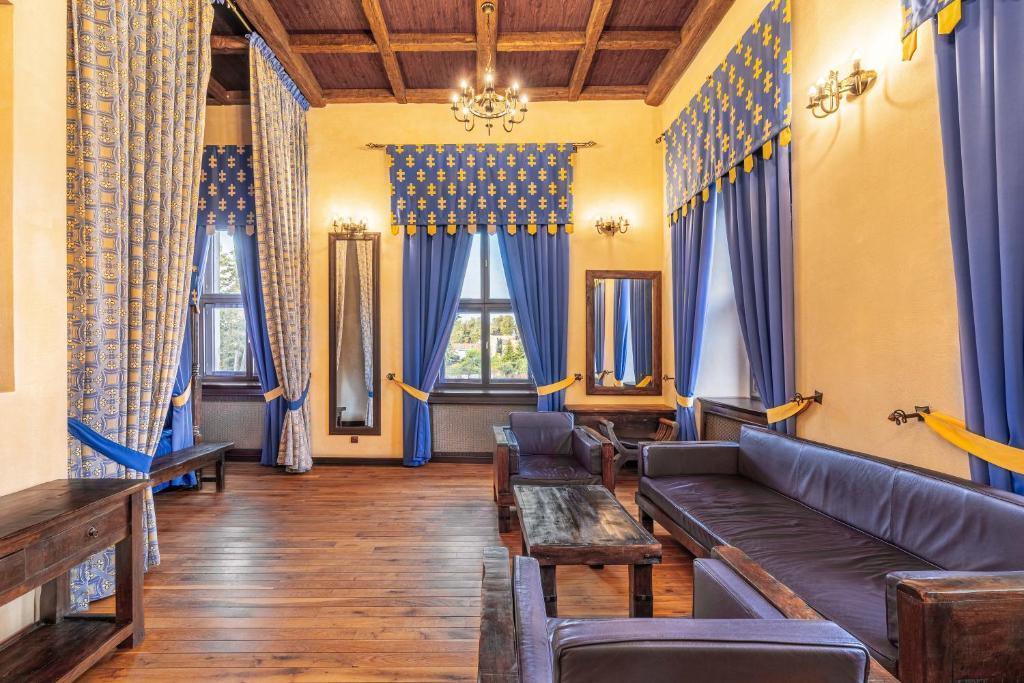
The castle is a hotel – it offers 15 rooms and 6 suites, decorated in a medieval and eclectic style.
 Souvenirs
It is worth enquiring about the availability of souvenirs at the castle reception or at the tourist information centres in Uniejów.
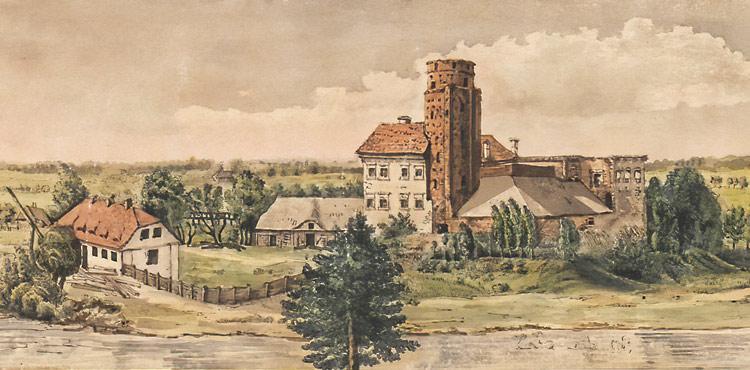
The Castle of the Archbishops of Gniezno in Uniejów stands on the outskirts of the town, in the Warta Valley, in the north-western part of the Łódź Voivodeship. It is the best-preserved medieval stronghold of the Archbishops of Gniezno, who for centuries were the lords of Uniejów and the surrounding estates. The 14th-century stone castle underwent subsequent Renaissance, early Baroque and Romantic-era alterations, and today it houses a hotel and restaurant, forming part of the Term Uniejów complex.
Origins – following the Teutonic Knights’ invasion
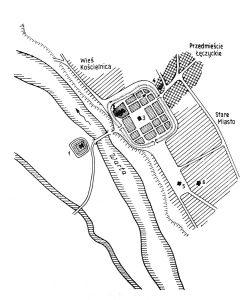
The earlier wooden archbishop’s fortress in Uniejów was destroyed in 1331 during an invasion by the Teutonic Knights. In its place, between 1360 and 1365, a stone castle was built on the initiative of Jarosław Bogoria Skotnicki, Archbishop of Gniezno. At that time, Uniejów formed part of a system of border strongholds protecting the central lands of the state from the north, whilst the castle also served as the administrative centre for the archbishop’s extensive estates and as a residence where the archbishops would stay whilst travelling.
The castle’s importance is confirmed by the synod held here in 1376, which was attended by the papal nuncio. The Uniejów stronghold was therefore not only a defensive stronghold, but also a venue for important ecclesiastical assemblies.
A Renaissance mansion
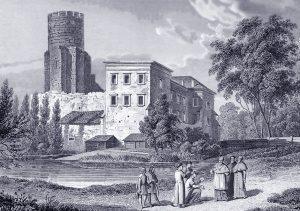
In 1525, the castle was destroyed by fire. The reconstruction was overseen by Stanisław of Gomolin, the starost of Uniejów, who, by 1534, had transformed the austere stronghold into a Renaissance residence. A memento of his is the Jelita coat of arms, which is displayed on the wall facing the courtyard.
In the first half of the 17th century, the castle lost its defensive significance. Under Archbishops Jan Wężyk and Maciej Łubieński, it was transformed into a comfortable residence in the early Baroque style. The entrance portal, bearing the Wąż and Pomian coats of arms in honour of both prelates, dates from this period.
Damage and repairs in the 18th century
The early 18th century brought destruction – in 1704, the castle was ravaged by Saxon troops. In 1736, following a fire in the town, Archbishop Krzysztof Antoni Szembek carried out renovation work, focusing primarily on the restoration of the roofs.
The Tollows and the Romantic Revival
Following the collapse of the Polish-Lithuanian Commonwealth, the archbishop’s estates were seized by the partitioning powers. In 1836, Tsar Nicholas I granted Uniejów, together with the title of count, to General Karol Tollow of Estonia, rewarding him for his role in suppressing the November Uprising. The general himself never lived at the castle. In 1848, his son Aleksander rebuilt the residence in the Romantic style, and his wife laid out a landscape park to the west of the castle. The Toll family remained the owners of Uniejów until the end of the First World War.
The 20th century
During the Second World War and in the early post-war years, the castle was severely damaged. Between 1956 and 1967, it was restored and converted into an archive. In 1967, the building was entered in the register of historic monuments. Later, the castle began to be used for tourism and as a hotel.
Architecture
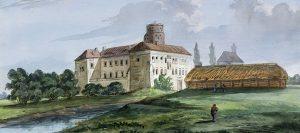
The castle was built of brick on a quadrilateral plan with an inner courtyard. Its most distinctive feature is a cylindrical tower approximately 25 metres high, designed as a keep – the last line of defence. The castle’s structure bears traces of all the stages of its history: Gothic walls, Renaissance and early Baroque alterations, and Romantic décor from the 19th century. Particularly noteworthy are the coats of arms – Wąż and Pomian on the entrance portal, and Jelita on the courtyard wall.
The layout of the castle clearly illustrates its dual role. The massive brick walls and the keep bear witness to its medieval defensive function, whilst the regular residential wings surrounding the courtyard and the later portals reflect the needs of a residence where archbishops and their stewards managed their estates, received guests and stored documents. Each successive alteration tended to affect the interiors and details rather than the fundamental structure, which is why the 14th-century Gothic core remains clearly recognisable.
The castle is set within a park on the banks of the Warta, modelled on a Romantic-style layout from the mid-19th century. The observation tower offers a panoramic view of the town and the river valley.
The castle today
The castle currently houses a hotel with rooms and suites decorated in a style reminiscent of the castle’s chambers, as well as the Herbowa Restaurant; the Creative Work Centre is also located nearby. The venue organises conferences and receptions. The castle features a viewing tower, and organised groups can book a guide who will recount the castle’s history whilst ascending the tower. Details of the tour should be arranged with reception. The castle is situated not far from the Uniejów Thermal Baths complex, making it easy to combine a visit with a relaxing break in the thermal waters.


