






Genesis of the Castle
The castle in Czchów dates back to the period of intensive development of the defence system of the Piast state, which occurred at the turn of the 13th and 14th centuries. At a time when Poland was a mosaic of principalities and lands under the rule of various branches of the Piast dynasty, the key task of the central authority was to ensure the security of the most important trade routes and to effectively control the borders and the flow of goods. It is in this context that the establishment of the Czchów stronghold, which was intended not only to have a defensive function, but also an administrative and treasury function, should be understood.
The castle's construction was probably initiated by one of the kings of the Piast dynasty - possibly Wenceslas II or Władysław Łokietek - who wanted to consolidate their power in southern Lesser Poland and secure the lucrative trade route leading from Krakow through the Dunajec Valley to the border with the Kingdom of Hungary. This route was of great importance to the region's economy, as this was the route through which salt, wine, leather, grain, metals and other goods of strategic commercial value were transported.
The location of the castle on a hill about 250 metres above sea level was no coincidence. Such a location provided an excellent view of the Dunajec valley, which made it possible to effectively control the movement of merchants and counteract potential threats from robbers, marauders or hostile armies. At the same time, the castle was located in the vicinity of the customs chamber - a place where fees were collected for the transport of goods. The stronghold thus served not only a military function, but also an economic and administrative one.
The original layout of the castle was relatively simple, which corresponded to the architectural realities of the time. The main defensive element was a massive stone tower - the donjon - with a guard and residence character. It was the centre of the castle's life: on the one hand, it provided shelter and a place of command; on the other, it was a symbol of royal presence and power. In the following years, with the growing importance of Czchów as an administrative and local trade centre, a perimeter wall was added to the tower, which surrounded the inner courtyard, as well as a simple residential building for the crew and royal officials.
Thus, from the very beginning the Czchów Castle was a structure with a strictly defined purpose, combining military, fiscal and residential functions. Its genesis is thus an example of a well-thought-out political and military investment, set in the realities of late-medieval Central Europe, in which castles played a key role in the organisation of territorial power and the protection of state interests.

History of the Castle
The first documented mention of the Czchów castle dates back to 1356 and refers to the burgrave Imram, son of Żegota, who was then acting as the administrator of this strategic facility. Although the record itself does not yet describe the fully developed structure, it shows that the castle was already a significant administrative and military link at that time. Its particular importance became apparent during the reign of Casimir the Great, a king known for his concern for the development of the state's defence infrastructure - it was then that the Czchów castle was elevated to the rank of the seat of the Czchów starosty, covering vast areas of the Dunajec valley. In addition to its military and administrative functions, it also served as a land court, making it the centre of power and justice in the region.
During the Jagiellonian period, the castle experienced further development, although its importance gradually weakened in view of the growing power of the neighbouring castles in Rożnow and Nowy Sącz. Nevertheless, Czchów maintained its importance - both as a checkpoint on the trade route from Krakow to Hungary and as a fortress capable of defending against invasions. Numerous extensions were carried out during this period: the perimeter of the walls was enlarged, towers and towers were strengthened, outbuildings were erected and living conditions inside the castle were improved.
A turning point in the history of the fortress came with the Swedish deluge in the 17th century. At that time, the castle, like many other buildings in Poland, was severely damaged, which could not be fully repaired for many years. In addition, changing trade routes and the increasing centralisation of administrative power meant that the building gradually lost its original functions. In the 18th century, the castle tower was converted into a prison, which was the last act of utilitarian use of the place before a long period of abandonment.
After the First Partition of Poland in 1772 and the incorporation of Czchów into the Habsburg monarchy, the castle fell into complete ruin. Lack of interest on the part of the new authorities and its deteriorating technical condition led to it serving only as a source of free stone for local residents for many decades. It was not until the 20th century that the first, albeit sporadic, attempts were made to secure the ruins - but these works were mainly of a salvage nature.
The real revival did not come until the 1990s, when the local authorities, in cooperation with conservationists and social activists, began a comprehensive revitalisation of the building. First, the preserved parts of the walls were secured and restored, and in 2000 the castle was opened to the public. Subsequent stages of reconstruction included the gate tower, the wooden entrance bridge and a partial outline of the internal buildings. The final phase of restoration work, completed after 2018, allowed for a significant improvement in the tourist infrastructure and the creation of an attractive educational and cultural space, combining history with a modern form of heritage presentation.
Today, the Czchów Castle, although it has not survived in its entirety, is a valuable testimony to past eras, attracting numerous tourists, history lovers and regional residents who rediscover its value and symbolic significance for the identity of Malopolska.

Architecture and its Key Features
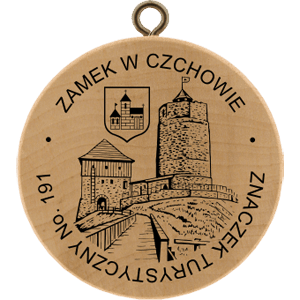
The castle in Czchów is an example of medieval defensive architecture, adapted both to the terrain conditions and to the administrative and military function it performed in its heyday. The oldest and at the same time the most characteristic element of the stronghold is the monumental, cylindrical main tower of the donjon type, which is about 12.5 metres in diameter and today is 20 metres high. Erected from local stone and carefully worked limestone, it originally served both a residential and defensive role. Its thick walls (reaching up to 3 metres in the lower part) effectively protected against siege and allowed it to withstand attack for a long time.
Adjacent to the tower was a perimeter wall of varying thickness - from about 1.2 to 2 metres - surrounding the irregular castle courtyard, which was partially carved into the rock, further reinforcing the defence of the establishment. The courtyard contained residential and outbuildings, as well as entrances to cellars and a water cistern carved into the solid rock. The castle also had a separate gate tower through which the main entrance, once secured by a drawbridge, led. The entire buildings were adapted to the course of the steep hill on which the fortress was built, making it difficult to conquer and almost inaccessible from the valley.
During the recent revitalisation works, completed after 2018, many of the old architectural elements were reconstructed, restoring the castle to its former character. Among other things, the wooden bridge leading to the main gate, parts of the perimeter walls and the gate tower itself were reconstructed. An observation deck was also created in the courtyard, available to tourists, offering a panoramic view of the Dunajec River valley and the Rożnowskie Foothills.
An additional educational value is provided by the permanent exhibition in the courtyard, where a model of the castle from the times of its greatest glory and replicas of medieval siege machines such as the trebuchet, battering ram, crane for pouring tar or ballistae are placed. Each of the exhibits is accompanied by a description, giving a better understanding of the fighting and defence techniques used in the Middle Ages. Parts of the cellars and the portal of the entrance gate have also been reconstructed, and visitors can enjoy a range of multimedia and reconstruction elements that make the architectural heritage of the region more attractive.
Thanks to careful restoration and reconstruction, Czchów Castle is once again becoming an important and attractive point on the tourist map of Malopolska, combining the raw beauty of medieval architecture with a modern approach to historical education and recreation.
Interesting facts
One of the lesser-known but extremely intriguing pages in the history of Czchów Castle is its function after the First Partition of Poland, when the area came under Austrian rule. At that time, the medieval tower, originally used for military and observation purposes, was adapted as a prison. Its austere stone interiors and inaccessible location made it an extremely difficult place to escape, which perfectly suited the needs of the partitioning authorities. This fact not only underlines the versatility of the castle's defensive architecture, but also enriches its history with a repressive and dark theme, giving it additional historical depth.
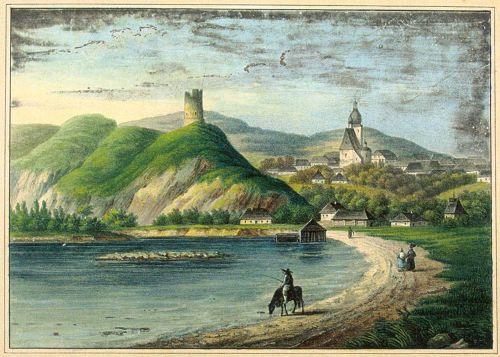
The castle has long fascinated artists and travellers. Already in the 19th century, during the Romantic era, its ruins attracted attention as a symbol of former splendour and transience. It was then that the famous lithographs by Adam Gorczyński and Maciej Bogusz-Stęczyński appeared, depicting Czchów as a place full of melancholy, wild beauty and steeped in history. Their works not only immortalised the castle in the artistic canon of Poland, but also contributed to its recognition among art lovers and sightseers.
The geographical location of the castle is also not without significance. It is located at a point where three important and symbolic historical paths cross. The first is the medieval trade route, which led from Krakow through the Dunajec Valley towards Hungary and was one of the main merchant routes in this part of Europe. The second is the modern route, linked to the Partition period and the subsequent administrative actions of the Austrians. The third is connected with the dramatic events of the 20th century, as there are visible remnants of World War II, including trenches and fortifications of the "Kochbunker" type, which were part of the German defence system.
The presence of these historical layers in one place makes Czchów not only a point on the tourist map, but also a space of memory, where the history of the Middle Ages, modern times and the present day intertwine. The castle, although small, tells a story much broader than just its own - it becomes a witness to the fate of the whole region and its inhabitants over the centuries.


