Sandomierz Castle
is one of the most representative and historic places in Poland. Its history is closely linked to the history of the city and important national events.
Genesis (11th-12th century):
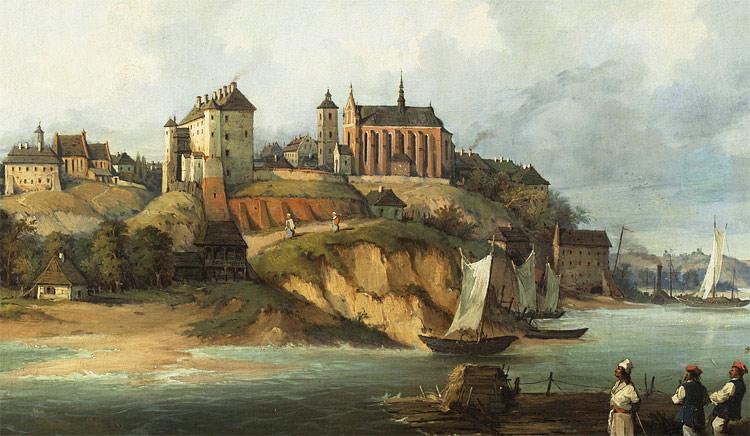
The first mention of a castle in Sandomierz dates back to the 11th century. It was probably a wooden defensive stronghold that protected a strategic location on the Vistula River and controlled important trade routes. In the 12th century, during the reign of Boleslaw the Wry-mouthed, the castle was expanded and fortified, demonstrating its strategic importance at the time.
Development in the Middle Ages (13th-15th centuries):
In the 13th century, Sandomierz was granted city rights and became an important commercial and cultural centre. The castle, with administrative and defensive functions, witnessed numerous conflicts and important historical events, such as the Tartar invasions or the Polish-Teutonic wars. In the 15th century, influenced by Renaissance trends, the castle underwent reconstruction, acquiring a modern appearance and representative functions.
Modernity (16th-18th centuries): In the 16th century, Sandomierz was one of the most important cities in Poland, and the castle served as the seat of local government and a venue for important political meetings. In the 17th century, during the Swedish Wars and the Swedish Deluge, the castle suffered much destruction, but was rebuilt after each conflict. In the 18th century, as a result of the Partitions, Sandomierz came under Austrian rule, which affected the further history of the castle.

The castle during the Swedish Deluge (1655-1660):
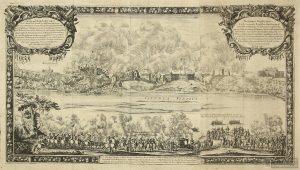
At the time of the Swedish Deluge, Sandomierz Castle witnessed important events and warfare that affected its running history and structure. In 1655, Swedish troops under the command of King Charles X Gustav entered the Polish-Lithuanian Commonwealth, initiating a period of armed conflict known as the Swedish Deluge. Sandomierz, which was a strategically important point on the map of Poland, became the target of the Swedish attack. The castle, as a key link in the defence system, was intensively defended by Polish troops. The Swedes, realising the difficulty of taking the castle by force, decided to attempt a siege. There were repeated clashes and skirmishes around the castle, many of which resulted in damage to its defensive structures. However, thanks to the courage of the defenders and efficient leadership, the Swedes failed to capture the castle by storming. Although the castle was not captured by the Swedes during the main hostilities, the conflict significantly affected its condition. Constant sieges, artillery shelling and other warfare caused significant damage to the building. After the end of the Deluge, the Polish authorities set about rebuilding and repairing the castle, although not all the work was carried out due to financial shortages. Sandomierz Castle, despite the hardships it endured, survived the period of the Swedish Deluge and became one of the few places that resisted the Swedish onslaught during this turbulent period of Polish history. Its defence became a symbol of Polish resistance and determination in the face of danger.
19th and 20th centuries:
In the 19th century, the Romantic era, Sandomierz Castle became a symbol of the past and national pride, as well as a source of inspiration for many artists of the era. Romantics turned to history and tradition, seeking in them a reflection of their ideals and national ideals. The castle, a testament to times gone by and the site of important historical events, fitted perfectly into this trend. Numerous restoration works were carried out to restore the castle to its former glory. Damaged architectural elements were rebuilt, the defensive structures were strengthened and work was carried out to prevent further damage. The castle became not only a cultural venue, but also a tourist centre attracting visitors from all over the country. However, the 20th century brought new challenges. Warfare, especially the First and Second World Wars, brought destruction to many monuments in Poland, including Sandomierz Castle. During the fighting, the castle was repeatedly shelled and damaged, leading to further deterioration. After the end of hostilities, the Polish authorities made attempts to save the castle, but a lack of funding and the changing political situation complicated the situation. In the post-war period, Sandomierz Castle was used for various purposes. It was used as a warehouse, a hostel or even a military base. The lack of adequate funds for restoration and conservation meant that the castle continued to deteriorate and its condition worsened. Modern times have brought new hope for the castle. With support from national and European funds, restoration work has begun to restore the castle to its former glory.
Architecture:
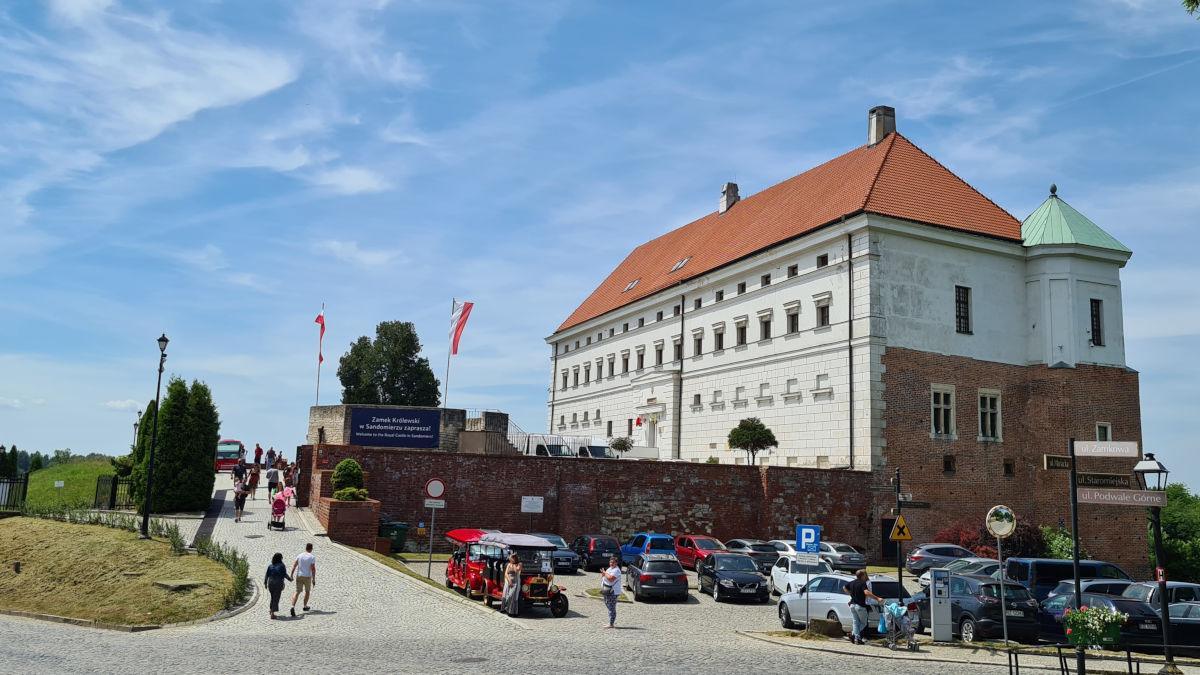
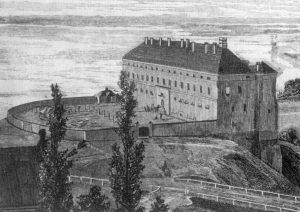
Sandomierz Castle is an extremely interesting architectural ensemble that has undergone various modifications and extensions over the centuries. Its architecture is a combination of different styles that reflect the long history of the building. Originally, in medieval times, Sandomierz Castle was a typical defensive fortress, built of stone and brick. Erected on a hill, it dominated the town and the surrounding area, emphasising its strategic importance. A characteristic feature of the early architecture was the massive defensive walls, towers and battlements, which provided defence against potential invaders. In the following centuries, especially during the Renaissance, the castle went through successive reconstructions that gave it a more representative and decorative character. Elements typical of this style were then added, such as decorated windows, balconies and attics. The interiors of the castle were richly decorated, with sculptures, paintings and other architectural details that attested to its rank and importance. In the 20th century, despite wartime damage, the castle still has many original architectural elements. Contemporary restoration work focuses on restoring the building's former splendour and authenticity, while adapting it to meet modern needs.
Castle Today: Today, Sandomierz Castle serves museum, cultural and representative functions. In its interiors one can admire a rich collection of art, furniture and other artefacts related to the history of the region. The castle's halls are often the venue for various exhibitions, concerts, literary meetings or other cultural events, attracting art and history lovers from all over the country. The castle is surrounded by a picturesque park, which is an ideal place for walks and relaxation. Its terraces offer beautiful views of the surrounding area, adding to the charm of the place. Guides are also available for tourists to show them around the castle's chambers, sharing fascinating stories and anecdotes from the past. In addition, workshops, museum lessons and other educational and entertaining activities for children and adults are often organised within the castle. Combining historical heritage with modern cultural initiatives, Sandomierz Castle is an important part of the cultural landscape of the city and region.