
Facilities
 Tickets and guided tours
Tourists can purchase tickets at the castle reception or online. Individual tours. Estimated tour time is approximately 1-1.5 hours.
Tickets and guided tours
Tourists can purchase tickets at the castle reception or online. Individual tours. Estimated tour time is approximately 1-1.5 hours.
 Parking
Under the main entrance of Reszel Castle there is a paid car park for visitors.
Parking
Under the main entrance of Reszel Castle there is a paid car park for visitors.
 Restaurant
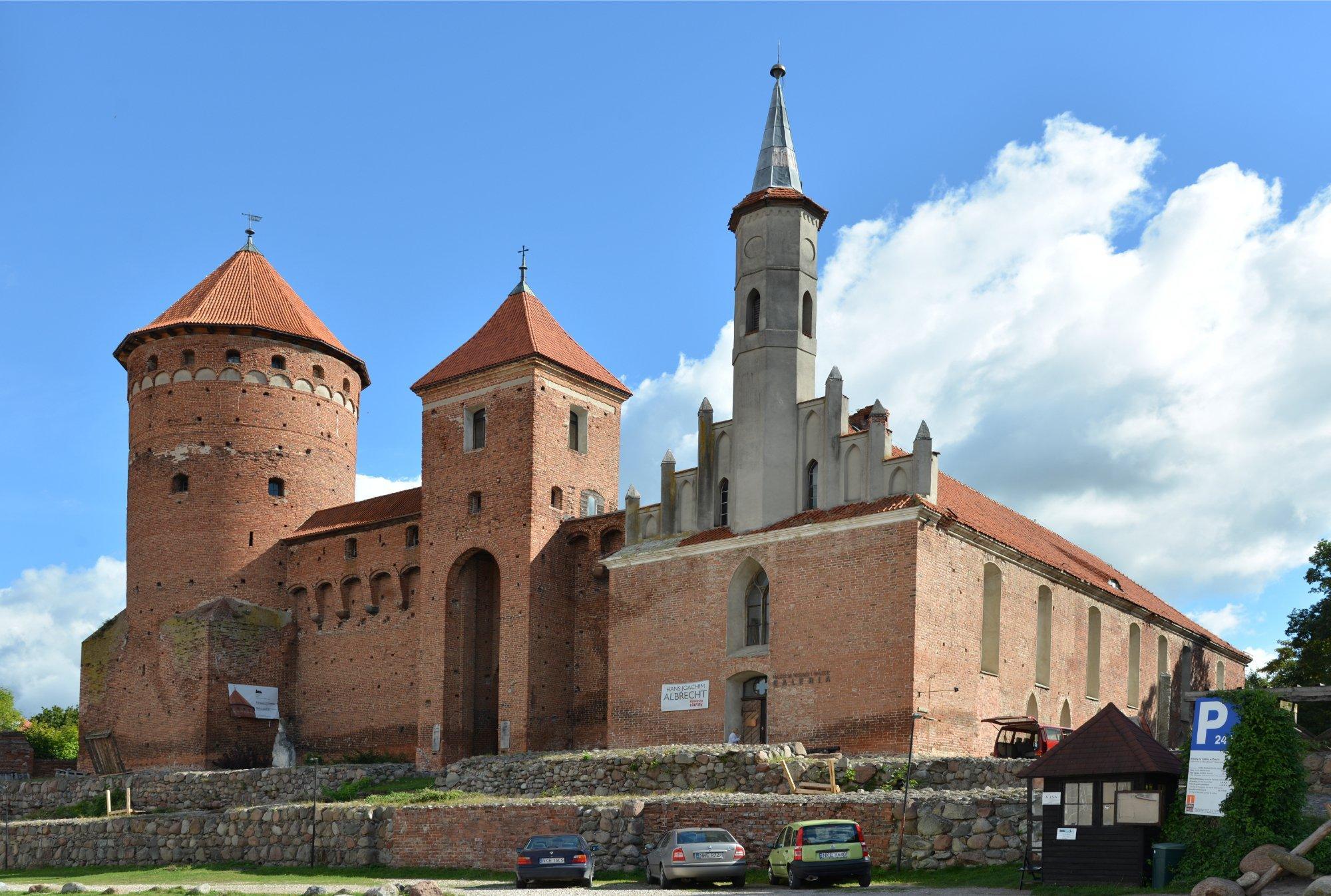
There is an atmospheric restaurant on the castle grounds.
Restaurant
There is an atmospheric restaurant on the castle grounds.
 Hotel
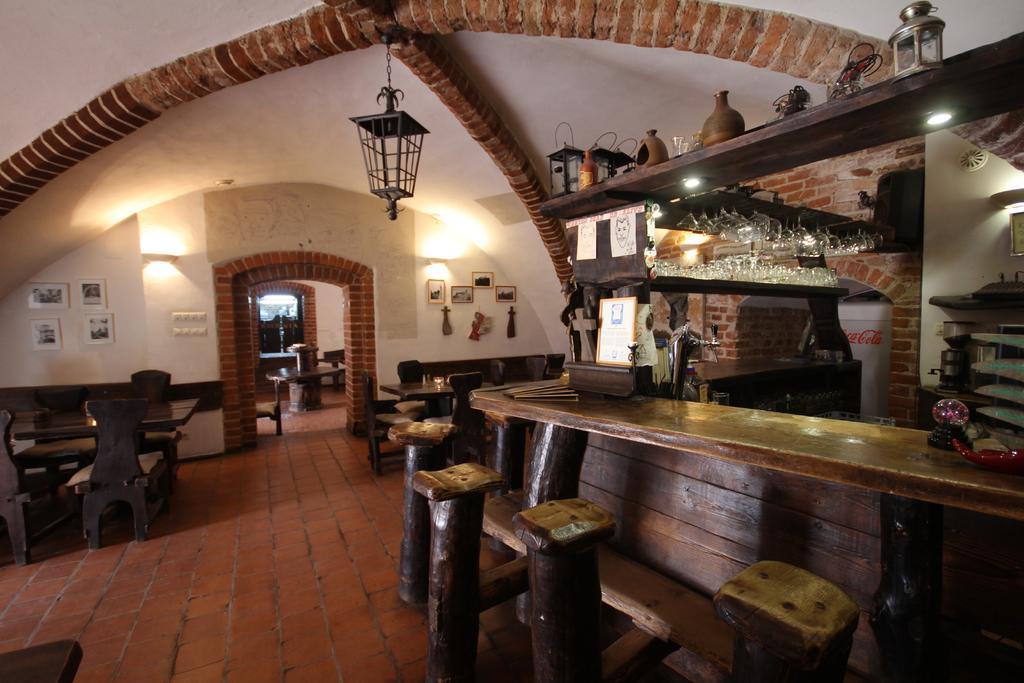
As well as the restaurant, there is a hotel for guests on the castle grounds.
Hotel
As well as the restaurant, there is a hotel for guests on the castle grounds.
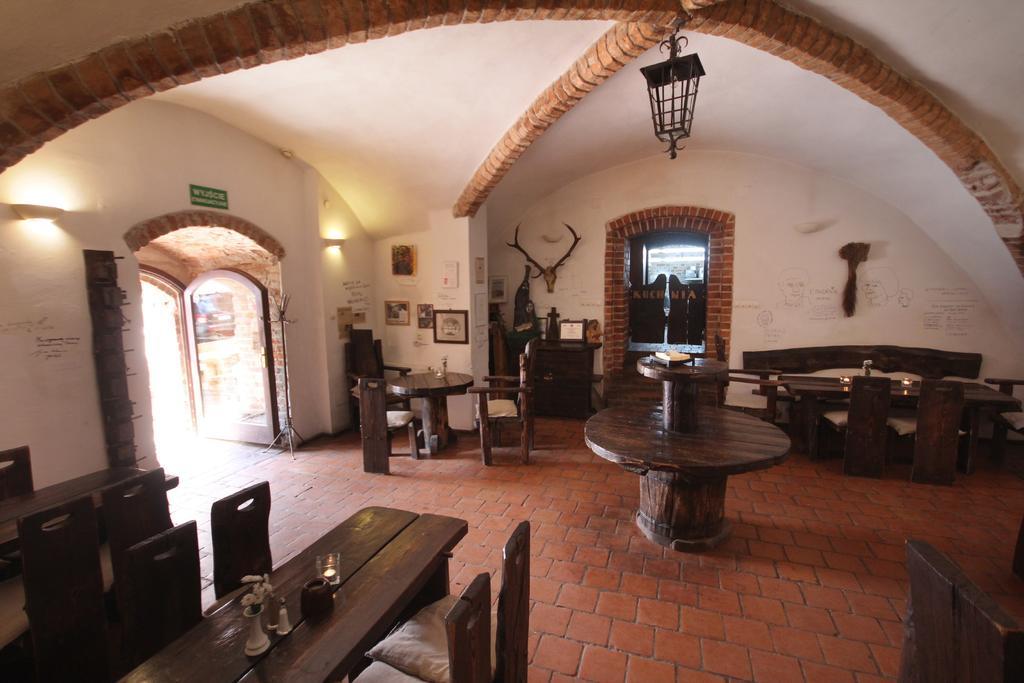

Situated on a hill above the river, the Teutonic Castle in Reszel is not only an impressive piece of architecture, but also a witness to many important historical events. Built in the Gothic style, it has undergone many transformations over the years, while retaining its unique character.
Genesis:
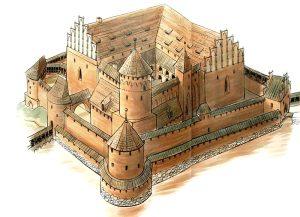
The origins of the Reszel castle, although not precisely documented, can be traced back to historical sources and archaeological research. In the 13th century, when the territory of present-day Poland was an arena of conflicts between Slavic tribes and neighbouring Prussian and Lithuanian tribes, it became important to ensure the defence of strategic points on the map. In this context, a wooden fortress was built on a small hill above the river. It was a simple structure, intended to provide shelter and defence against invaders. However, as the Teutonic Order grew and expanded into Prussia, the castle at Reszel took on greater importance. The Teutonic Knights, realising the strategic location of the site, decided to erect a solid stone fortress in its place. The stone walls were more resistant to attacks and provided better defence. The castle became not only a symbol of the Teutonic Order's power in the region, but also an important administrative centre. Throughout the Middle Ages, Reszel Castle was the site of many important events. It witnessed battles, negotiations and important political decisions. Its fortifications were constantly modernised, adapting to the growing militaristic challenges of the time. As a result, Reszel Castle became one of the key points in the defensive system of the Teutonic Order, while also performing important administrative and military functions. Its history in the Middle Ages bears witness to the dynamic political and military changes that shaped the fate of the region and the entire Teutonic state.
The Modern Period:
In the 16th century, Europe was experiencing an intense period of reformation, resulting in deep religious and political divisions. Also in Poland and Prussia, the Reformation was reflected in political and social life. The castle of Reszel, an important administrative and political centre, became the arena for important debates and decisions on attitudes towards the Reformation. The Teutonic authorities at the castle had to face the challenges of religious schisms in an attempt to maintain unity within their territory. However, it was the 17th century that brought the greatest challenges to Reszel Castle. The Swedish Deluge, or the invasion of the Republic of Poland by the Swedes, also reached Reszel. The castle, which was a strategic defensive point, became the target of a Swedish siege. Although some parts of the castle were destroyed as a result of the warfare, thanks to the determination and courage of the defenders, the invaders were successfully repelled. Following the end of the conflict, reconstruction work began which restored the castle to its pre-war state. The 18th century brought further changes. As a result of the partition of Poland, Reszel found itself under Prussian rule. The new Prussian authorities, recognising the strategic importance of the castle, decided to transform it into an administrative and judicial seat. The large halls and chambers, which had once served a defensive purpose, were adapted for administrative and judicial purposes. The castle walls, which once defended against enemies, now witnessed court trials and important administrative decisions. As a result, the modern era brought a number of challenges and transformations to Reszel Castle. Although it lost its military significance, it gained in importance as an important administrative and judicial centre, playing a key role in the life of the town and the region.
19th and 20th centuries:
After Poland regained its independence in 1918, it was a time of rebuilding and strengthening Polish national identity. Reszel Castle, witness to many turbulent historical events, gained a new importance as a place of culture and education during this period. The Polish state, recognising the historical and cultural value of the castle, decided to use it as a cultural centre, organising various exhibitions, concerts and educational meetings within its walls. However, fate was again not kind to the castle during the Second World War. As a result of the war effort, the castle was severely damaged and its interiors were devastated. Reconstruction after the war was not only a matter of physically reconstructing the building, but also symbolically restoring its former glory and significance. Thanks to the efforts of conservationists and specialists in the reconstruction of historical buildings, the Reszel castle slowly began to regain its former splendour. In the second half of the 20th century, the castle became not only a museum site, but also a vibrant cultural centre. Numerous exhibitions, concerts, workshops and scientific meetings were organised here, attracting both the inhabitants of the surrounding towns and villages and tourists from all over the country. As a result, the castle became an important part of the cultural landscape of the Warmia and Masuria region. Modern times have brought the Reszel castle up to date with modern technology and standards. It now offers not only rich museum collections, but also comfortable hotel rooms, restaurants and conference halls. It is a place where history meets modernity, creating a unique atmosphere and attracting tourists from all corners of Poland and the world. Reszel Castle is not only a witness to the turbulent history of Poland, but also a place that reflects the spirit of the Warmia and Masuria region. Its walls, although heavily marked by the passage of time, still tell fascinating stories of past centuries, making it one of Poland's most precious treasures of material culture.
Architecture:
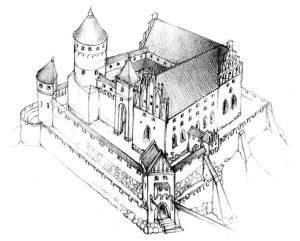
Reszel Castle is an impressive example of Gothic defensive architecture, which has gone through numerous extensions and modifications in its history.
Defensive wall
: The castle is surrounded by massive defensive walls, which in the Middle Ages were the main line of defence against the enemy. These walls, made of brick and stone, were intended to protect the interior of the castle from external attacks. The height and thickness of the walls testify to their original defensive nature.
Towers and Towers
: Within the castle grounds are imposing towers and towers which served as observation and defence posts. The towers allowed the guards to observe their surroundings and repel attacks from various directions. The towers, on the other hand, had a defensive function, being high strategic points from which to control the surroundings and direct the castle's defences.
Arcade Courtyards
: The castle has several courtyards which are surrounded by arcades. These classical Gothic arcades add to the castle's distinctive medieval appearance and create a harmonious interior space.
Castle Chapel
: The castle complex also includes the chapel, which was a place of private prayers and rituals for the castle's inhabitants. Its architecture, although simple compared to other parts of the castle, still impresses with its elegance and modesty.
Basements and Underground
: Beneath the castle stretches a vast underground, which served a variety of functions, from storing supplies to shelter in the event of a siege. These dark, stony spaces add mystery and depth to the castle.
Architectural details
: The entire castle is rich in numerous architectural details typical of the Gothic style: ogival windows, bas-reliefs, friezes and stone and brick ornaments. These fine elements testify to the high level of craftsmanship and attention to aesthetics in medieval times.
The architecture of the castle in Reszel is an echo of the old times, when the building performed defensive and representative functions. Its monumental walls, towers and towers testify to its strategic importance and rich history, and the preserved architectural details allow one to feel the atmosphere of past centuries.
Castle today:
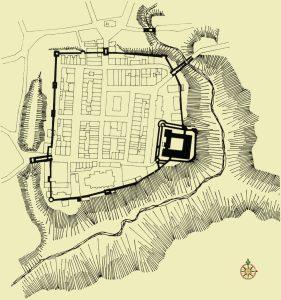
Reszel Castle, which is one of the most important monuments in Poland, today performs many functions, both cultural and touristic.
Cultural Centre
: Reszel Castle is currently an important cultural venue in the region of Warmia and Mazury. Various events, concerts, exhibitions and festivals are organised here, attracting both local residents and tourists from all over the country.
Museum
: Within the castle there is a museum that presents the history of the castle and the region. The castle interiors are filled with exhibits related to the history, culture and traditions of the area, allowing visitors to gain a deeper understanding of the rich past of the castle and the surrounding area.
Hotel and Restaurant
: Part of the castle complex has been converted into a luxury hotel and restaurant. Guests can stay in the historic interiors of the castle while enjoying modern comfort.
Education Space
: The castle often serves as a venue for workshops, educational meetings and conferences, providing a platform for the exchange of knowledge and experience.
Leisure space
: The area around the castle has been developed as a place of recreation and relaxation for residents and tourists. The castle garden and the surrounding parks are ideal for strolling and relaxing in the natural surroundings.
Protection and conservation
: The castle is constantly monitored and maintained to preserve its historic character and ensure the safety of visitors. Regular restoration work is carried out to restore the building to its former glory.
Reszel Castle today is not only an important historical monument, but also a dynamically developing cultural and tourist centre. Its multifunctional character and rich cultural and educational offer make it an extremely attractive place, which attracts both history lovers and those seeking active leisure.


