
Facilities
 Tickets and guided tours
Tickets for tours of the castle can be purchased at the main entrance. The tour lasts approximately 50 minutes.
Tickets and guided tours
Tickets for tours of the castle can be purchased at the main entrance. The tour lasts approximately 50 minutes.
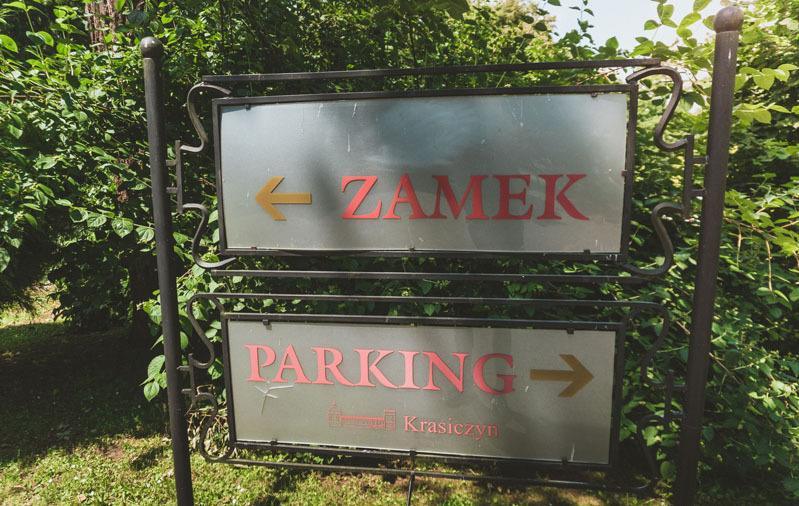
 Parking
There is a well-marked visitor car park next to the castle.
Parking
There is a well-marked visitor car park next to the castle.
 Restaurant
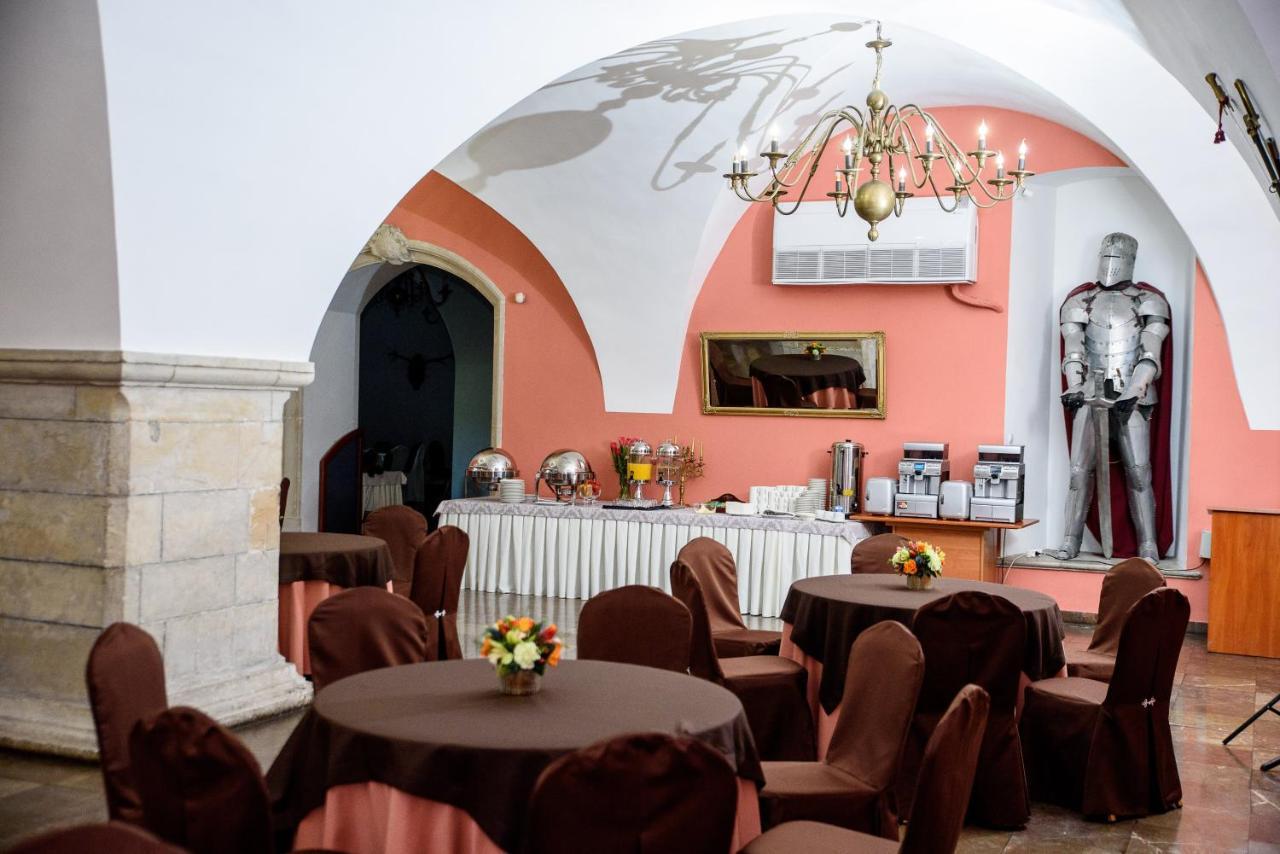
The castle has a restaurant serving local cuisine in a Renaissance setting.
Restaurant
The castle has a restaurant serving local cuisine in a Renaissance setting.
 Hotel
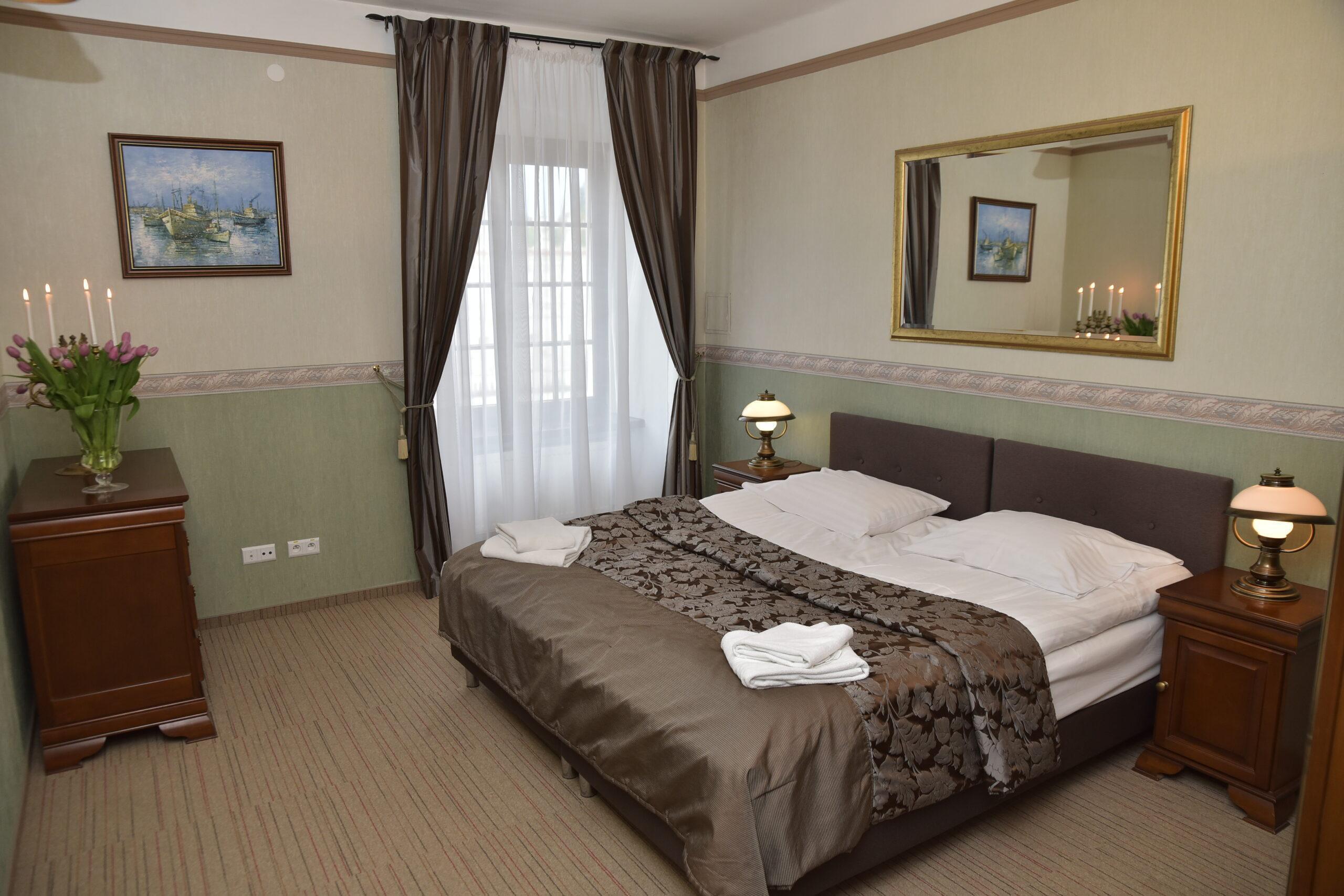
Within the walls of Krasiczyn Castle there is a stylish hotel, combining historical character with modern comfort.
Hotel
Within the walls of Krasiczyn Castle there is a stylish hotel, combining historical character with modern comfort.
 Souvenirs
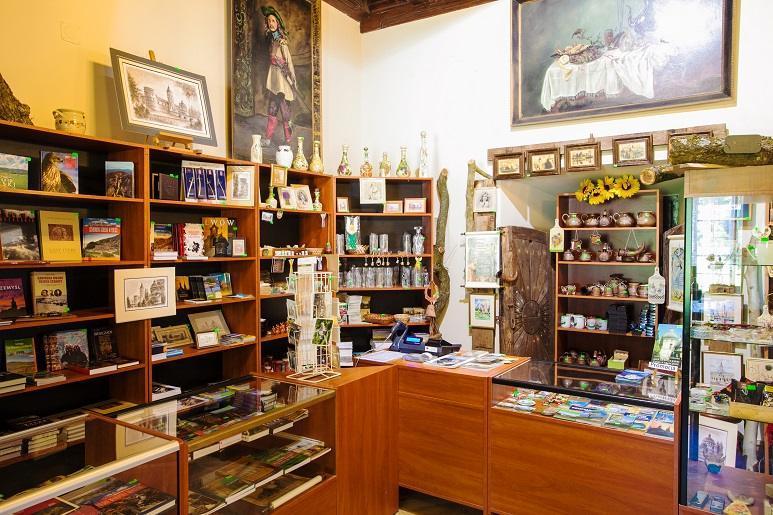
A gift shop for tourists is located inside the castle next to the ticket office.
Souvenirs
A gift shop for tourists is located inside the castle next to the ticket office.
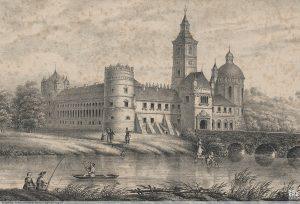
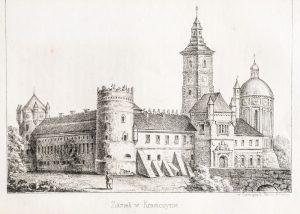
On the banks of the San River, in the picturesque landscape of the Podkarpacie region, rises the Krasiczyn Castle, one of the most beautiful and impressive castles in Poland. It is a true pearl of Renaissance and Baroque architecture, whose history and charm attract multitudes of art and history lovers. Krasiczyn Castle is a harmonious combination of military defensive functions with an artistic vision of the Renaissance. Its mighty walls, towers and bastions tell of a bygone age of power and splendour, while its delicately decorated facades, elegant arcades and thoughtful gardens reveal the subtlety and finesse of its creators. The artistic wealth does not end with the castle's external structure. Its interiors are home to numerous art treasures, from frescoes to sculptures, which bear witness to Poland's rich history, culture and heritage. As you enter the walls of Krasiczyn Castle, every step leads you through a labyrinth of stories - from knightly legends to love intrigues to historical battles. It is a place where history is alive and the past intertwines with the present, creating an unforgettable experience. Krasiczyn Castle is not only an architectural masterpiece, but also a gateway to a world where history comes to life anew.
Genesis (16th century)
: The history of Krasiczyn Castle begins in the 16th century, when there was a wooden defensive mansion in the area. In 1580, Jan Kmita, Great Hetman of the Crown, purchased these lands and decided to build a new residence. At his request, the architect Jan Michalowicz of Urzędów initially built a simple defensive manor house.
Extensions and alterations (17th-18th centuries)
: The castle underwent many extensions and modernisations in the 17th century. The most important of these was the reconstruction of the castle in Renaissance and Baroque style. An imposing bastion was built next to the castle, which served a defensive function. The interiors of the residence were decorated with rich stucco decoration and frescoes. In the 18th century, the castle was acquired by the Lubomirski family, who introduced additional changes to the castle's appearance and decoration.
19th century
: In the nineteenth century, during the reign of the Potocki family, Krasiczyn Castle underwent further modernisation, including reconstruction in neo-Gothic style. At the time, the castle served as an important cultural and artistic centre and its interiors were filled with valuable art collections.
World War II and post-war times
: During World War II, Krasiczyn Castle was damaged and many valuable works of art were destroyed or taken away. After the war, the castle was nationalised and became state property. Conservation and restoration work began and continues to this day.
Architecture:
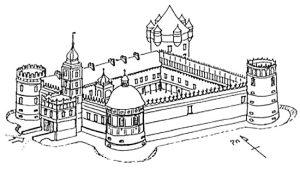
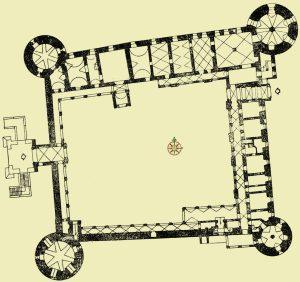
Krasiczyn Castle is an exceptional example of defensive and residential architecture, combining elements of different styles and eras. Its architecture impresses with the precision of the details and the harmonious combination of various elements. Here is a closer look at the architecture of Krasiczyn Castle:
Architectural style
: Krasiczyn Castle is an example of transitional architecture, combining Renaissance, Mannerist and Gothic elements. Originally, in the 16th century, the castle was built in the Renaissance style, which is evident in the architectural details, such as the cloisters and the inner courtyard. However, over the years, Baroque and Neo-Gothic elements were also added during subsequent reconstruction and modernisation, giving the building its unique character.
Façade and courtyard
: The façade of Krasiczyn Castle is extremely impressive. The central part of the building is dominated by a three-storey tower, decorated with decorative details and masquerades. In addition, the castle has rich friezes and cornices, and the facades are decorated with rich stuccowork and sculptures, which refer to the Renaissance and Baroque styles. The inner courtyard is surrounded by galleries with arcades supported by columns.
Towers and fortifications
: Krasiczyn Castle also has powerful bastions and fortifications, which were part of the defence system. The bastions provided additional protection against enemy attacks and were part of the military architecture of the castle.
Interiors
: The interiors of Krasiczyn Castle are as impressive as the facade. The interiors retain rich stucco decoration, paintings on the walls, wooden ceiling beams and elaborate furniture. When visiting the castle, you can discover numerous chambers and halls where you can feel the atmosphere of bygone eras and imagine life in the castle in different historical periods.
Gardens and surroundings
: Krasiczyn Castle is surrounded by picturesque gardens that complement the architecture. There are beautiful walking paths, fountains, ponds and ancient trees, creating an idyllic landscape.
Krasiczyn Castle is a true architectural pearl that impresses with its harmony and variety of styles. It is not only a defensive castle, but also an elegant residence that reflects the rich history of Poland and the region. Its architecture bears witness to the evolution of art and tastes over the centuries, while at the same time delighting visitors with its extraordinary beauty and grandeur.
Legends:
Krasiczyn Castle is a place full of history and secrets, which gives ample material for legends and curiosities. Here are some of them:
The legend of Wanda's Mound
: Near the castle of Krasiczyn is the Wanda Mound. According to legend, Wanda was a princess who became a symbol of resistance against the invaders. This mound is the place where she was supposed to defend herself against the attacks of her enemies. This legend is part of the general history of the castle and the region, full of heroic deeds and resistance against invaders.
The legend of secret passages
: Like many castles, Krasiczyn Castle is the subject of numerous stories about hidden passages and tunnels leading to other castles or places. Although many of these stories may only be legends, they fascinate visitors and encourage them to search for hidden secrets underground.
Castle ghosts
: Like many other castles, Krasiczyn Castle is not free of ghost stories. Ghosts of former residents are said to appear in the castle, the most famous of which is the ghost of Princess Izabela Lubomirska. Tales of mysterious phenomena and nocturnal sounds attract lovers of paranormal phenomena.
Treasures of Krasiczyn
: Like many other castles in Europe, Krasiczyn Castle is a place associated with legends of hidden treasures. It is said that riches are hidden in or around the castle grounds, waiting for a brave prospector. Although no one has yet discovered these treasures, stories about them still circulate among the local community.
Stories of love and betrayal
: Castles have often witnessed complicated love stories and intrigues. Krasiczyn Castle is no exception, and in its history you can find stories of love, betrayal and romance that have affected the fate of the castle and its inhabitants.
Today
: Today, Krasiczyn Castle is one of the most beautiful and important monuments in the Podkarpackie region. Its architecture is a combination of various styles, including Renaissance, Baroque and Neo-Gothic. The interiors of the castle preserve its historical character with rich stucco decoration, paintings and furniture from different periods.
Krasiczyn Castle is also a place of culture and tourism, hosting various events, exhibitions, concerts and historical events. Open to the public, it attracts history, architecture and art lovers from all over the world, offering them the opportunity to discover the fascinating past of the place. It is one of those places that catch the eye with its beauty and craftsmanship, leaving an unforgettable impression.


