
Facilities
 Tickets and guided tours
Tickets for the tour can be purchased at the ticket office in the hotel reception near the castle. The tour lasts approximately 90 minutes.
Tickets and guided tours
Tickets for the tour can be purchased at the ticket office in the hotel reception near the castle. The tour lasts approximately 90 minutes.
 Parking
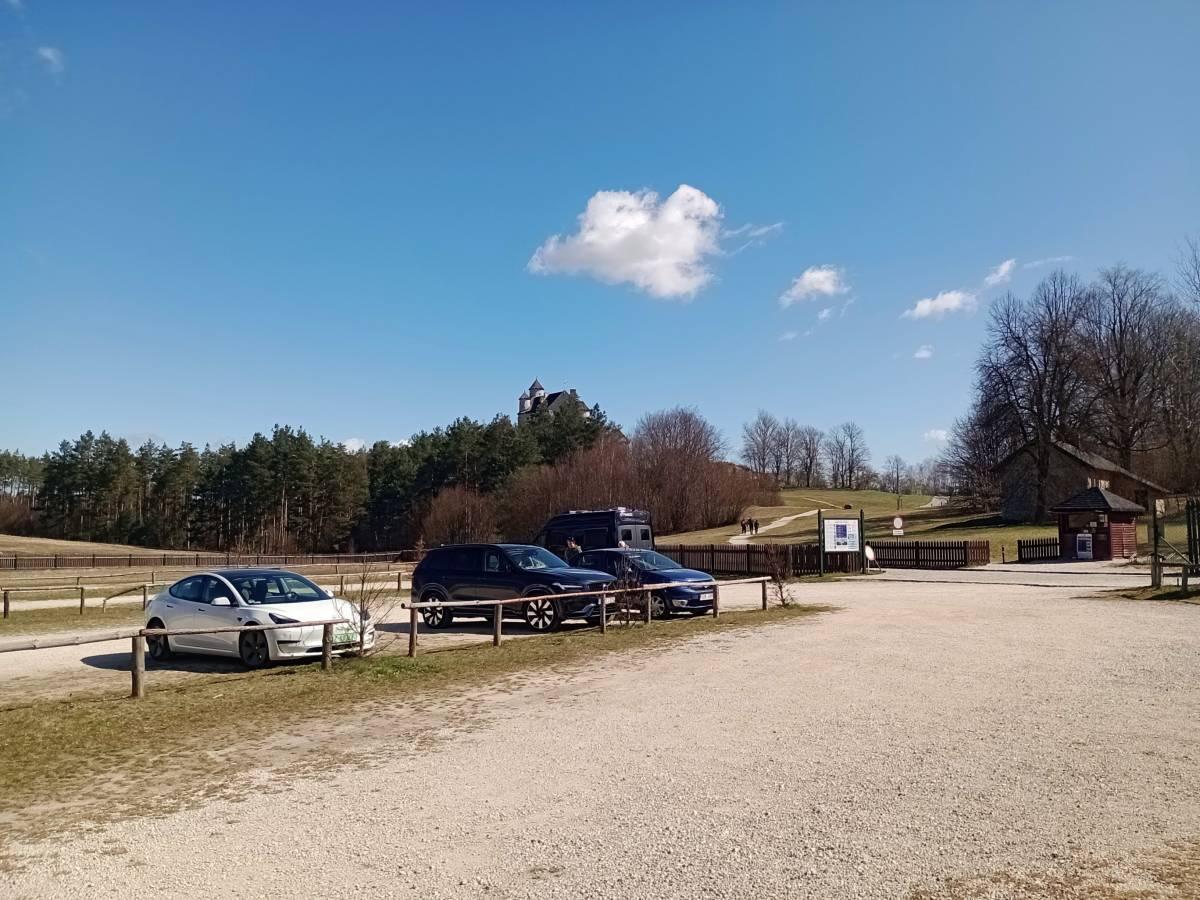
There is a free car park for tourists at the foot of the castle.
Parking
There is a free car park for tourists at the foot of the castle.
 Restaurant
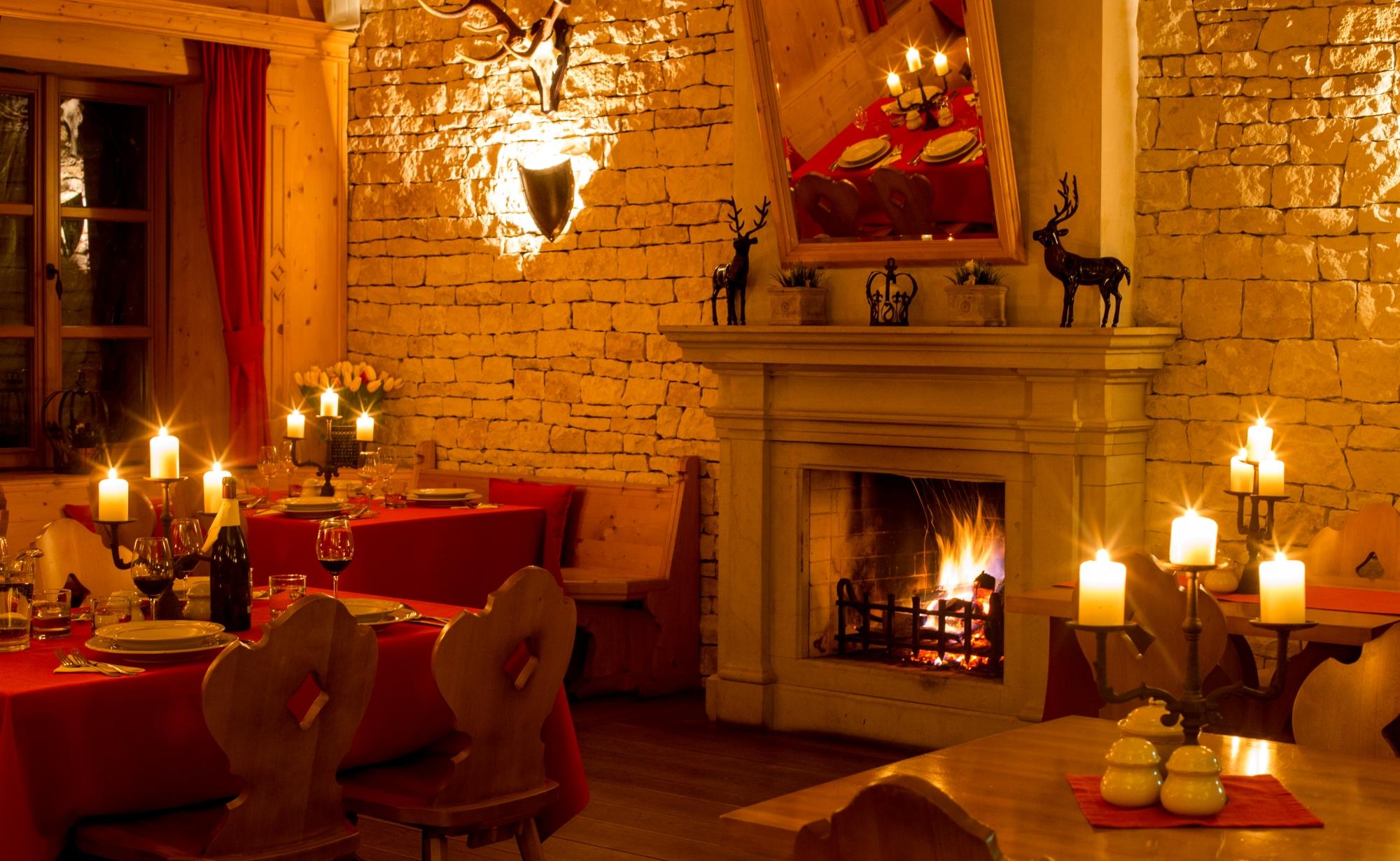
We would like to recommend an excellent restaurant located within the castle grounds.
Restaurant
We would like to recommend an excellent restaurant located within the castle grounds.
 Hotel
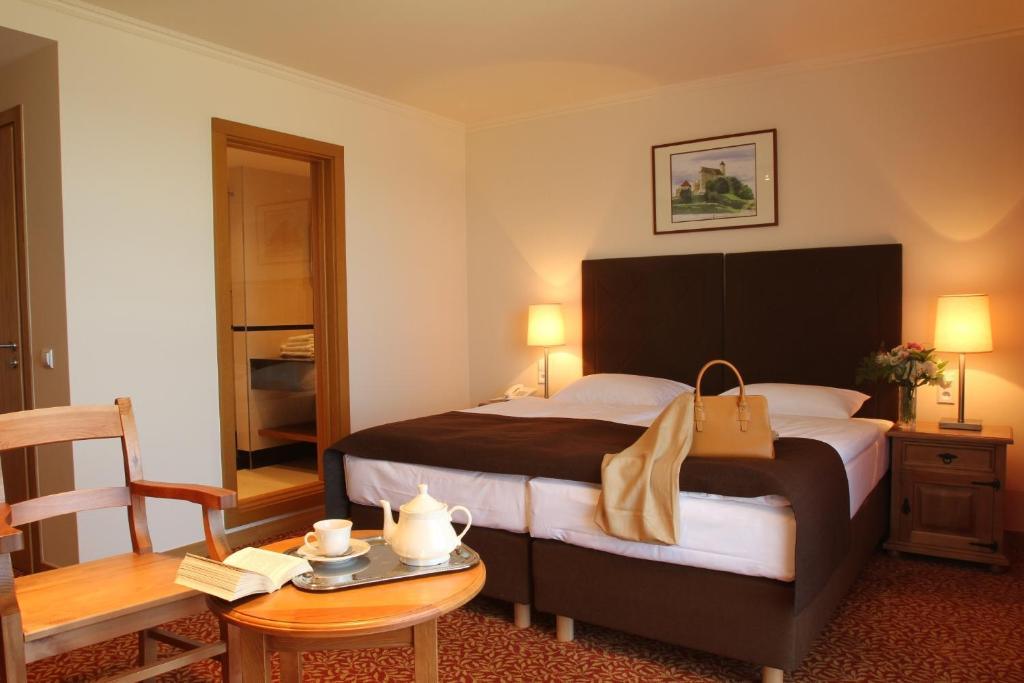
We recommend the Castle Hotel, situated opposite the castle, to tourists.
Hotel
We recommend the Castle Hotel, situated opposite the castle, to tourists.
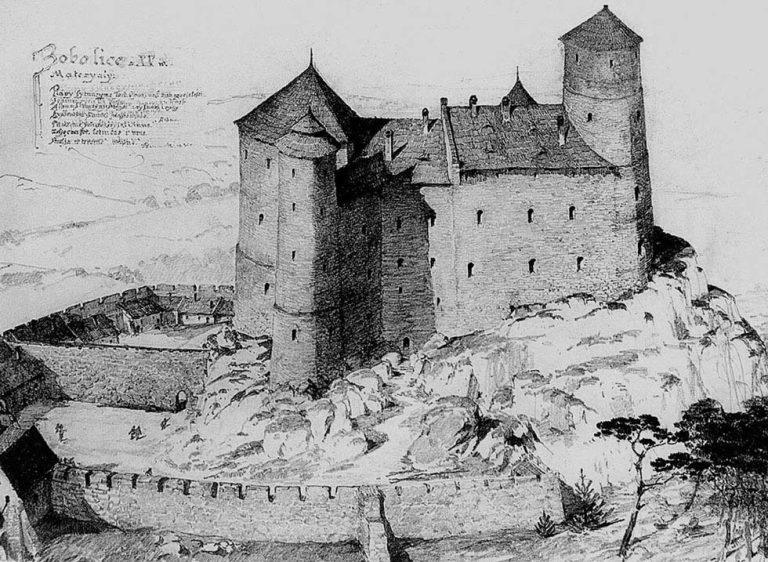
The Royal Castle in Bobolice is one of the most distinctive and recognisable strongholds of the Kraków-Częstochowa Upland. Situated on a limestone hill amidst the picturesque landscapes of the Kraków-Częstochowa Upland, it is one of the finest examples of medieval defensive architecture in Poland. Its white limestone walls blend perfectly with the rugged Jurassic landscape, creating a remarkable fusion of history and nature.
The stronghold at Bobolice was one of the components of the defensive system known as the Eagles’ Nests Trail – a network of castles and watchtowers erected primarily during the reign of King Casimir the Great. Their purpose was to protect the western borders of the Kingdom of Poland against incursions by Czech forces and to control the important trade routes running through the borderlands of Lesser Poland and Silesia.
For centuries, Bobolice Castle has been a symbol of royal power, a scene of chivalrous disputes, political conflicts and dramatic events. Its history encompasses the heyday of the medieval fortress, periods of decline and neglect, and its remarkable modern-day restoration, which has restored the building to its former glory. Today, the castle is one of the most important tourist attractions in the Jura region, drawing in lovers of history, architecture and stunning landscapes.
The distinctive silhouette of the castle, perched on a solitary limestone rock, makes Bobolice one of the most photogenic places in Poland. The combination of medieval architecture, legends and the beauty of the Jurassic landscape creates a unique atmosphere that transports visitors back to the days of knights, princes and royal expeditions.
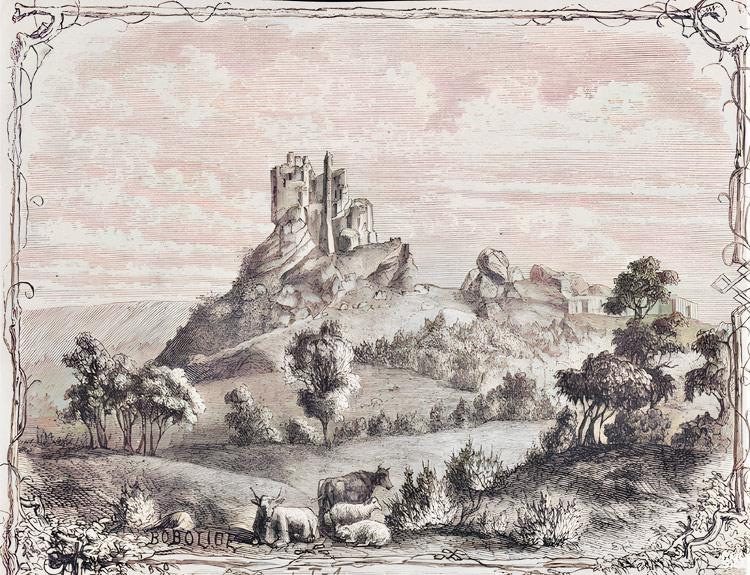
The origins of the castle
The origins of Bobolice Castle date back to the reign of King Casimir the Great, who, in the 14th century, undertook a wide-ranging programme to strengthen the borders of the Kingdom of Poland. Following a period of fragmentation and numerous conflicts with neighbouring states, it became particularly important to secure the country’s western frontiers, especially the areas near the border with Silesia, which remained under Czech influence.
The construction of the castle in Bobolice was part of a larger defensive system comprising over a dozen strongholds situated on the hard-to-reach hills of the Kraków-Częstochowa Upland. These castles were intended to serve as observation posts, military strongholds and the seats of royal officials responsible for controlling the region.
The exact date on which construction began has not been definitively established, but historians believe that the stronghold was built around the mid-14th century. The first written records concerning Bobolice date from 1379 and indicate that the castle was already functioning as an important administrative and military centre.
The castle’s location was chosen with great care. It was built on a high limestone rock, which in itself served as a natural barrier against potential attackers. The steep terrain made it difficult to launch an effective attack, whilst at the same time providing an excellent view of the surrounding area. From the castle walls, it was possible to monitor important roads and observe the movements of troops and merchants travelling through the Jura.
The original castle was relatively small in size, but its design met the requirements of a medieval border stronghold. The central feature was a stone tower serving as both a residence and a defensive structure, surrounded by perimeter walls. In the years that followed, the castle was gradually extended to meet growing military requirements and the needs of its owners.
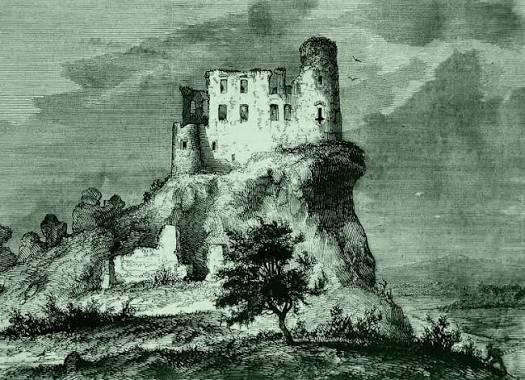
The history of the castle
The Royal Period – 14th century
The castle’s early history was directly linked to the Piast monarchy. Bobolice Castle originally belonged to the king and served as one of the royal watchtowers on the western border of the kingdom.
Following the death of Casimir the Great in 1370, the political situation in Poland changed. Control over many royal castles was transferred to powerful families as royal grants. Bobolice also came into the hands of private owners, who were obliged to maintain the stronghold and ensure its defence.
The Szafraniec dynasty – 15th century
In the 15th century, the castle came into the possession of the Szafraniec family of the Starykoń coat of arms, one of the most influential families in Lesser Poland. During this period, Bobolice experienced a time of growth, but also of numerous conflicts.
The castle became the scene of family disputes and power struggles. A particularly difficult period arose during the time of Mikołaj Szafraniec, who was accused of robbery and of using the castle as a base from which to attack merchants travelling through the Jura Mountains.
The royal authorities took steps to curb the arbitrary power of the noble families, but the castle’s remote location helped its owners to maintain their independence.
The period of its heyday and expansion – the 16th century
In the 16th century, the castle was partially rebuilt and adapted to new residential standards. The medieval stronghold began to take on the character of a noble residence.
However, changing methods of warfare and the development of artillery meant that traditional rock-cut castles gradually lost their military significance. Spacious palatial residences began to play an increasingly important role, whilst Bobolice slowly lost its former defensive status.
The destruction of the 17th century
The castle’s greatest decline occurred in the 17th century. During numerous armed conflicts, particularly during the Swedish Deluge of 1655–1660, many Polish strongholds were destroyed. Bobolice also suffered as a result of the hostilities.
Following the destruction, the castle never regained its former splendour. A lack of funds for reconstruction, coupled with its declining military importance, led to the site being gradually abandoned.
The period of decline – 18th–20th centuries
By the 18th century, Bobolice was already a partially abandoned ruin. Residents of the surrounding villages used the castle’s stone elements as building material, which accelerated the deterioration of the walls.
In the 19th century, the ruins began to attract the interest of Romantic artists, travellers and sightseers. Like other castles in the Jura region, Bobolice became a symbol of Poland’s former power and a source of inspiration for artists.
For most of the 20th century, the castle remained in a state of permanent ruin. However, sections of the walls, the foundations and the distinctive layout have survived, making it possible to reconstruct the appearance of the medieval stronghold.
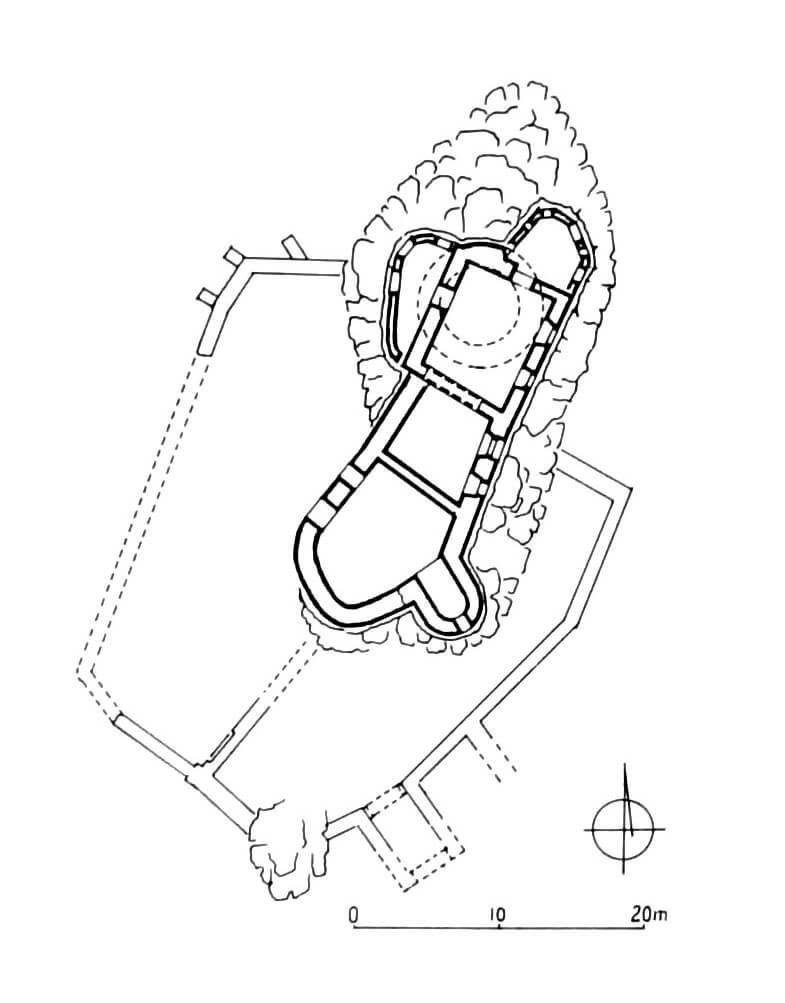
The architecture of the castle
Bobolice Castle is a fine example of the defensive architecture typical of the Kraków-Częstochowa Upland, in which the natural topography of the terrain was utilised as an additional element of the fortification system.
The stronghold was built from local limestone, which means it blends in perfectly with the surrounding Jurassic rocks. Originally, the castle consisted of a residential section, a tower and defensive walls surrounding a small courtyard.
The oldest part of the complex was probably the residential tower, which served both a defensive and a ceremonial purpose. The thick stone walls ensured the safety of the inhabitants, whilst the small window openings limited the enemy’s ability to fire upon them.
The castle also had a system of defensive walls that followed the contours of the rocky hill. The natural rock formed part of the defences, which meant that the number of additional fortifications required was limited.
A distinctive feature of Bobolic is its irregular layout, resulting from the limited surface area of the rock outcrop. The builders had to adapt the structure to the terrain, which gave the castle its unique appearance.
Following its restoration, the building has retained its medieval character, but has been partially adapted for tourist use. Among other things, the state rooms, elements of the interior décor and the internal layout have been reconstructed.
The reconstruction of the castle
One of the most remarkable chapters in the history of Bobolice is the modern-day restoration of the castle, which began at the start of the 21st century.
After many years as a ruin, in 1999 the castle and the surrounding land were purchased by the Lasecki family, who decided to restore it.
The work took over a dozen years and was carried out on the basis of archaeological and historical research, as well as surviving iconographic material. The aim was not to create a modern building inspired by the Middle Ages, but to recreate the castle’s former appearance as faithfully as possible.
Traditional materials were used during the restoration, primarily the limestone characteristic of the region. The walls, towers, living quarters and defensive features were reconstructed.
The reconstruction sparked much debate amongst historians and conservationists. Some people emphasised that, thanks to it, the castle had regained its former prestige and become a major tourist attraction, whilst others pointed out the difficulties involved in recreating the building’s exact appearance after several hundred years of deterioration.
Whatever people may think, the reconstruction has made Bobolice once again one of the most famous castles in Poland.
Interesting facts
Bobolice Castle is one of the best-known sites on the Eagles’ Nests Trail, which links the most important strongholds of the Kraków-Częstochowa Upland.
According to one popular legend, the castle was connected to the nearby Mirów Castle by an underground tunnel. The story also tells of two brothers who were said to have ruled both strongholds together, but a conflict between them led to tragedy.
There is a legend associated with Bobolice about a hidden treasure and the ghost of the White Lady, who, according to local lore, is said to appear at night on the castle walls.
The castle has been used as a film and television set. Its distinctive silhouette perfectly matches the image of a medieval stronghold.
Bobolice, together with nearby Mirow, form one of the most picturesque castle complexes in the Jura region. The two strongholds are separated by just a few kilometres, and a walk between them takes you through the Jura’s unique landscapes.
The castle today
Today, the Royal Castle in Bobolice is one of the most important tourist attractions in the Kraków-Częstochowa Upland. Following the completion of its restoration, it has been opened to the public and serves as a museum and educational centre.
Tourists can explore the castle’s interiors, view the state rooms and historical exhibitions, and learn about the history of the stronghold and its former inhabitants. A particular highlight is the chance to step out into the castle courtyards and admire the panoramic view of the Jurassic hills.
Near the castle, there are walking and cycling trails leading through the most beautiful parts of the Kraków-Częstochowa Upland. The combination of history, nature and a unique landscape makes Bobolice a popular destination for families, photographers and lovers of Polish castles.
Today, Bobolice Castle stands as a symbol of the revival of historical heritage. Its history shows that even a building which has lain in ruins for centuries can regain its significance and once again become a key landmark on Poland’s cultural map.
This is a place where medieval history meets the present day, and where the stone walls still tell the story of knights, kings and the people who, over the centuries, were connected to this extraordinary Jurassic stronghold.


