
Facilities
 Tickets and guided tours
Tickets for the tour can be purchased at the castle or online. Tour time is approximately 1.5 hours, there is a guided tour option. A night tour of the castle is also available.
Tickets and guided tours
Tickets for the tour can be purchased at the castle or online. Tour time is approximately 1.5 hours, there is a guided tour option. A night tour of the castle is also available.
 Parking
There is a car park directly next to the castle grounds, which serves both visitors to the castle and visitors to the park.
Parking
There is a car park directly next to the castle grounds, which serves both visitors to the castle and visitors to the park.
 Restaurant
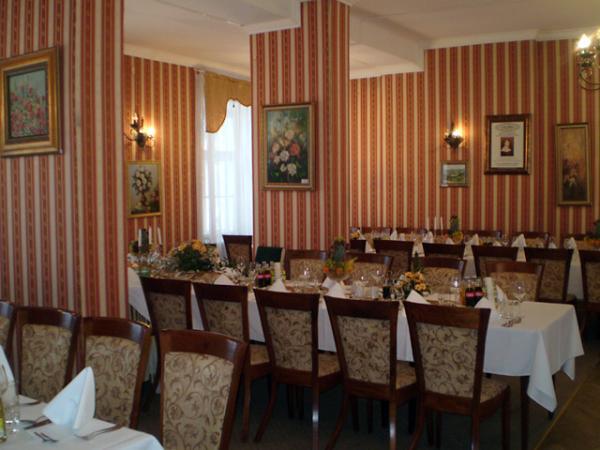
The castle restaurant "Łańcut" operates within the castle complex, offering traditional regional dishes and European cuisine.
Restaurant
The castle restaurant "Łańcut" operates within the castle complex, offering traditional regional dishes and European cuisine.
 Hotel
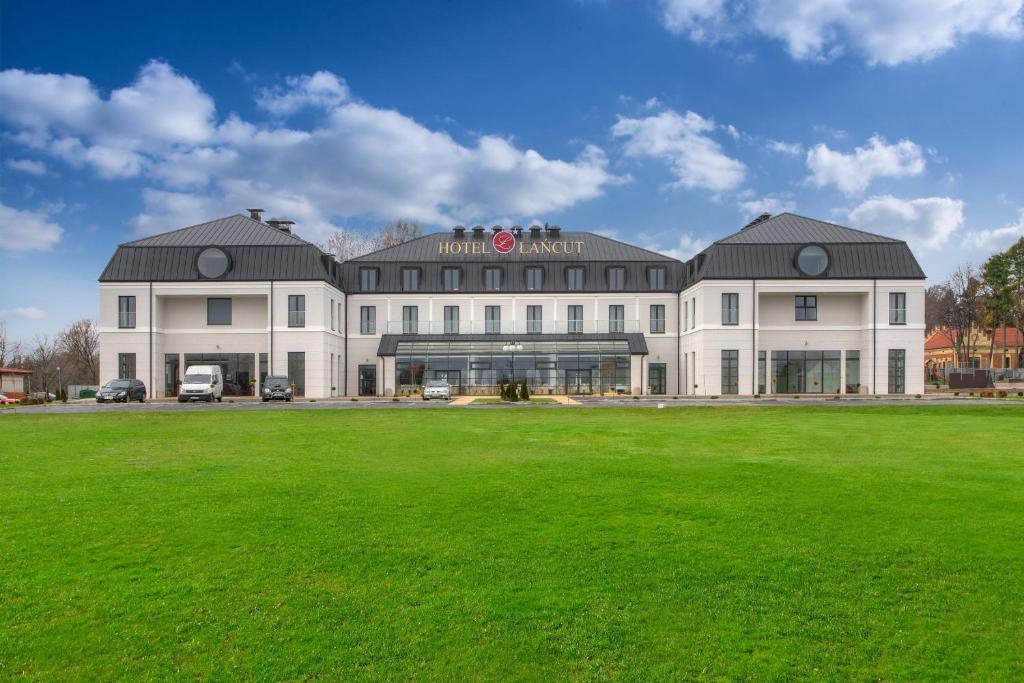
Close to the castle is the prestigious 'Hotel Lancut' offering accommodation for visitors.
Hotel
Close to the castle is the prestigious 'Hotel Lancut' offering accommodation for visitors.
 Souvenirs
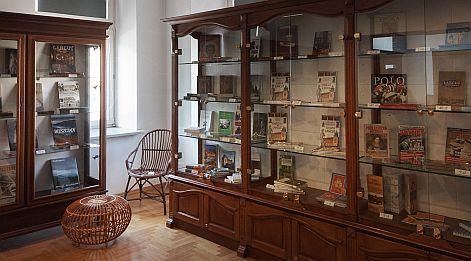
Inside the castle there is a museum shop with souvenirs for tourists.
Souvenirs
Inside the castle there is a museum shop with souvenirs for tourists.

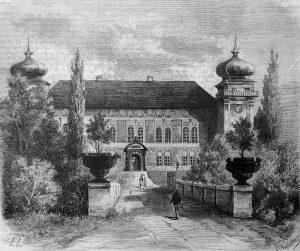
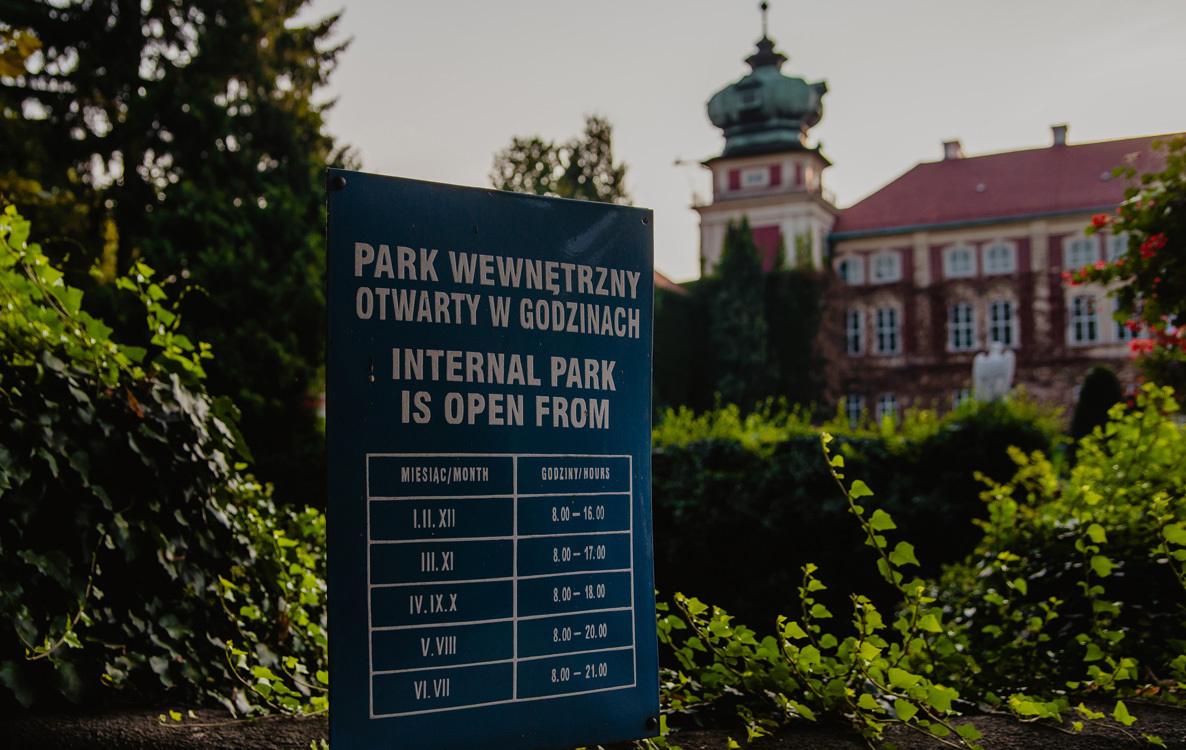
The castle in Łańcut is a true pearl of Polish residential architecture, known not only in the country but also worldwide. Its rich history, spanning centuries, is intertwined with the fates of the illustrious aristocratic families that shaped its face. The majestic buildings, surrounded by a beautiful landscaped park, hide numerous secrets, artistic treasures and testimonies of past eras. In every corner of this residence you can feel the atmosphere of the past and, at the same time, the incessant pulse of cultural and scientific life. Łańcut is not only a castle, it is also a story of people, art and history waiting for you to discover it.
History of Łańcut Castle:
The castle in Łańcut is one of the most beautiful and valuable monuments of residential architecture in Poland. Its history is fascinating and inextricably linked with the fate of the illustrious aristocratic families that have influenced the history of this place over the centuries.
First Mentions and the Middle Ages:
The original defensive structure on the site of the present castle was probably built in the 12th century. It was a wooden structure intended to guard important communication routes. Over time, the wooden structure was replaced by a brick one, but the medieval roots of the castle are no longer visible today.
Renaissance transformations:
In the 16th century, the castle was purchased by the Stadnickis, a powerful noble family. It was they who transformed the medieval fortress into a Renaissance residence. At that time, the castle was the cultural centre of the region, bringing together artists, scholars and distinguished visitors.
The Lubomirski era:
Another important moment in the castle's history was in 1629, when it was purchased by Stanisław Lubomirski. The Lubomirski family owned the castle for over two centuries, changing its face. It was during their reign, in the 18th century, that the building was thoroughly rebuilt in Baroque style. The castle then became one of the most magnificent palaces in Poland.
Castle in the hands of the Potockis:
At the end of the 18th century, the castle passed into the hands of another illustrious family - the Potockis. Under their rule, the castle underwent another metamorphosis, this time in classicist style. Particularly important was the role of Izabela Lubomirska, who hired renowned architects and artists to transform the castle into an architectural masterpiece.
20th century:
The turn of the 19th and 20th centuries was a time of many challenges for the castle - World Wars I and II, political and social changes. Nevertheless, thanks to the efforts of the last owners and proper protection, the castle survived these difficult times intact. After World War II, as a result of land reform, the Potocki estate was nationalised. The castle became the property of the state and adaptations began to be made for the museum.
Modern times:
Today, the castle in Łańcut is the Museum-Zamek Łańcut, which attracts crowds of tourists from Poland and abroad. Its rich collection, beautiful interiors and the romantic park surrounding the castle make it one of the most valuable places in Poland in terms of history, culture and art.

Architecture of Łańcut Castle:
Lancut Castle is a pearl of residential architecture that took many centuries to shape. It reflects the stylistic diversity and artistic richness of the eras in which it was rebuilt and adapted. It presents mainly Baroque, Classical and Rococo elements, although older traces are also hidden within its walls.
Foundations and medieval roots:
The original castle that was built on this site was defensive in nature. It was probably a wooden building erected in the 12th century, the traces of which have been completely obliterated by subsequent reconstructions. However, its foundations, although hidden, form the basis for the present-day residence.
Renaissance chateau of the Stadnickis:
In the 16th century, thanks to the Stadnicki family, the castle underwent its first significant metamorphosis. At that time, it built brick wings, acquiring the character of a typical Renaissance residence. These elements, although partly rebuilt by later owners, are an important part of the historic fabric of the building.
Baroque reconstruction of the Lubomirski family:
The Lubomirski family, who became the owners of the building in the 17th century, decided to carry out a thorough reconstruction in the Baroque style. Monumental volumes, richly decorated facades and representative interiors were then introduced. The grand ballroom, the chapel and numerous chambers were decorated with frescoes, sculptures and stucco, reflecting the taste and prestige of this family.
The classicist transformations of the Potockis:
At the end of the 18th century, the castle was acquired by the Potocki family. It was during their reign that the building underwent another significant metamorphosis. Classicist elements were introduced, which gave the castle elegance and harmony. The interior layout was changed, introducing new architectural solutions such as columns, porticoes and balustrades.
Surrounding the castle:
The surrounding park cannot be omitted from the description of its architecture. The English-style landscaped garden, full of romantic corners, ponds, bridges and old trees, is an integral part of the castle complex.
The architecture of Łańcut Castle is a wealth of forms and styles that make up a unique whole. It is the result of the work of many generations who have had a hand in shaping this unique place. Thanks to this, today's visitors can admire a harmonious synthesis of different eras and a testimony to the evolution of tastes and needs of its former inhabitants.

Curiosities and legends of Łańcut Castle:
Witnessing centuries of history, the castle in Łańcut carries many fascinating stories and legends. Although it is difficult today to separate fact from fiction, these stories add an extra charm to the place.
- Spiritual protection of the castle
According to one legend, the castle is haunted by the ghost of Izabela Lubomirska, who still watches over her former residence. It is said that her figure is sometimes seen in the castle's corridors or in the park, always dressed in a white dress, carrying with her the delicate scent of lily of the valley. Her presence was believed to protect the castle from all evil.
- Underground corridors
Tales of underground passageways are quite common for many castles, but Łańcut is no exception. It is said that there are secret passages connecting the castle to the town's parish church. These were supposed to serve as an escape route in case of danger.
- Clock collection
It is interesting to note that Izabela Lubomirska had an obsessive passion for clocks. Her collection was so impressive that the castle in Łańcut was nicknamed "the house with the most clocks in Poland". To this day, many of these exceptional timepieces can be admired in the castle's chambers.
- Unique orangery
Łańcut Castle has one of the few orangeries in Poland. In the 19th century it was a real attraction where exotic plants were grown and where the aristocracy could admire rare specimens of nature. To this day, the orangery is one of the most valuable elements of the castle complex.
- Princess on a Pea
It is said that one of the guests at the castle was the famous writer Hans Christian Andersen. In one of the chambers, he was to notice a pea-shaped pattern laid out on the floor. This is supposed to have inspired him to write the well-known fairy tale 'The Princess on a Pea'.
The castle in Łańcut is a place that constantly fascinates with its history, architecture and countless stories that have survived to our times. Some of them are more plausible, others definitely fall into the realm of legends, but all of them together create the unique atmosphere of this exceptional place.


