







History and key events
In the 14th century, Tropsztyn Castle found itself in the hands of the influential Chebdyce family, who took custody of it at a time when Malopolska was developing intensively and the nobility was consolidating its influence in the borderlands. The Chebdycci family began to expand the fortress, adapting its structure not only to defensive requirements, but also making it more comfortable to use. However, the castle's greatest heyday came when it came under the rule of the Zaklik family of the Topór coat of arms - a distinguished and powerful knightly family, which was characterised by its loyalty to the monarchy and its high position in the political structures of Poland at the time. It was the Zakliki family who transformed Tropsztyn into a more representative residence, introducing elements of the Gothic style and taking care of its defences.
During the reign of Casimir the Great, the castle played an important role in the system of protecting the southern border of the Polish Kingdom. This ruler, known for his concern for the security of the state, took particular care of the borderland fortifications. Tropsztyn, along with other castles along the Dunajec River, was an important link in the defence chain guarding against potential invasions from Hungary and Rus. Although accurate accounts of the period have not survived, it can be assumed that the castle served as an observation and communication point from which signals were sent to neighbouring strongholds in case of danger.
As time passed and the balance of power in Europe changed, the castle gradually lost its strategic importance. Tragic times came for it in the 17th century - first the ravages of the Cossack and Hungarian invasions, and then the catastrophic destruction during the Swedish Deluge. The troops of Charles X Gustav, who wreaked havoc in the Republic, did not spare Tropstein. The stronghold was partially burnt down and its buildings looted. Since then, the castle has never regained its former splendour.
In the 18th century, deprived of the care of its owners and without funds for reconstruction, the castle gradually deteriorated. The following decades brought progressive degradation - the roofs collapsed, the walls began to crumble and the courtyard became overgrown with wild vegetation. In the 19th century, the ruins of Tropsztyn began to attract romantic travellers, artists and writers who were fascinated by the picturesque remains of ancient fortresses. Numerous engravings, watercolours and literary stories were produced, making the castle a place inspired by the spirit of history and mystery.
One of the most fascinating and also most mysterious stories associated with the castle is the legend of the Inca treasure. According to local accounts, after the collapse of the Inca Empire in the 16th century, the descendants of Tupac Amaru - the last Inca chieftain - were said to have embarked on a long journey across Europe, fleeing from their Spanish persecutors. As a result of this trek, they were to reach Poland and settle in the Dunajec region, where they allegedly hid some of the legendary treasure in the vaults of Tropsztyn Castle. Although this story has not been confirmed historically, it fired the imagination of researchers, adventurers and history enthusiasts, contributing greatly to the growing interest in the ruins in the 20th century.
In the 1990s, the castle finally got its long-awaited reconstruction. The initiative was taken by Andrzej Benesz, a Polish politician and history enthusiast, who saw in the ruins the potential to revive the region's cultural heritage. Thanks to his efforts, and then work continued by subsequent generations, Tropsztyn regained some of its former glory, becoming not only a reminder of the past, but also a meeting place for history, legend and art.

Architecture of Tropsztyn Castle
Tropsztyn Castle is one of the most characteristic examples of medieval defensive architecture with a residential function, perfectly illustrating the evolution of castle building in Malopolska from the 13th century to the modern reconstruction. Situated strategically on a rocky hill above the Dunajec River - today partly flooded by the waters of Lake Czchów - the castle used the natural lay of the land as part of its defence system. Thus, on the one hand, it was an inaccessible fortress, and on the other, it provided an excellent observation point to control traffic in the valley and at the river crossing.
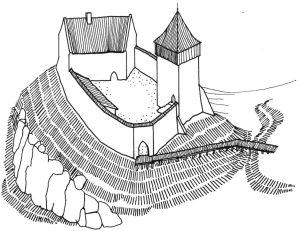
The original core of the castle consisted of a rectangular courtyard, surrounded by thick stone curtain walls. The heart of the fortress was a massive donjon - a quadrilateral residential and defensive tower with thick walls and narrow, shot windows. The donjon was the highest and most important structure in the castle: it housed the owner's living quarters and became the last point of defence in the event of a siege. Its lower storeys housed larders and storerooms, while the upper storeys were used for staging and living quarters. These rooms were heated by stone cookers or fireplaces, as archaeological findings have confirmed.
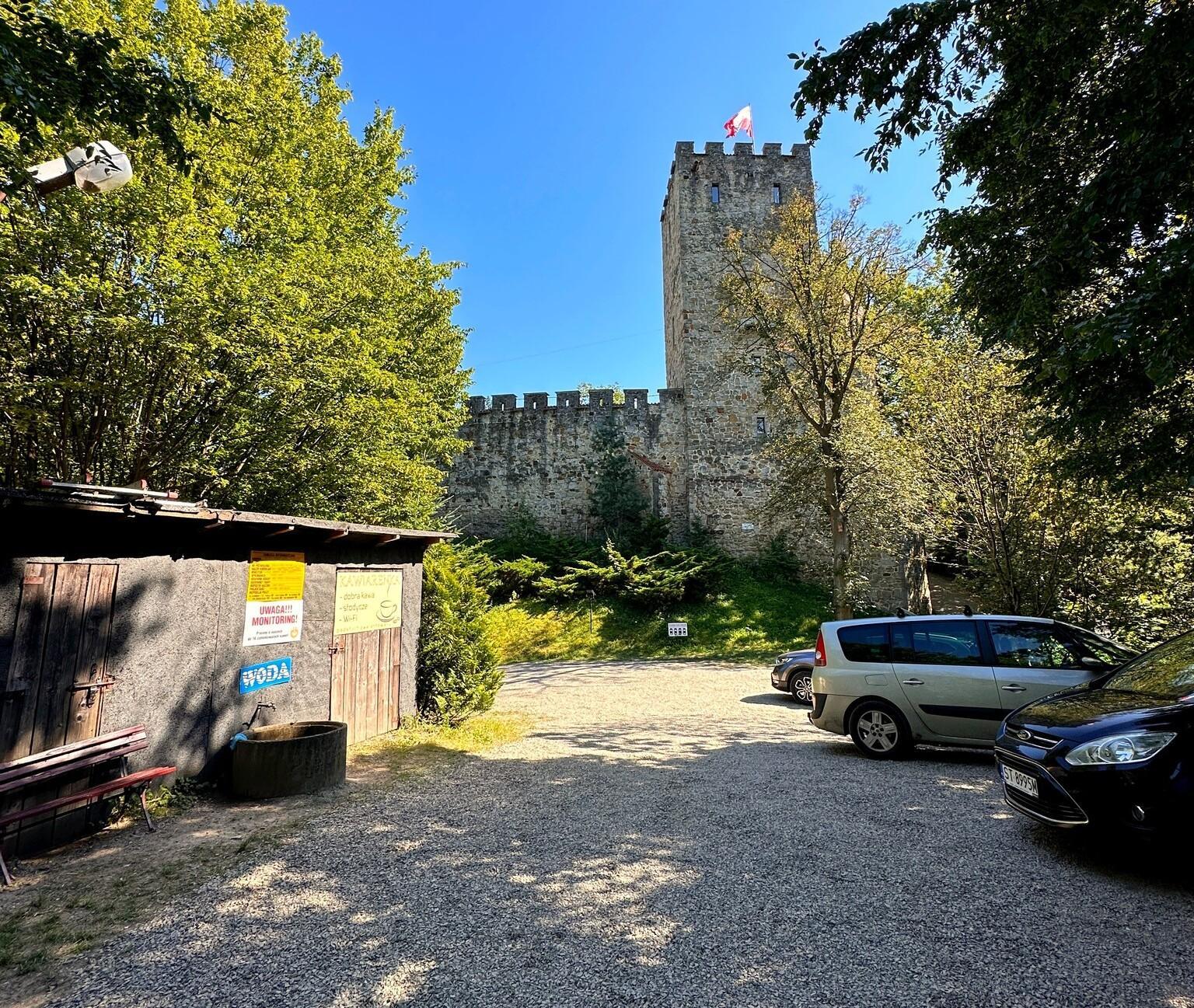
Among the most recognisable features of the castle are cylindrical corner towerThe tower is still standing today and has been partly reconstructed. The tower had an observation and communication function - from the top it was possible to transmit fire signals to neighbouring fortresses. Its thick walls and strategic location at the corner of the walls made it an important point in the entire defence system. From its top, there is a panoramic view of Lake Czchowskie, which today is one of the biggest landscape attractions of the region.
During Tropstein's heyday, i.e. in the 14th and 15th centuries, the castle was extended. Outbuildings, new residential wings and an extensive courtyardwhich served as the daily life of the castle residents. Along the inner walls, cloisters and ancillary buildings were erected, and on the entrance side there was a entrance gate z drawbridge - wooden structure, allowing access to the castle over a ditch carved into the rock. The drawbridge mechanism, although not preserved today, was typical of fortresses of the time and testified to the high engineering level of the builders.
Building material
The material used to build the castle was local broken stone - mainly sandstone and limestone. The raw nature of this substance gave the building a monumental and somewhat gloomy appearance, perfectly in keeping with the Gothic style. The stone was bonded with lime mortar and some parts of the walls were reinforced with brick - especially in the later phases of the expansion. Archaeological discoveries and stratigraphic analyses have revealed the presence of a Renaissance architectural detailssuch as decorative portals, fragments of columns or window frames, suggesting that the castle was partly transformed in the 16th century to suit the tastes and representational needs of the time.
Castle reconstruction
carried out at the turn of the 20th and 21st centuries, was a unique undertaking in terms of scale, precision and commitment. Initiated by Andrzej Benesz, it was carried out with respect for historical sources, archaeological documentation and iconography. Both preserved parts of the original walls and modern reconstruction materials were used, which made it possible to faithfully recreate the appearance of the fortress from its heyday. The castle was equipped with functional interiors: exhibition rooms, dungeons, staircases and viewing terraces, which today serve as spaces for visitors.
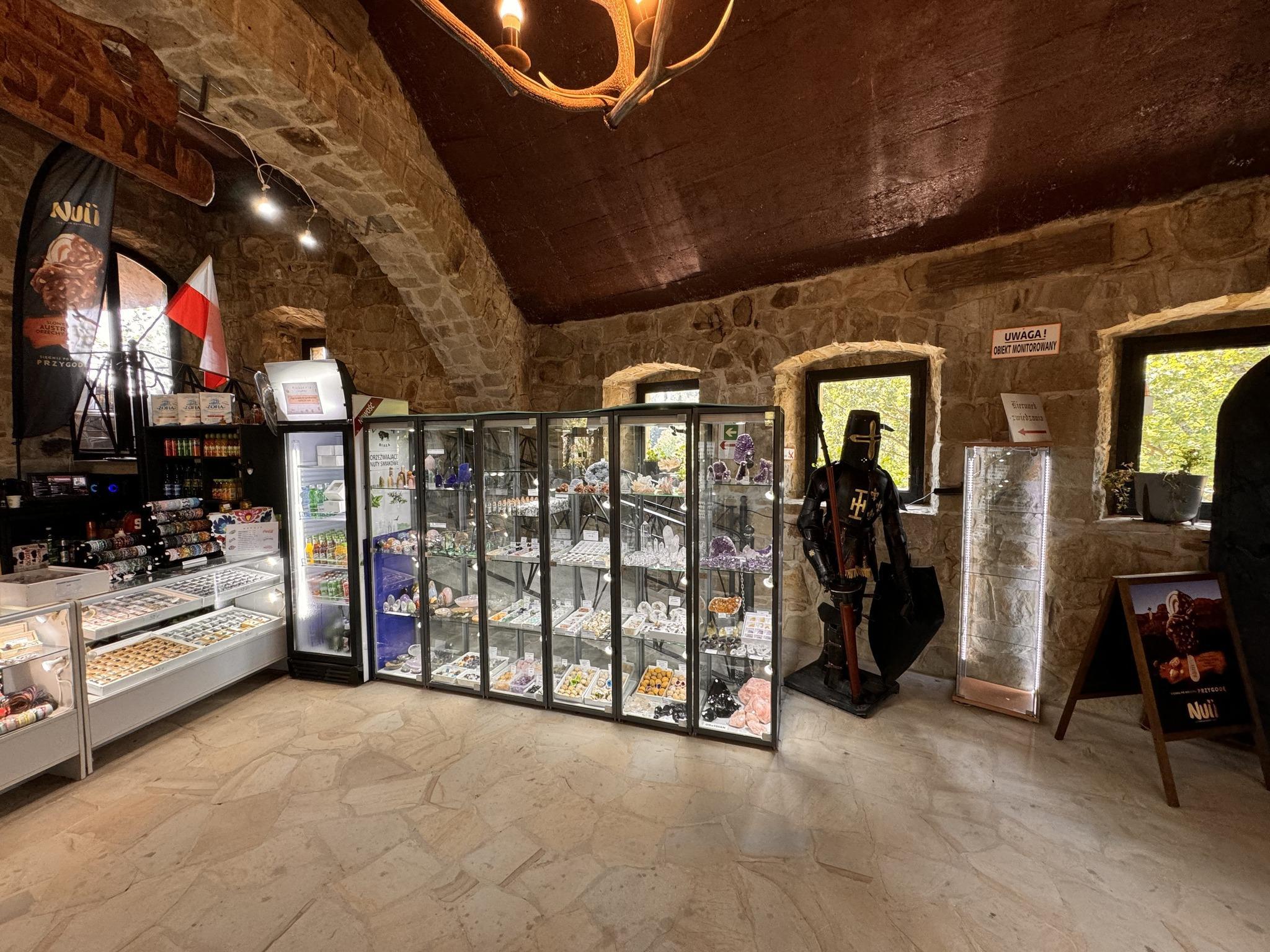
The modern Tropstein is not just a reconstruction of the building - it is also a thoughtful recreation of the spirit of the era. The castle spaces were designed to reflect the atmosphere of the Middle Ages: austere walls, wooden ceilings, heavy iron fittings and historicising details bring visitors into the atmosphere of past centuries. The castle has become not only a monument, but also a living museum, where material history meets legend and the architecture becomes a vehicle for the story of times past.
Legends of the Castle
Tropsztyn Castle, located on a rocky hill on the banks of the Dunajec River in the village of Wytrzyszczka in Malopolska, is one of the most fascinating fortresses in southern Poland - not only for its medieval origins and architecture, but also by the unique aura of mystery that surrounds it. Today, brought back to life after centuries of oblivion, it is a place where history is intertwined with legend and cultural heritage is revived in a form that is accessible and inspiring for generations to come. It is not just a fortress made of stone, but a story of passion, determination and faith in the power of the past.
From knight's fortress to forgotten ruins
The origins of the castle date back to the 13th or 14th century, when - probably on the initiative of one of the mighty knightly families - the first defensive building was erected. Its strategic location on the Dunajec River was of considerable importance: the castle guarded the river crossing and the trade route leading from Hungary to Krakow, then one of the main centres of trade and politics in this part of Europe. The castle served not only military, but also administrative functions - representatives of the local elite resided there, and its walls witnessed numerous political and economic events.
During its heyday, Tropsztyn was expanded with more residential wings, a courtyard, an entrance gate with drawbridge and a watchtower overlooking the river valley. However, over the years, especially after the 17th century, the castle began to lose its importance. Wars, changes of owners, and natural processes of deterioration led to its complete abandonment. For centuries, it remained in ruins, overgrown with forest, becoming only a backdrop for village stories and a forgotten symbol of its former power.
The legend of the Inca treasure - a secret that has survived the centuries
One of the most intriguing stories associated with Tropsztyn Castle is the legend of the the treasure of the Incaswhich contributed to the growing interest in the ruin in the 20th century. According to this theory, hidden somewhere in the castle's vaults was supposed to be a fragment of the legendary treasure taken out of Peru by fugitives from the royal Inca family, who took refuge in Europe after the fall of the empire. One of the descendants of these fugitives was allegedly Andrew Beneš - Polish social activist and politician, who in the 1960s began research around the ruins of Tropsztyn.
A passionate history buff and legend tracker, Benesz claimed to be in possession of documents proving his family's connection to the last Incan priests. He believed that some of the gold and sacred artefacts taken from South America to save them from the conquistadors were hidden in the dungeons of the castle. Although no physical evidence of the treasure has ever been found, the legend itself became immensely popular and became a permanent part of Tropstein's identity. Today, the castle houses an exhibition dedicated to this story, and visitors enjoy listening to the guides' tales of Inca gold, secret passages and Benesh's family secret.
Castle renaissance - rebuilding with respect for the past
After the death of Andrzej Benesz, work on the reconstruction of the castle was not abandoned. Thanks to the determination of his family and the support of numerous history enthusiasts, the painstaking, multi-year reconstruction of Tropsztyn began at the turn of the 20th century. The aim was not just to reconstruct the exterior, but also to restore the atmosphere of the castle from its finest period. Local building materials, historical masonry techniques and archaeological discoveries and archival engravings were used. The preserved sections of masonry were protected and new parts of the building were attempted to be stylistically and structurally faithful.
The castle has been enriched with exhibition interiors, including a reconstruction of a medieval knights' chamber, a room dedicated to an Incan legend, a viewing terrace and a dungeon underground with arranged dungeons. Today, Tropsztyn is not just a castle "to look at" - it is a living educational space, full of exhibitions, themed events and activities for children. During the summer months, knights' shows, historical workshops and festivals are held here, making history accessible and attractive to the general public.
A castle that inspires
Tropsztyn Castle is a place that delights not only with its picturesque location and architecture, but above all with its history - full of passion, secrets and a tireless struggle to preserve its heritage. From forgotten ruins to Inca legends to the modern Renaissance, Tropsztyn has become a symbol of a return to one's roots and a reminder that every era has its heroes. Today, it is not only a monument, but also a story - of people who did not let the stone speak only of ruins, but gave it a second life as a witness to history and legends that still fire the imagination.
Tropsztyn Castle - a past that is still alive
Tropsztyn Castle is not just a stone fortress rising above the Dunajec River - it is a story about the power of memory, passion and extraordinary determination to save heritage. For centuries it has been a silent witness to history, a place where the fates of knights, mighty families and mysterious legends of lost treasures intertwined. Today, thanks to careful restoration, it is once again teeming with life - delighting with architecture, inspiring with legends and teaching successive generations the importance of nurturing cultural identity. It is a space where the past meets the present and history becomes an experience, not just a memory.


