
Facilities
 Tickets and guided tours
Tickets for the tour can be purchased at the ticket desk in reception. The average duration of the tour is 45 minutes. Bookings must be made by telephone.
Tickets and guided tours
Tickets for the tour can be purchased at the ticket desk in reception. The average duration of the tour is 45 minutes. Bookings must be made by telephone.
 Parking
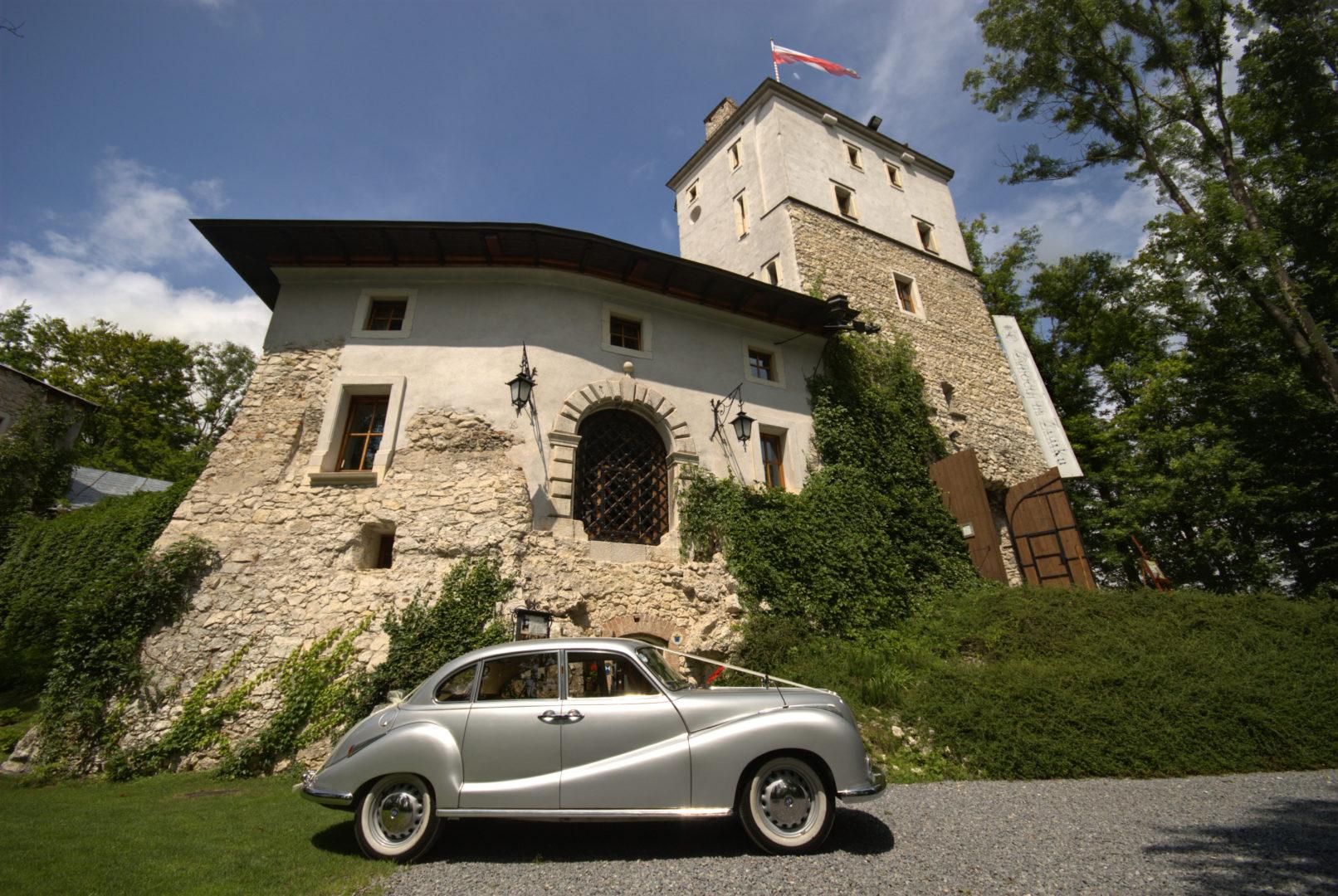
There is free parking under the castle.
Parking
There is free parking under the castle.
 Cuisine
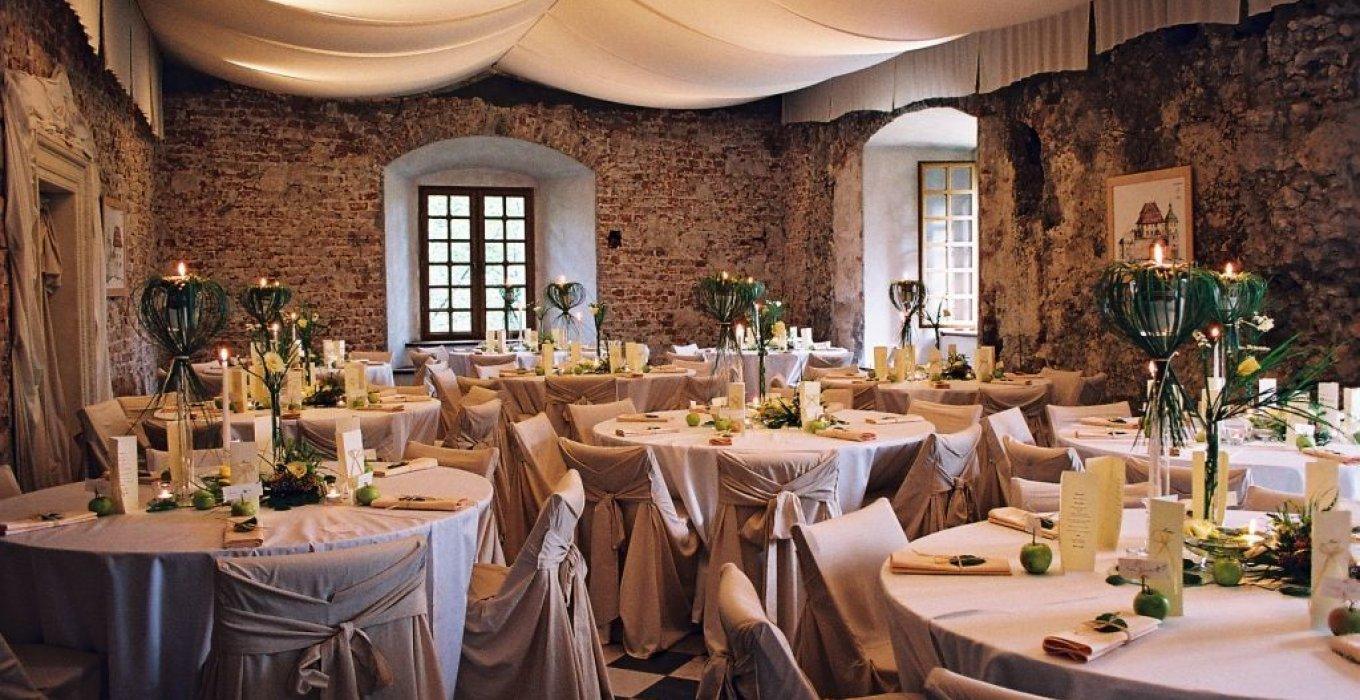
There is a delicious hotel kitchen for guests in the castle grounds.
Cuisine
There is a delicious hotel kitchen for guests in the castle grounds.
 Accommodation
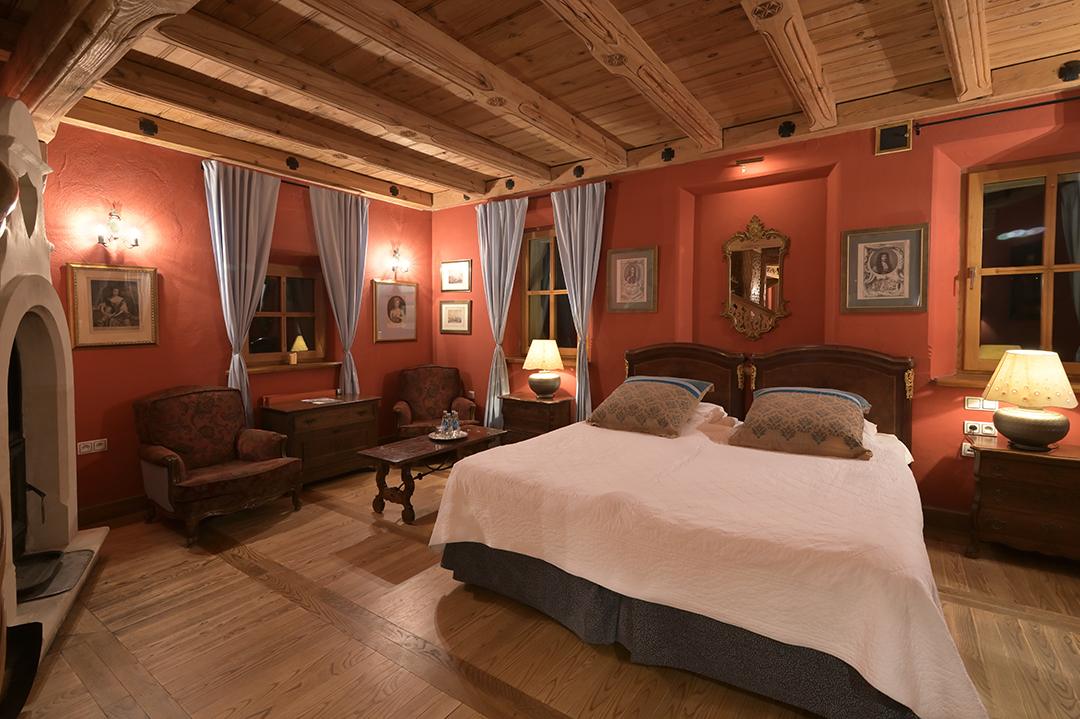
The castle offers accommodation inside.
Accommodation
The castle offers accommodation inside.
In the heart of the picturesque Krakow-Częstochowa Jurassic Upland, just thirteen kilometres north of Krakow's bustling Main Square, rises Korzkiew Castle - a true architectural gem and one of the most unique landmarks on the famous Eagles' Nests Trail. Situated on a steep limestone hill washed by the waters of the Korzkiewka River, this medieval structure is a fascinating combination of austere, chivalrous history with a modern, private effort to save national heritage. Surrounded by the green buffer zone of the Ojców National Park and a historic park dating back to the 19th century, this castle is not just a cool museum exhibit. It is a vibrant, meticulously restored monument to the past that brilliantly proves that, with the right determination, former splendour can be raised from the ruins, creating a place that delights historians and seekers of unconventional leisure alike.
Genesis and early years
The history of the castle in Korzkwi dates back to the deep Middle Ages. The first documents preserved in the archives, in which the hill itself and the fortress erected there are mentioned, date back to 1352. The initiator of the construction was Jan of Syrokomla, a representative of an influential Lesser Poland family, who decided to take advantage of the natural defensive properties of the steep rock to erect a solid defence and residential tower. At that turbulent time, the castle was of key strategic importance. It was part of an extensive defence system, guarding the north-western frontiers of the Polish Kingdom against invasions. The original, rather austere Gothic construction, rising proudly above the river (then known as the Bieśnica), allowed the staff to effectively control important local trade routes.
The heyday and evolution
Over the following decades, as the political situation in the region stabilised, the Korzkiew Castle gradually began to lose its exclusively military and austere character, becoming a comfortable residence for wealthy families. In the 15th century, the stronghold passed into the hands of a representative of the wealthy patriciate of Krakow, Piotr Krupek, and later belonged to the Ługowski and Zborowski families. It was during the Renaissance that the castle began to undergo its most visible transformation, smoothly turning from a military fortress into an elegant noble residence. The cool medieval walls were embellished with elaborate Renaissance details. The interiors were enriched with beautiful carved portals, monumental fireplaces, which were not only meant to warm but also to please the eye, and intricately carved wooden ceilings.
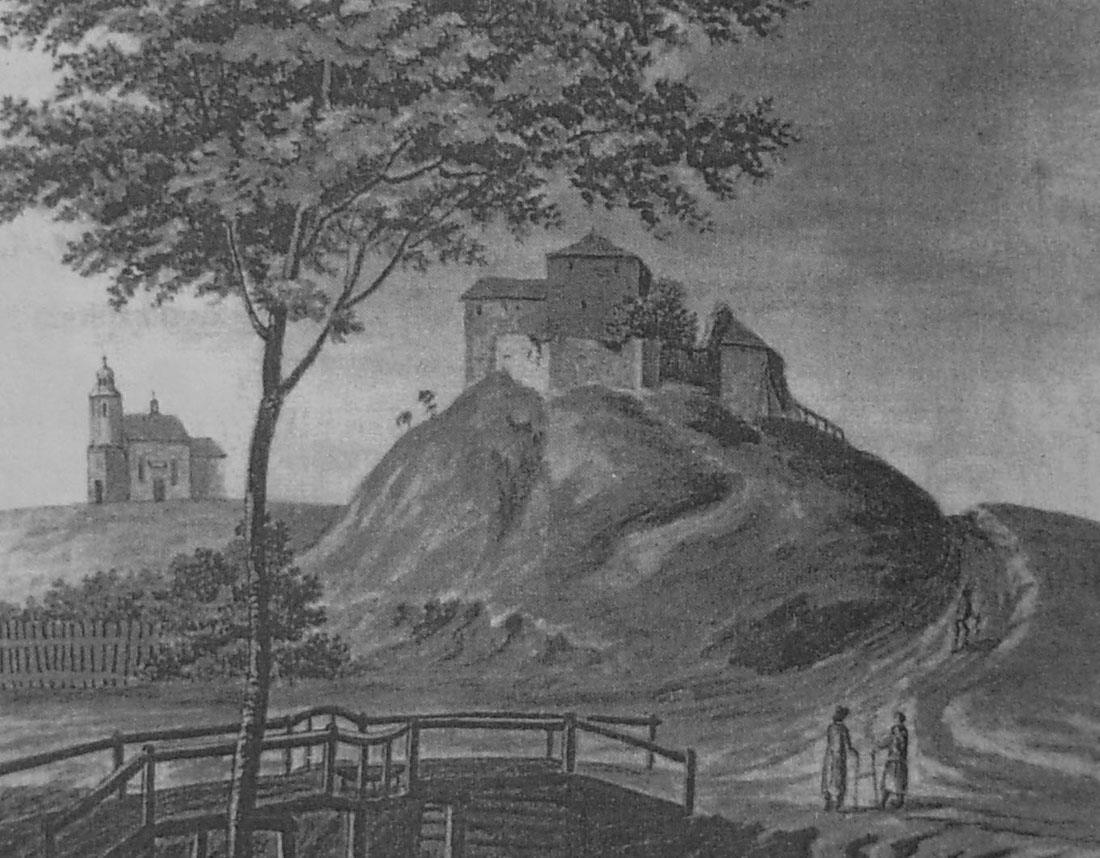
Further extensions and baroque splendour
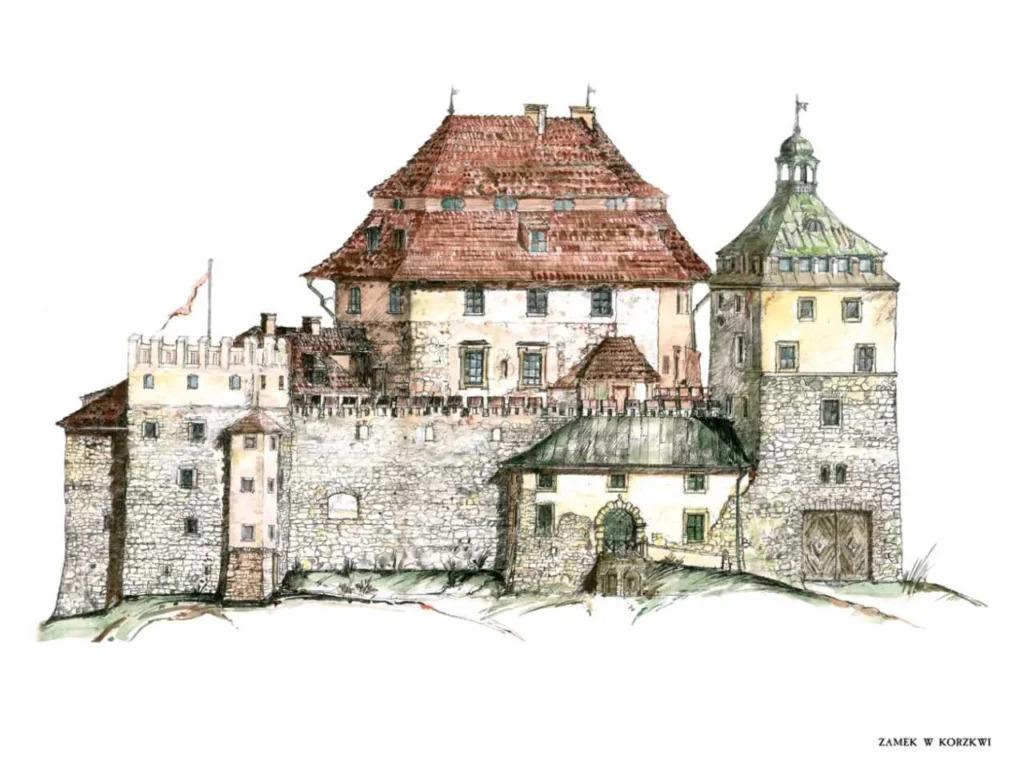
The process of expanding the castle grounds continued over the centuries. During the 15th and 16th centuries, the original Gothic tower was surrounded by massive peripheral walls whose shape closely matched the relief of the limestone buttress. Rectangular towers were also added to reinforce the defensive system of the gate and a two-storey gatehouse. However, it was the beginning of the 18th century that brought the most architectural splendour to the castle. In 1720, Senator Michał Stefan Jordan began a large-scale reconstruction, giving the building the look of a magnificent magnate's residence. It was on his initiative that an elegant loggia was built, serving as a glazed, representative veranda open onto the valley. The walls of the castle were decorated with elaborate sgraffito decorations in the form of friezes, bringing a breath of Western European Baroque to the Jura.
Fall of the fortress and times of oblivion
Unfortunately, like most Polish castles, Korzkiew did not resist the winds of history. As a result of the partitions at the end of the 18th century, the site found itself within the borders of the Russian Empire. Due to rising maintenance costs and the deteriorating condition of the medieval walls, the then owners - the Wodzicki family - decided to abandon the austere chambers and move to a newly built, much more comfortable wooden manor house at the foot of the hill. The abandoned castle began to perform economic functions, becoming, among other things, a granary. With each decade it fell into increasing disrepair. Although the main buildings still had roofs at the beginning of the 20th century, a lack of ongoing maintenance and military action meant that by mid-century the castle was just a picturesque, crumbling shell. Attempts at restoration by the tourist community in the 1960s and 1970s eventually backfired due to a lack of funding.
Spectacular reconstruction in modern times
A breakthrough in the history of Korzkiew came in 1997, when the badly ruined monument was purchased by a Krakow architect, Jerzy Donimirski, significantly a descendant of the former owners from the Wodzicki family. He initiated an unprecedented private project for the complete reconstruction of the building, based on detailed architectural and historical research. Thanks to titanic work, the ruins were first secured and then the dwelling house, tower and perimeter walls were painstakingly reconstructed. Care was taken to use historical technologies and materials - suffice it to say that the giant 18th-century timber beams used for the new ceilings were specially imported from Silesia. Today, the castle is the heart of the developing Korzkiew Cultural Park.
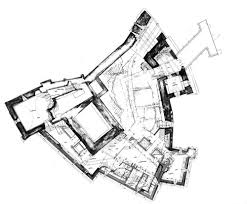
Castle architecture
The spatial layout of Korzkwo Castle is a classic example of the adaptation of a defensive structure to a difficult, rocky terrain. The oldest and most massive element of the complex is the former defence and residential tower from the second half of the 14th century. It is a massive stone-built block with a rectangular ground plan measuring 9.5 by 12 metres, with walls as thick as 2.5 metres. Initially it was separated from the rest of the hill by a dry moat. In the later phases of development, the tower was joined by a multi-cornered perimeter wall, closing off the space and creating a charming inner courtyard. A one-storey stone-built gateway building was built into the wall on the south side, which today serves as the reception area, with a tower above it housing the guest rooms. The deep basement residential house, built on the plan of two connected rectangles, is located deep in the courtyard. It conceals beautiful cellars with barrel vaults. The historic fortifications were supplemented during the most recent reconstruction with wooden defence porches, allowing visitors to walk along the crown of the walls and admire the impressive construction of the entire complex.
Castle Today
The castle in Korzkwi is a phenomenon on the tourist map of Malopolska. Its uniqueness lies in the fact that it is not a dead museum trapped behind display cases, but a living organism. The building is fully integrated into the landscape of the Korzkiewka Valley, offering visitors the unusual experience of communing with real history in an extremely intimate, almost homely environment. The castle courtyard repeatedly teems with life during knightly tournaments, court dances or feasts organised there. A visit to Korzków is not only a lesson in architecture, it is a journey in time which makes one realise how successfully ruined monuments can be saved today, giving them a new, useful form, appreciated by tourists from all over the world.


