







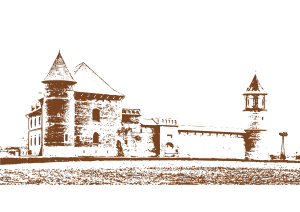
The history of Tykocin Castle is a story that spans more than six centuries and includes times of both splendour and dramatic decline. The most important stage of its history falls during the reign of Sigismund Augustus. It was this monarch who decided to transform the former partly wooden castle into one of the most modern Renaissance fortresses on Polish soil. According to available sources, the importance of Tykocin castle was even compared to the royal residences at Wawel or Vilnius, which testifies to its rank in the administrative and defence system of the Republic. The castle became the centre of the royal table goods, a place where weapons, archives, valuables and even part of the resources of the state treasury were stored, constituting a key pillar in the management of the north-eastern territories of the Crown. Meetings on policy towards Lithuania, Inflants and Prussia were held within the walls of the fortress, and the Tykocin starosty itself gained the rank of one of the most prestigious royal offices.
The following decades, i.e. the period of the turn of the 16th and 17th centuries, brought successful development of the castle, which was regularly modernised and extended under the care of the royal starosts. However, the real test for Tykocin came in the middle of the 17th century, in the era of the Swedish deluge. At that time, the castle played a strategic role, being a point of resistance against the offensive of Charles X Gustav's army. In 1656, the fortress was besieged, which led to significant damage both to the walls and to the equipment gathered inside. Despite this, Tykocin did not lose its political significance; on the contrary, it became the site of one of the most important propaganda events of the era. It was here, on 1 January 1661, that Hetman Stefan Czarniecki, one of the greatest commanders of the Republic, received from King Jan Kazimierz the title of Tykocin starost. This distinction was intended to emphasise his merits in the fight against the Swedes and, at the same time, to strengthen the authority of the state after the devastating conflict. The fortress itself continued to be a military point, but its infrastructure required increasing amounts of money, which were often in short supply in subsequent years.
After Czarniecki's death, the slow but inexorable process of degradation of the castle began. In the 18th century, despite sporadic attempts at renovation, the building ceased to play a significant military and political role. Changing military realities, the development of artillery and strategic shifts meant that the former Renaissance fortress began to be seen as obsolete. During the Saxon period, the Tykocin starosty continued to function, but the castle itself was already in need of extensive work, for which insufficient funds were allocated. The end of its splendour came after the partitions. The Prussians, who took over these lands at the end of the 18th century, found the building useless and started its systematic demolition. Bricks from the walls were used as cheap building material, which led to the almost complete disappearance of parts of the above-ground structures in just a dozen years. By the 19th century, all that remained of the impressive fortress were relics of foundations, barely visible in the landscape.
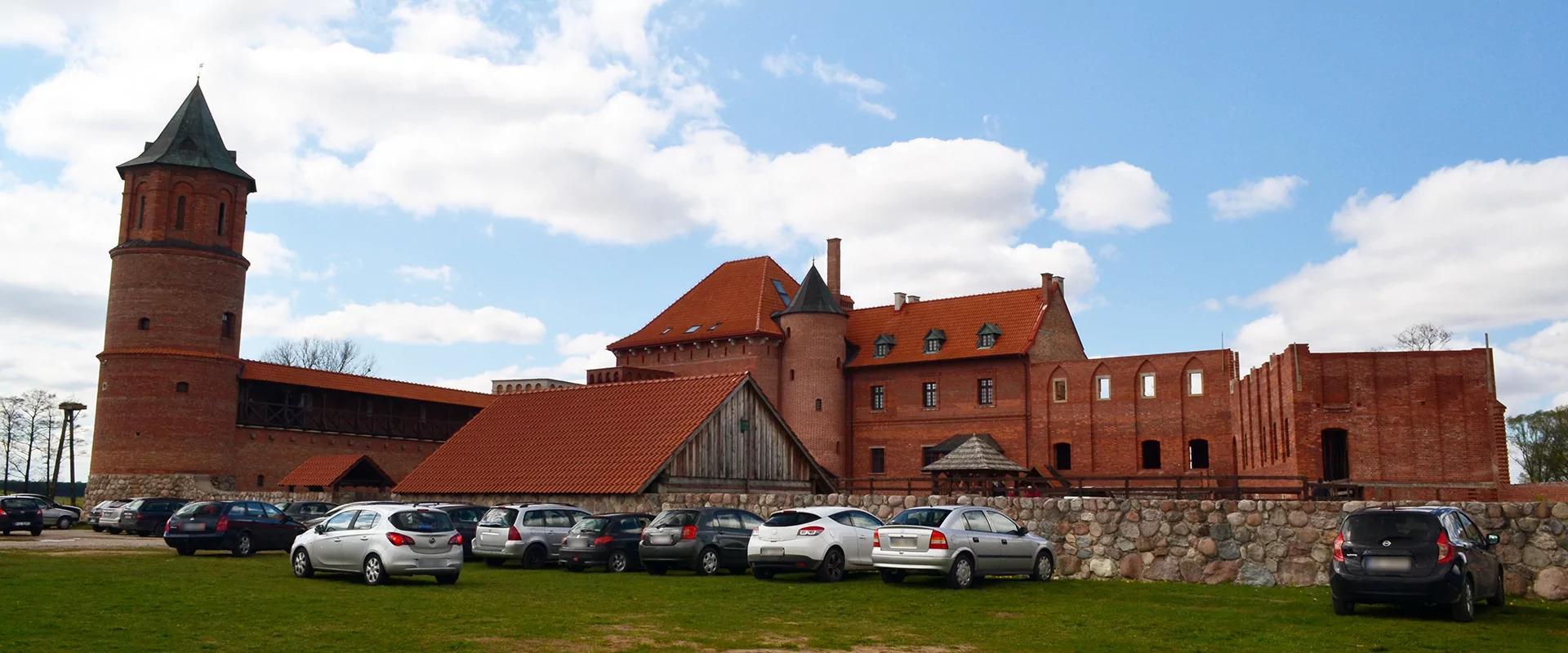
It was not until the turn of the 20th and 21st centuries that a new chapter in the castle's history began. Extensive archaeological research was launched, which made it possible to reconstruct the plan of the former fortress, the layout of the rooms and the construction of the walls. On this basis, a decision was made to partially reconstruct the castle with the aim of restoring its Renaissance character. The contemporary reconstruction, which began in the first decade of the 21st century, included the restoration of residential wings, parts of the fortifications and interiors inspired by 16th-century descriptions. Thanks to these efforts, today we can see a castle which, although not fully original, allows us to understand its former function, scale and importance for the history of the region and the entire Republic. The reconstructed fortress has become one of the most important tourist sites in Podlasie and an exceptional example of how modern archaeology and conservation can bring back to life places considered lost for centuries.
Castle architecture
- Defence system and foundation plan
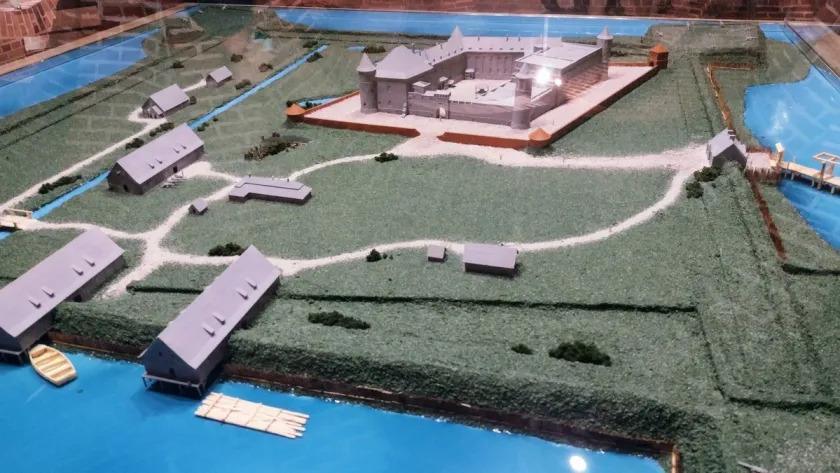
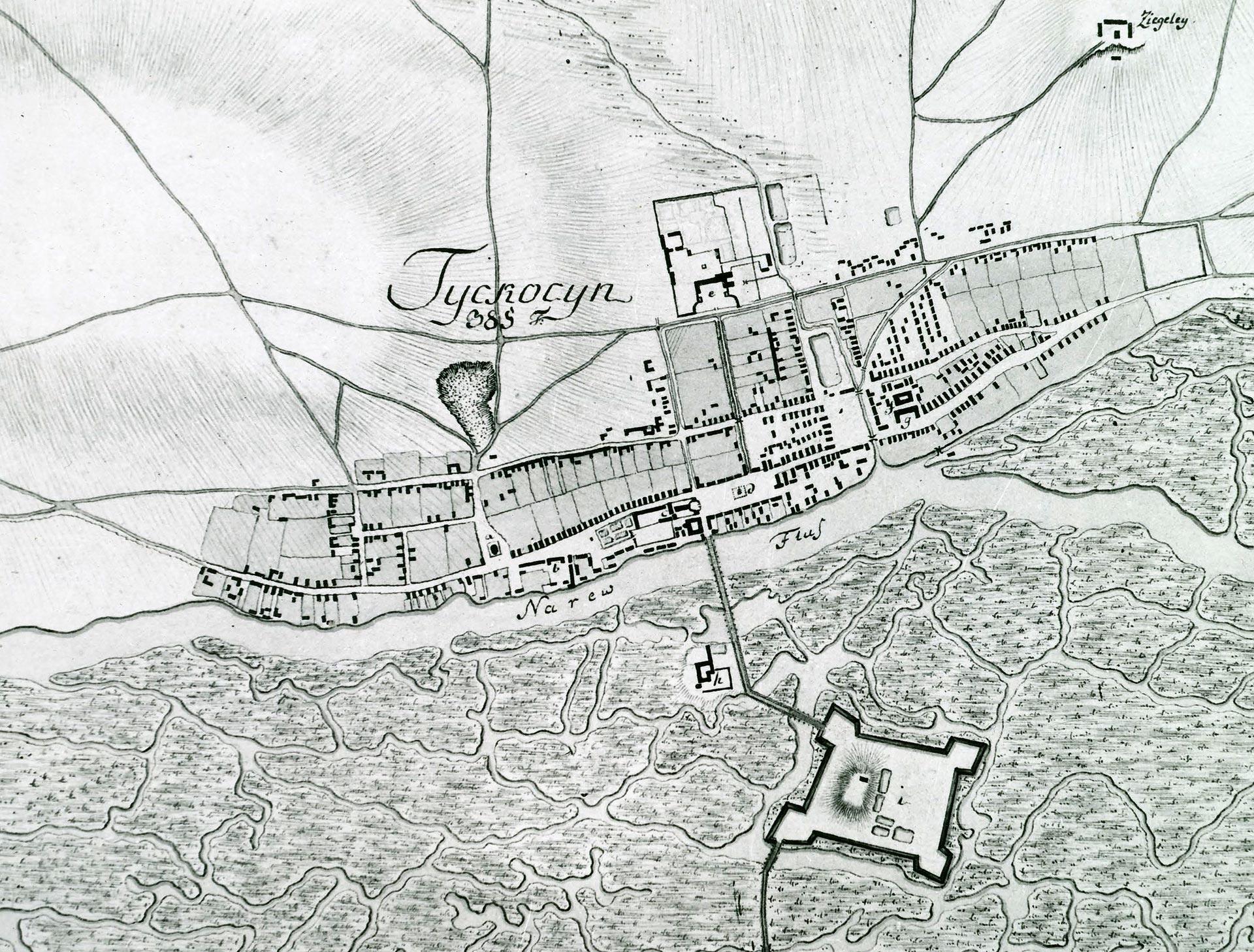
The castle in Tykocin was designed as a regular Renaissance foundation with a geometric, well-thought-out defensive layout. The fortress formed an almost ideal quadrangle surrounded by a moat, whose waters came from the nearby Narew River, making the whole establishment extremely difficult to conquer. The central element of the composition was the inner courtyard, around which the residential, administrative and utility wings were arranged. The layout brought Tykocin close to the best European standards of 16th century fortifications, putting it in line with the key royal Renaissance investments.
- Building materials and construction technology
The building was constructed using a combination of brick and stone, which gave the structure both elegance and durability. The stone foundations and lower parts of the walls were resistant to moisture and structural pressure, while the brick facades allowed for more precise detailing. The reconstruction used bricks fired in colours consistent with the original, which restored the castle to its former character. Numerous decorative elements were also reconstructed, such as window frames, portals, vault arches and beams, alluding to the aesthetics of the era of Sigismund Augustus.
- Corner towers and defence system
Each corner of the foundation was reinforced with a multi-storey tower of massive construction, serving both a watchtower and artillery function. Their positioning allowed for complete control of the foreground and to conduct „flanking fire” along the walls. The cylindrical or polygonal forms of the towers were more resistant to firing, and their solid walls ensured the safety of the gun crews. A contemporary reconstruction recreates one such tower, providing an understanding of the scale of the former defence system.
- Living wings and staterooms
The main wing housed the royal chambers, the great reception hall, the archive and the armoury. These were rooms with high vaulted ceilings, large windows and clear Renaissance architectural divisions. The other wings were organised according to functions - domestic, administrative and residential. The modern reconstruction has recreated the most important of these spaces, giving them the character of historical interiors while adapting them to museum and educational needs.
- Entrance gate, bridge and moat
The former entrance led through a massive, strongly fortified gate flanked by two towers. Behind the gate there was a wooden bridge thrown over the moat, probably drawbridge or partially liftable, which significantly impeded the intrusion of enemies. This element testified to the high level of thought put into the defensive system - in Tykocin natural terrain obstacles were combined with advanced engineering solutions.
- Inner courtyard and traffic system
The courtyard had a representative and utilitarian function. All the wings were concentrated around it, and communication was provided by arcaded passageways and staircases enabling rapid movement during ceremonies, daily functioning and defence. The contemporary courtyard reproduces part of this foundation, emphasising the symmetry and Renaissance simplicity of the composition.
- Stylised interiors and museum display
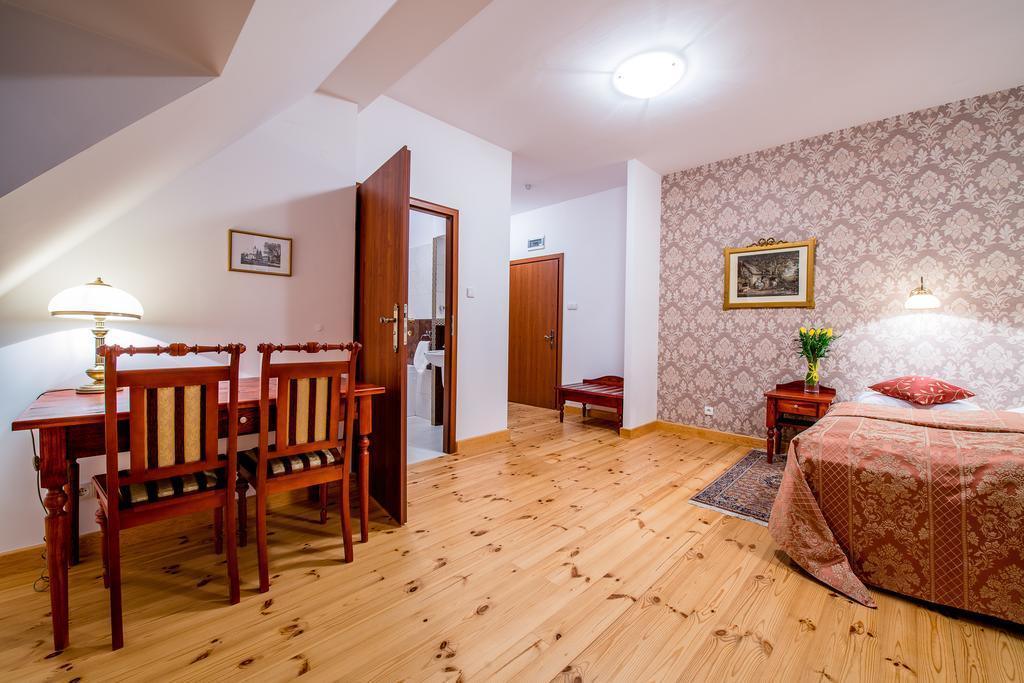
The interiors of the castle - although a reconstruction - present the character of the rooms of the 16th century with great attention to detail. The Renaissance halls, the armoury, the residential chambers and the stateroom have been arranged here using historical patterns, colours and spatial arrangements. In this way, the castle not only has an educational function, but also an immersive one, allowing visitors to „enter” the reality of the epoch of Sigismund Augustus.
Curiosities and legends
-
The castle was reputed to be one of the most secure treasuries in the Commonwealth - royal documents and valuables, including some of the crown's assets, were kept here.
- According to local legends, the castle is haunted by the ghost of a guard who died during the siege and still „guards” the door to one of the chambers today.
- There was a legend about a secret tunnel connecting the castle to the Holy Trinity Church - to this day, no confirmed remains of it have been found.
- Stefan Czarniecki was to regard Tykocin as his favourite seat in Podlasie, and the castle became a symbol of his victories over the Swedes.
- During the 19th century demolition, bricks from the castle found their way into many buildings in the area - some local houses are said to „have a piece of the former royal residence in them”.


