Facilities
 Tickets and guided tours
Tickets for the tour can be purchased at the castle museum. Tours can be taken individually or with a guide. The tour takes about 1.5 hours.
Tickets and guided tours
Tickets for the tour can be purchased at the castle museum. Tours can be taken individually or with a guide. The tour takes about 1.5 hours.
 Parking
Free parking for cars is right next to the castle.
Parking
Free parking for cars is right next to the castle.
 Restaurant
The „Hotel Zamek” restaurant is located on the castle grounds.
Restaurant
The „Hotel Zamek” restaurant is located on the castle grounds.
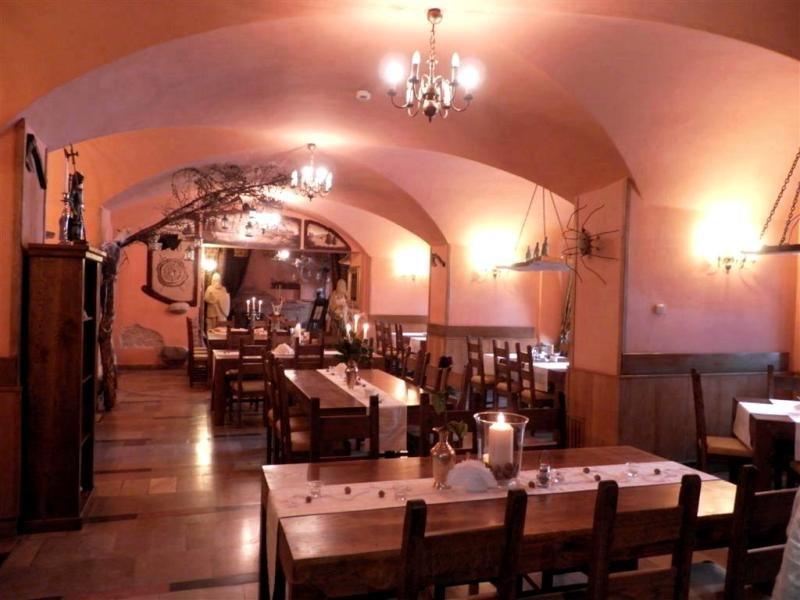
 Hotel
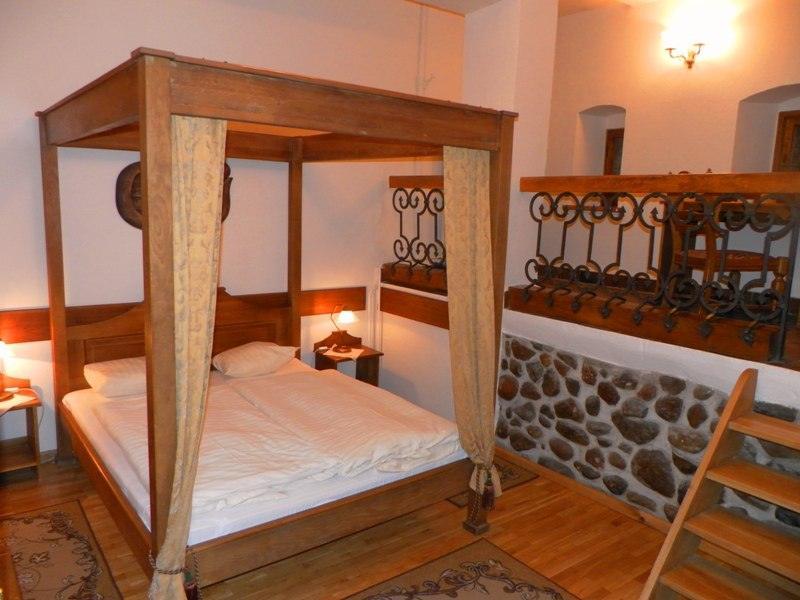
Located on the castle grounds, the „Hotel Zamek” also offers accommodation for visiting tourists.
Hotel
Located on the castle grounds, the „Hotel Zamek” also offers accommodation for visiting tourists.
 Souvenirs
A gift shop for tourists is also located in the castle museum.
Souvenirs
A gift shop for tourists is also located in the castle museum.
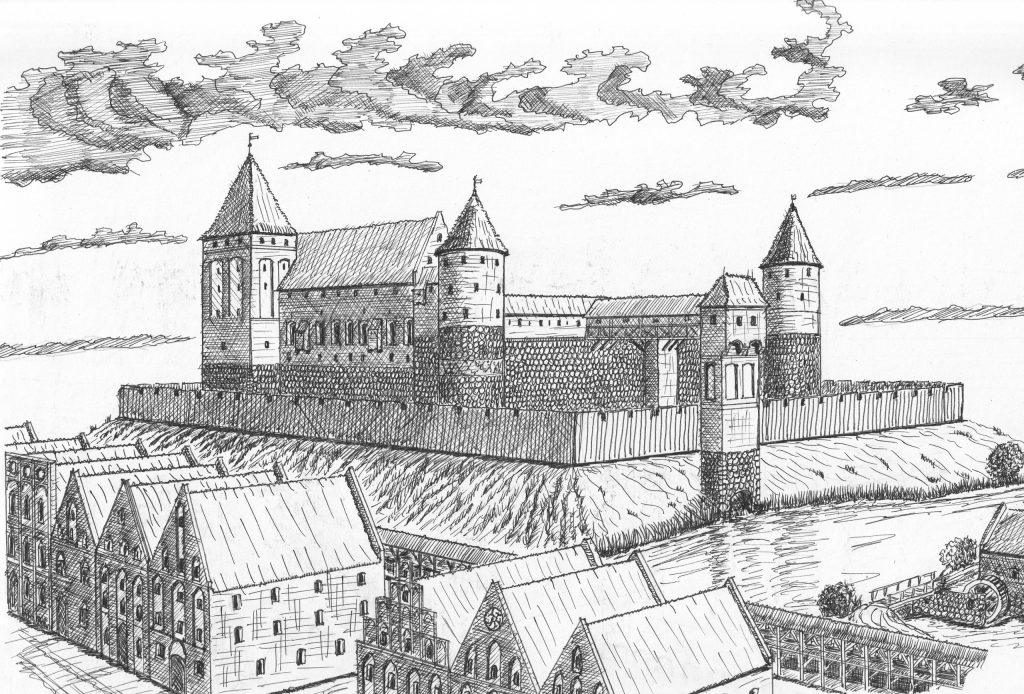
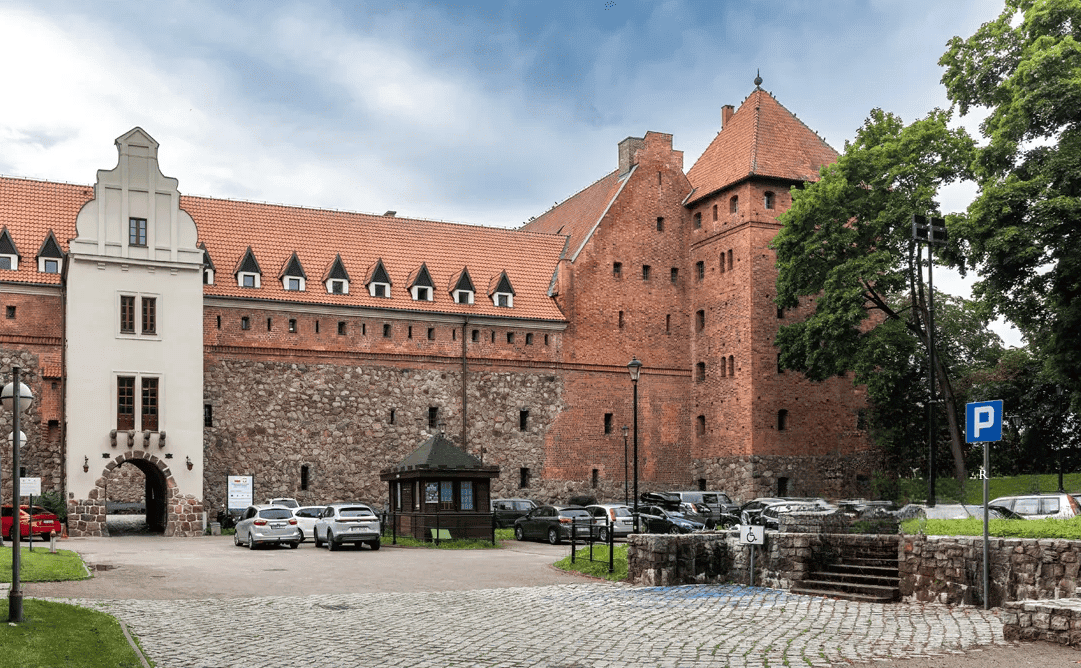
Bytow Castle - a Gothic Teutonic castle from the 14th and 15th centuries that was initially the seat of the Teutonic procurator and later the property of the Pomeranian dukes. In the first half of the 14th century the Teutonic Order acquired the land of Bytów. In 1390 the Teutonic Knights began to build a brick castle in Bytów, on a hill in the south-eastern part of the town. It was located on the western edge of the Teutonic Order's state. Earthworks were carried out and building materials were collected until 1396. The actual construction work was carried out between 1398 and 1406 under the direction of Nikolai Fellenstein. Finishing work continued for several more years. The castle was one of the latest Teutonic castles built and the development of firearms was taken into account in its design.
The castle was built on a rectangular plan measuring 49×70 metres from erratic stones and bricks. Three round towers were built in the corners (Mill, Rose and Field) and one square tower (Powder Tower) in the north. A three-storey basement dwelling house ("Religious House") measuring 13 x 39 metres was erected at the north-west wing. This building housed the most important rooms, such as the refectory, the chapel and the prosecutor's flat. The top floor housed the storerooms. A one-storey kitchen with food storage was built at the south-west wing. A well was located adjacent to it. The entrance gate was erected on the north-east side. A moat was dug in front of the entrance gate, over which a drawbridge was thrown. In the corners of the wings were powerful towers and a tower. The fortress allowed the use of firearms for defence, which was a novelty at the time. The castle was permanently inhabited by several to a dozen monastic knights, together with squires and knaves. The full castle staff consisted of several dozen people.
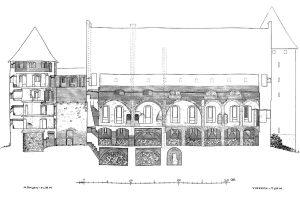
In 1410, the castle was captured by the armies of Władysław Jagiełło, but was returned to the Teutonic Knights after the First Peace of Toruń (1411). During the Thirteen Years' War (1454-1466), the castle was again captured by the Polish army, after which King Casimir Jagiellon gave it as a fief to the Pomeranian Duke Erik II in 1466. In 1500, the fortress was surrounded by earth fortifications and bastions capable of artillery fire. In the second half of the 16th century, the castle came into the possession of the Pomeranian dukes from the Gryfit dynasty, who built a Renaissance "Prince's House" next to the south-east wing between 1560 and 1570. In the 17th century, a bakery and a brewery were placed in the medieval house. A new building called the "Widows' House" was built at the north-eastern curtilage in 1623. The new houses, like the "Religious House", used the castle's perimeter walls. There was little damage to the fortress during the Thirty Years' War (1618-1648). In 1637, after the heirless death of Boguslaw XIV, the last West Pomeranian duke, the castle, along with the rest of the Bytow-Lębork land, was incorporated into the Kingdom of Poland. From then on, it served as the seat of the royal starost.
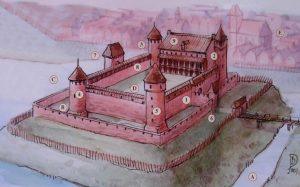
During the Polish-Swedish War (1655-1660), the Powder Tower was demolished and the castle burnt down, with only the outer walls remaining. In 1657, under the Treaties of Welawsko-Bydgos, the castle was taken over by Brandenburg (since 1701 the Kingdom of Prussia), although it was formally a fief of Poland. After being destroyed, it was partly rebuilt by the Brandenburg Elector Frederick William I (first half of the 18th century). In 1681, a building was added to the north-eastern wall (between the entrance gate and the "Prince's House") to house the tax office and court. In the 18th century the Ducal Office and the Gate Tower were demolished and the bridge over the moat was replaced by a causeway. The earthen ramparts and bastions were levelled. In the 19th century, a court and a Prussian prison were placed in the castle. The first restoration work was carried out between 1930 and 1939, when the Powder Tower was rebuilt from scratch, the Gate Tower rebuilt, the vaults in the "Priory House" reconstructed and the "Ducal House" and "Widows' House" repaired. After the end of the Second World War in 1945, it housed a prison (transit camp) of the NKVD, where local residents were detained. The castle was finally rebuilt intermittently between 1957-1962 and 1969-1990, housing the West Kashubian Museum (in the "Religious House") and a hotel with a restaurant (in the "Prince's House") and a library (in the "Widows' House").


