
Facilities
 Tickets and guided tours
Tickets for the tour can be purchased at the ticket desk in reception. The average duration of the tour is 90 minutes. Tours are available with or without a guide.
Tickets and guided tours
Tickets for the tour can be purchased at the ticket desk in reception. The average duration of the tour is 90 minutes. Tours are available with or without a guide.
 Parking
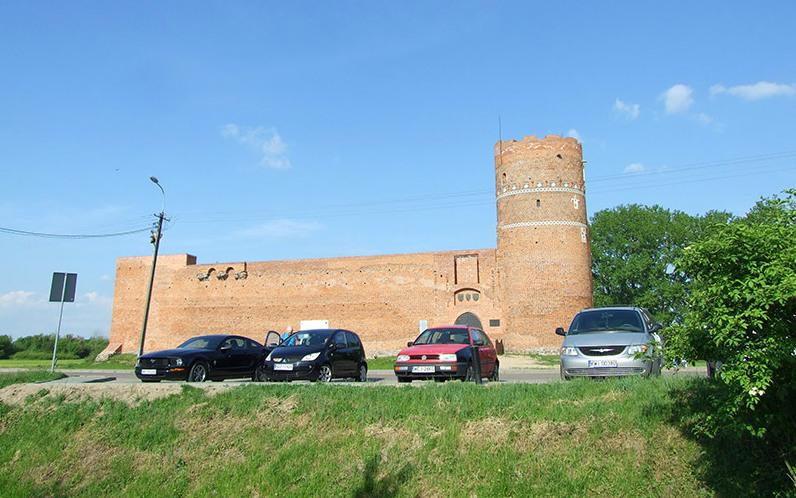
There is free parking under the castle.
Parking
There is free parking under the castle.
 Restaurant
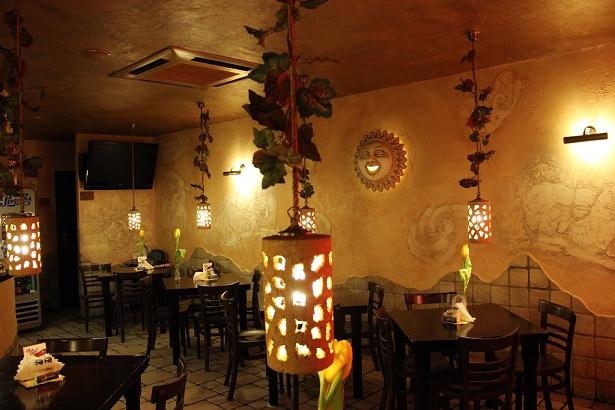
The highly recommended Tesali Restaurant is a 3-minute drive from the castle.
Restaurant
The highly recommended Tesali Restaurant is a 3-minute drive from the castle.
 Hotel
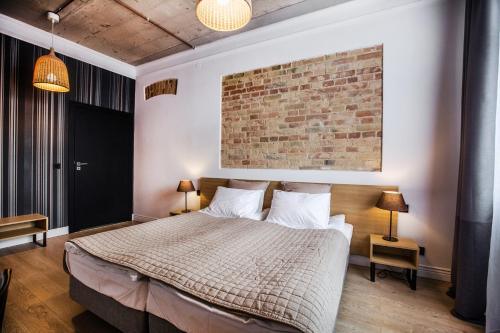
We recommend the nearest QBATURA CAFE&HOTEL to visitors.
Hotel
We recommend the nearest QBATURA CAFE&HOTEL to visitors.
 Souvenirs
A gift shop for tourists is also located in the castle museum.
Souvenirs
A gift shop for tourists is also located in the castle museum.

The Castle of the Dukes of Mazovia in Ciechanów is one of the finest examples of medieval defensive architecture in Poland and one of the most recognisable landmarks of historic Mazovia. This monumental structure, built of its characteristic red brick, has towered over the valley of the River Łydynia for over six centuries, serving as a reminder of the times when Mazovia was a separate duchy ruled by its own rulers from the Piast dynasty. Two imposing cylindrical towers, massive defensive walls and a vast courtyard form a unique defensive complex which, to this day, continues to impress with its grandeur and authentic medieval character.
The building not only served a military purpose, but was also one of the most important residences of the Dukes of Mazovia and a key administrative centre for the region. It was here that decisions concerning the running of the duchy were made, distinguished guests were received, councils were held and defences were prepared against threats from the north and east. Over the following centuries, the castle witnessed numerous armed conflicts, political changes and shifts in the political system, all of which left their mark on its walls.
Despite extensive damage, alterations and periods of neglect, the Castle of the Dukes of Mazovia in Ciechanów has retained its unique character. Today, it is one of the most important historical monuments in Mazovia, attracting history and architecture enthusiasts, as well as tourists keen to learn about the region’s history and see one of the best-preserved Gothic ducal fortresses in Poland.
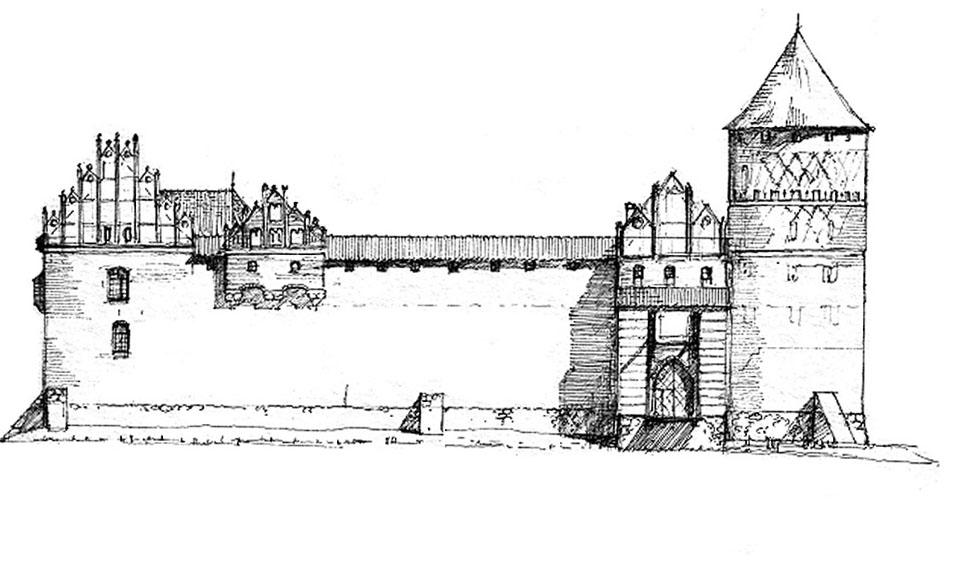
The origins of the castle
The history of the castle dates back to the second half of the 14th century, when Mazovia was an independent duchy ruled by the Mazovian Piasts. During this period, the region was situated between powerful neighbours – the Kingdom of Poland, the State of the Teutonic Order and Lithuania. This necessitated the creation of a modern defence system to protect the most important towns and trade routes.
The decision to build a brick fortress in Ciechanów was taken by Siemowit III, Duke of Mazovia, around the 1370s. On the site of an earlier wooden and earthen stronghold, work began on erecting a modern, brick fortress in keeping with the latest architectural trends of the era. The location was not chosen at random – the castle was built on marshy ground in a bend of the River Łydynia, whose floodplains provided natural protection against potential attackers.
The construction was continued by the successors of Siemowit III, most notably Prince Janusz I the Elder, one of the most distinguished rulers of Mazovia. During his reign, the fortress was expanded and became one of the principal princely residences. Ciechanów quickly gained prominence as a major administrative, economic and military centre of northern Mazovia.
From the very beginning, the castle was designed to serve both as a stately residence and a defensive structure. It was intended to protect the region’s inhabitants, serve as the seat of the ducal administration, and emphasise the prestige and independence of the Mazovian Piast dynasty.
History
Throughout the 15th century, the Castle of the Dukes of Mazovia remained one of the most important centres of power in Mazovia. The Dukes of Mazovia resided here; meetings of the nobility were held; documents were issued; and decisions concerning the running of the duchy were taken. Representatives of the Crown of the Kingdom of Poland and foreign envoys were also hosted within the castle walls.
Following the deaths of the last Piast princes of Mazovia – Stanisław and Janusz III – in 1526, Mazovia was incorporated into the Kingdom of Poland. The castle ceased to serve as an independent ducal residence, becoming the seat of the royal starosts. It nevertheless continued to play an important administrative and economic role.
In the 16th century, a series of modernisation works were carried out to adapt the castle to new requirements. New residential buildings and state rooms were constructed. At the same time, advances in artillery meant that the medieval fortifications were gradually losing their military significance.
The 17th century brought the greatest destruction. During the Swedish Deluge, the castle was captured and plundered by Swedish troops. The residential buildings, furnishings and part of the fortifications were destroyed. Subsequent wars and conflicts led to the further deterioration of the site.
In the 18th century, the castle gradually fell into ruin. The abandoned buildings were not repaired, and some of the building materials were used in the construction of other buildings in the town. The former princely residence was turning into a picturesque ruin, which, over the years, became increasingly overgrown with vegetation.
In the 19th century, interest in the preservation of historic monuments began to emerge. The first conservation works succeeded in halting the deterioration of the walls. Following Poland’s regaining of independence, more systematic conservation efforts were launched; however, the outbreak of the Second World War brought many of these plans to a halt.
After the war ended, extensive archaeological research and conservation work were carried out. The castle grounds were cleared, the surviving walls were stabilised, and the site was prepared for visitors. In the 21st century, further phases of restoration were carried out, thanks to which the castle has regained its former splendour and has become one of the most important tourist attractions in northern Mazovia.
Architecture
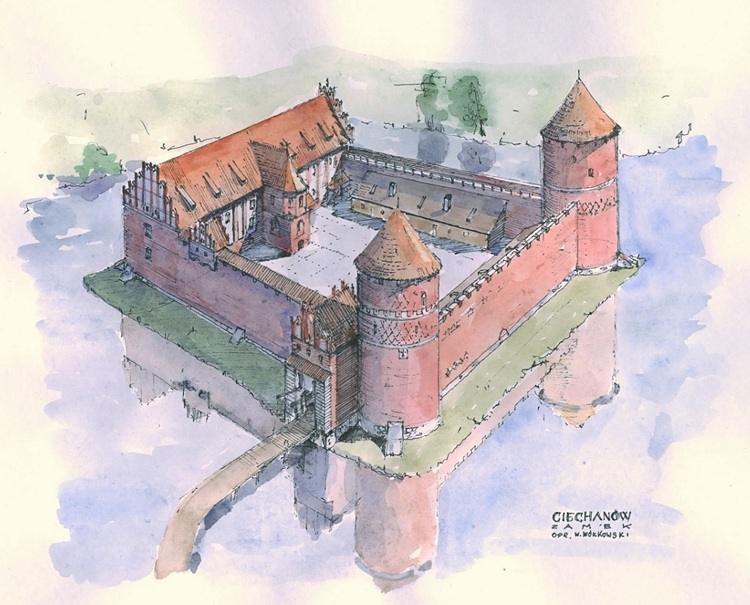
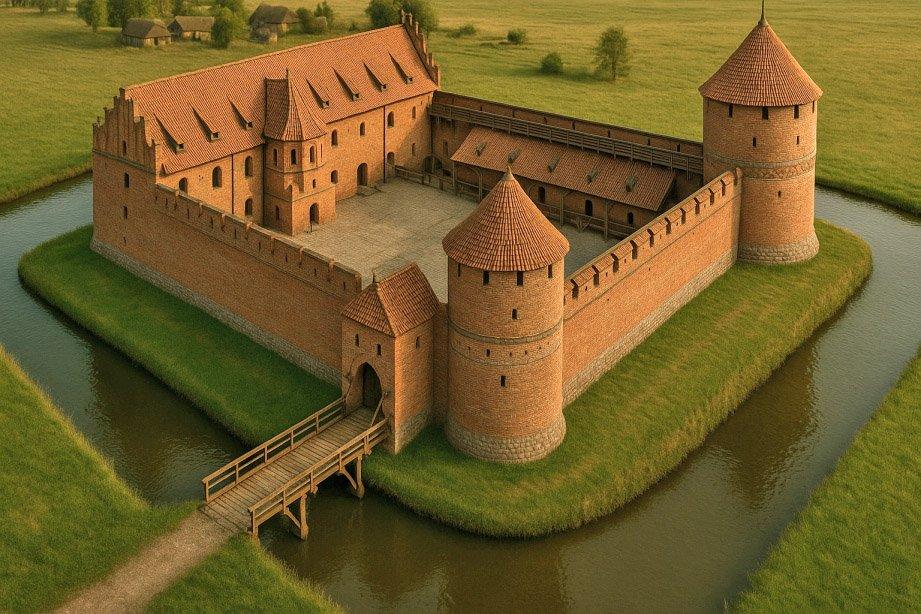
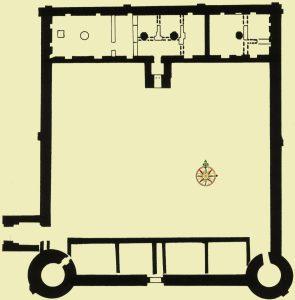
The Castle of the Dukes of Mazovia in Ciechanów is one of the best-preserved examples of Gothic defensive architecture in Mazovia. It was built of red brick on a roughly rectangular plan measuring approximately 48 × 57 metres. A distinctive feature of the complex are the two massive cylindrical towers positioned diagonally – one in the south-west corner and the other in the north-east.
The defensive walls were around ten metres high and over two metres thick. They were surrounded by a moat fed by the waters of the Łydynia River, which made it very difficult to capture the fortress. A drawbridge and a single main gate led into the fortress.
The central part of the complex was a vast courtyard surrounded by residential and service buildings. It housed the prince’s residence, administrative offices, storerooms, kitchens and buildings for the staff. Although most of these buildings have not survived to the present day, archaeological research has made it possible to reconstruct their original layout.
The most impressive features of the castle are its two towers. Their thick walls, small arrowslits and high-set entrances are evidence of their distinctly defensive nature. From their summits, it was possible to survey the surrounding area and keep watch over the roads leading to the town.
The castle’s architecture combines the simplicity of a medieval fortress with a high level of craftsmanship on the part of the builders. The distinctive brickwork pattern, Gothic details and the proportions of the walls make the building one of the finest examples of late medieval military architecture in Poland.
Interesting facts
One of the most interesting facts is that the castle was built on marshland. The medieval builders made use of the natural floodplains of the Łydynia River as an additional element of the defensive system, which made it much more difficult to capture the fortress.
The stronghold is one of the few castles of the Dukes of Mazovia to have retained its medieval layout. Despite extensive damage, it is still possible to clearly make out the original layout of the complex and the course of the defensive walls.
During the archaeological excavations, numerous everyday objects, pottery shards, pieces of armour, coins and jewellery dating from the period when the castle was in use were discovered. These finds have provided a better insight into the lives of the inhabitants of the medieval stronghold.
According to local legends, there were said to be secret passages in the castle’s underground leading outside the walls. Although archaeologists have not been able to confirm the existence of an extensive network of tunnels, these tales have captured the imagination of locals and tourists alike for centuries.
The castle’s distinctive red walls are one of the most recognisable symbols of Ciechanów and frequently feature in promotional material for the town and the whole of northern Mazovia.
The castle today
Today, the Castle of the Dukes of Mazovia in Ciechanów is one of the most important tourist attractions in the Mazovia Voivodeship and a branch of the Museum of the Mazovian Nobility. Thanks to the conservation and restoration work carried out, the building has been properly protected and made accessible to visitors.
The castle grounds host historical exhibitions, concerts, battle re-enactments, jousting tournaments, educational workshops and cultural events designed to promote the history of Mazovia. Events relating to medieval traditions and life at the ducal court are particularly popular.
Visitors can stroll around the courtyard, climb the observation towers, learn about the history of the Mazovian Piasts and view exhibitions showcasing the findings of archaeological research. From the castle walls, there is a picturesque view of Ciechanów and the Łydynia Valley.
Today, the Castle of the Dukes of Mazovia is not only a valuable monument of Gothic architecture, but also an important centre for historical education and cultural life in the region. It bears witness to the power of the former Dukes of Mazovia and serves as a reminder of Mazovia’s centuries-old history, remaining one of the most valuable monuments to Poland’s medieval heritage.


