
Facilities
 Tickets and guided tours
Tickets for the guided tour can only be purchased at the castle reception. The tour lasts approximately 60 minutes.
Tickets and guided tours
Tickets for the guided tour can only be purchased at the castle reception. The tour lasts approximately 60 minutes.
 Parking
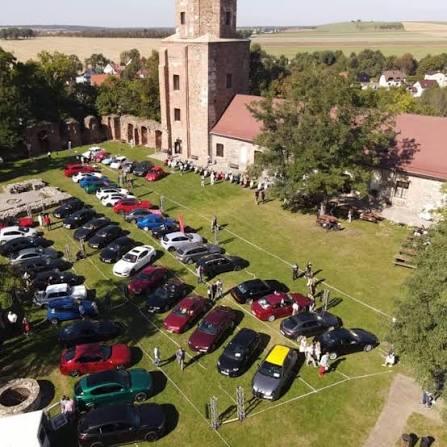
There is a free car park for tourists next to the castle, on the side facing the church.
Parking
There is a free car park for tourists next to the castle, on the side facing the church.
 Restaurant
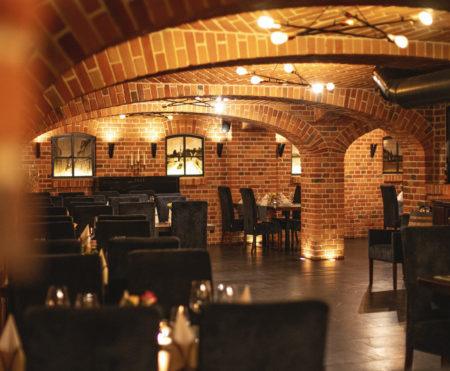
The nearest restaurant is in the hotel below the castle.
Restaurant
The nearest restaurant is in the hotel below the castle.
 Hotel
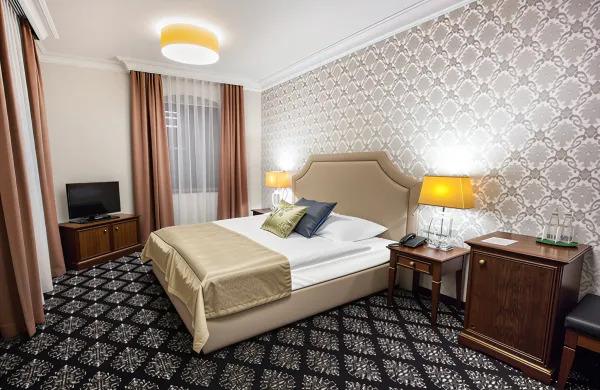
The highly recommended 'HG Hotel' is situated 250 metres from the castle.
Hotel
The highly recommended 'HG Hotel' is situated 250 metres from the castle.
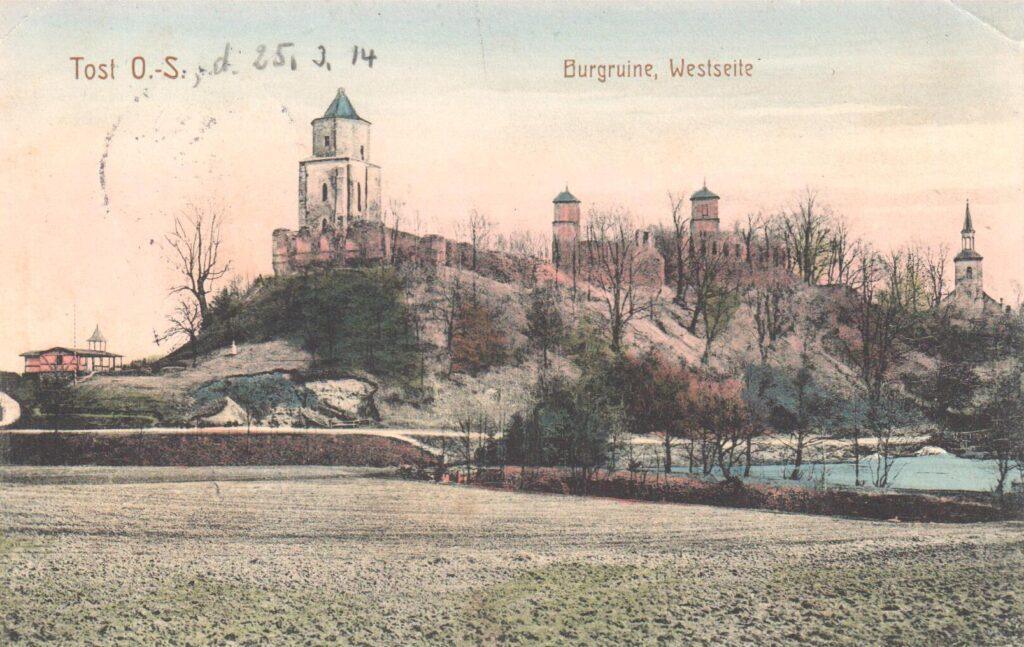
Toszko Castle is one of the most valuable historical monuments in Upper Silesia and one of the oldest fortifications within the current Silesian Voivodeship. Rising on a small hill in the centre of the historic town, it has remained a symbol of Toszek and a witness to the region’s turbulent history for over eight hundred years. Over the centuries, it served defensive, administrative and residential functions, acting as a crossroads of Polish, Czech, Austrian and Prussian influences. Its history perfectly reflects the complex fate of Silesia – a region that has changed national affiliation many times, remaining under the influence of various cultures and dynasties.
Although today mainly fragments of the old walls and partially reconstructed wings of the castle remain, the building still captivates visitors with its monumental character and unique atmosphere. Walking through the courtyard and amongst the remains of the medieval fortifications, one can easily imagine the times of knights, Piast princes and the powerful Silesian families who ruled over these lands for centuries.
The castle’s location was of immense strategic importance. Toszek stood at the junction of major trade routes leading from Lesser Poland to Silesia and on towards Bohemia and Moravia. Control over these routes not only enabled the effective defence of the region, but also allowed for the collection of trade duties and the administration of the surrounding lands.
Today, Toszek Castle serves a completely different purpose than it did centuries ago. It is one of the region’s most important cultural centres, hosting concerts, historical events, exhibitions and numerous open-air events. The preserved walls serve as a reminder of the former splendour of the ducal residence, whilst the modern infrastructure allows visitors to discover the history of the site in an engaging and accessible way. It is a place where the medieval past meets the present, creating a unique space for lovers of history, architecture and Silesian heritage.
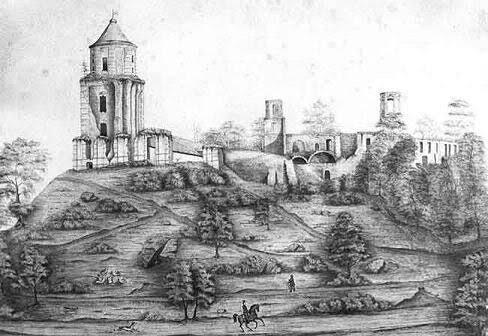
The origins of the castle
The origins of Toszek Castle date back to the 12th century, when a wooden and earthen fortified stronghold belonging to the Piast dukes stood on the hill overlooking the settlement. The stronghold served as a watchtower controlling the route of important trade routes and securing the north-western borders of the lands belonging to the Silesian Piasts.
The settlement’s growth and the region’s increasing importance led to the start of construction of a much more modern, stone fortress in the 13th century. The project was probably initiated by Kazimierz I, Duke of Opole and Racibórz, or his successors, who sought to strengthen their political position and create a prestigious ducal residence.
Construction took place in stages over many decades. Initially, the most important defensive elements were built – the stone perimeter wall and the main tower, which served as a lookout point and the last line of defence. In the years that followed, the residential section was extended, and outbuildings, a chapel and state rooms intended for the princely court were added.
The castle’s location was no accident. The hill provided an excellent view of the surrounding area, whilst at the same time making it naturally difficult to capture the fortress. The only convenient access road led from the town, and this could easily be controlled in the event of a threat. Thanks to this, Toszek remained one of the most important defensive strongholds in north-western Upper Silesia for many centuries.
From the very beginning, the castle served several purposes at once. It was the seat of the dukes and their officials, the administrative centre of the surrounding lands, a place for storing documents, and a safe haven for the local population during raids. It also served as a symbol of ducal power and prestige, emphasising the importance of the Piast dynasty in Silesia.
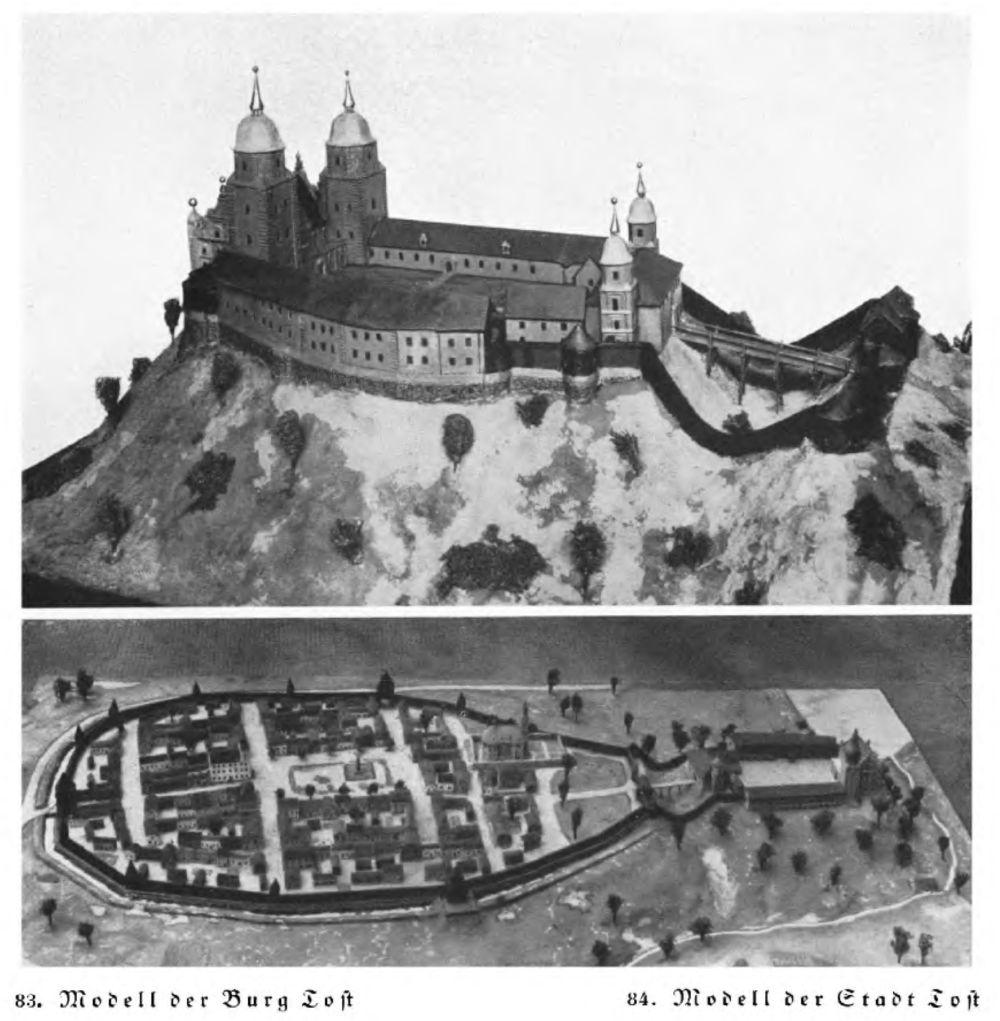
The history of the castle
The Piast period – 12th–13th centuries
The castle’s earliest history is linked to the Silesian Piast dynasty. The wooden stronghold was gradually replaced by a stone fortress, which, as the town grew, became an increasingly important administrative centre for the region.
Following the founding of the town of Toszek in the 13th century, the castle’s importance grew even further. Within its walls resided the prince’s officials responsible for managing the surrounding estates, collecting taxes and organising the defence.
The Golden Age in the 14th and 15th centuries
The castle underwent its greatest expansion during the 14th and 15th centuries. During this period, the stronghold was extended on numerous occasions, and its owners invested in new defensive and ceremonial features.
Further residential wings were built, the defensive walls were extended, and the castle was adapted to meet growing military requirements. At that time, Toszek was one of the most important administrative centres in northern Upper Silesia.
The stronghold hosted representatives of the Silesian dukes, magnates and the clergy. Political deliberations, court proceedings and meetings concerning the administration of the region took place within its walls.
Renaissance reconstruction – 16th century
In the 16th century, the changing needs of the owners led to a thorough reconstruction of the medieval fortress. The austere defensive castle began to be transformed into a more comfortable magnate’s residence.
The living quarters were enlarged, the interiors were remodelled, and features characteristic of Renaissance architecture were introduced. The building retained its defensive functions, but increasing emphasis was placed on the residents’ comfort.
The Thirty Years’ War and the 17th century
During the Thirty Years’ War, the castle changed hands many times. Silesia became a theatre of war, and Toszek did not escape destruction.
Once the conflicts had ended, repair work was carried out, but the stronghold’s former glory gradually faded. The development of modern artillery meant that medieval fortifications were no longer able to fulfil their original functions.
The Great Fire – 1811
The most tragic event in the castle’s history was the massive fire that broke out in 1811. The fire almost completely destroyed the residential buildings, the roofs and a large part of the interiors.
The extent of the damage was so great that the owners decided against rebuilding the mansion. The castle gradually fell into ruin, and some of the building materials were used in the construction of other buildings in the town.
Over the following decades, the former princely stronghold remained abandoned and fell into an ever-greater state of disrepair as a result of the passage of time and the elements.
The 19th and 20th centuries
Despite its progressive deterioration, the castle has not been completely forgotten. As early as the late 19th century, historians and heritage enthusiasts began to recognise its value as one of the oldest castles in Upper Silesia.
After the Second World War, the first work to protect the surviving walls began. In the decades that followed, archaeological and conservation surveys were carried out with the aim of halting the deterioration of the ruins.
Thanks to systematic work, it has been possible to preserve the most important parts of the medieval stronghold and to adapt the site for cultural and tourist purposes.
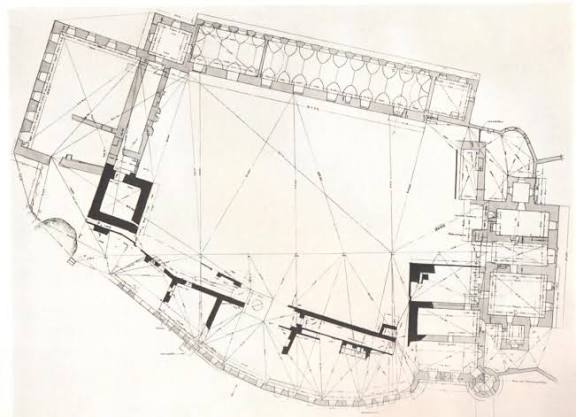
Architecture
Toszko Castle is an excellent example of the evolution of medieval defensive architecture in Upper Silesia. It was built in stages over several centuries, which is why its layout reflects influences from Romanesque, Gothic and Renaissance architecture. Although it has not survived in its entirety to the present day, the remains of the walls and the reconstructed sections allow us to reconstruct the former appearance of one of Silesia’s most important ducal residences.
The oldest part of the castle was the stone keep – the main defensive tower, which also served as the last line of defence during a siege. Built of stone and brick, it offered an excellent view of the surrounding area and allowed control over all the roads leading to the town. Thick walls, small window openings and a high entrance were typical features of medieval strongholds.
During subsequent phases of expansion, a perimeter wall was built around the irregularly shaped castle courtyard. The walls were fitted with a system of towers and embrasures, which enabled effective defence against attackers. The whole complex was adapted to the natural contours of the hill, making the castle extremely difficult to capture.
The central part of the complex consisted of residential buildings intended for the castle’s owners and their household. These housed state rooms, a knights’ hall, the castle chapel, kitchens and utility rooms. The cellars were used to store food, weapons and supplies necessary in the event of a siege.
In the 16th century, the castle underwent a thorough renovation in the Renaissance style. The windows were enlarged, the interiors were remodelled, and decorative architectural features characteristic of the period were added. As a result, the medieval fortress began to resemble a comfortable magnate’s residence rather than a typical defensive stronghold.
The castle courtyard is particularly noteworthy, as it remains the focal point of the entire complex to this day. The surviving sections of the walls give a sense of the scale of the former complex, whilst the reconstructed elements harmoniously blend the historic fabric with modern facilities designed to facilitate visits.
Despite extensive damage, the castle has retained many authentic medieval structural features, making it one of the most interesting examples of defensive architecture in the Silesian Voivodeship.
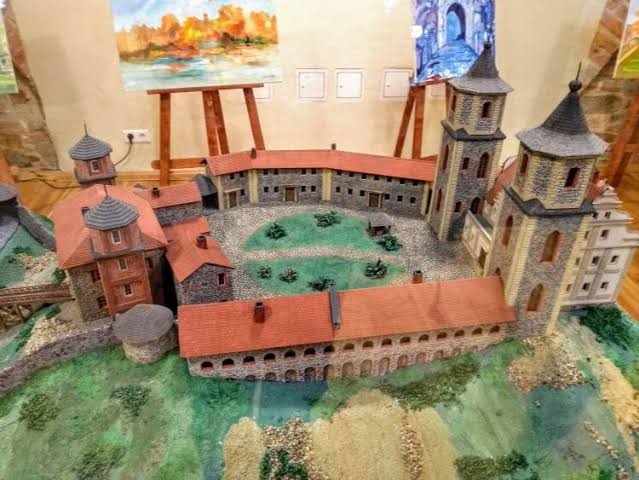
The reconstruction of the castle
Following the tragic fire of 1811, Toszek Castle remained abandoned for many decades. A lack of funds and the changing needs of its owners meant that the former princely residence gradually turned into a picturesque ruin. Vegetation overgrew the crumbling walls, further sections of the buildings collapsed, and some of the stone was used as building material in the construction of nearby houses.
The first measures aimed at preserving the castle were not undertaken until the 20th century. Initially, these were limited to securing the most vulnerable sections of the walls and tidying up the site. At the same time, archaeological excavations were carried out, which provided a better understanding of the history and layout of the medieval stronghold.
Following the Second World War, systematic conservation work began. The surviving walls were stabilised, parts of the vaults were reconstructed, and selected architectural features were restored. This succeeded in halting the monument’s progressive deterioration.
The turning point came at the turn of the 20th and 21st centuries, when the castle underwent a large-scale regeneration programme. The surviving wings were restored, exhibition spaces were created, and the building was adapted to host cultural and tourist events.
During the works, particular attention was paid to preserving the authentic historic fabric of the building. All new elements were constructed with due regard for the building’s historical character, ensuring that modern interventions did not detract from the castle’s medieval atmosphere.
Today, Toszek is a prime example of the successful combination of heritage conservation with the modern use of historic spaces. The castle is not merely a ruin – it has become a vibrant centre for culture and historical education.
Interesting facts
One of the best-known legends associated with Toszek Castle is the tale of the Golden Duck. According to local lore, a vast treasure is hidden in the castle dungeons, guarded by an enchanted duck made of gold. Many daredevils have tried to find the legendary treasure, but no one has ever managed to locate it.
For centuries, the castle has been the subject of numerous ghost stories. According to local legends, the White Lady – a figure linked to the tragic story of one of the castle’s former residents – is said to wander the ruins at night. Her apparition is said to appear particularly on misty autumn evenings.
For several centuries, Toszek was under the rule of various states – Poland, Bohemia, the Habsburg Monarchy, Prussia and Germany. The castle’s history perfectly reflects the complex history of the whole of Upper Silesia.
The fire of 1811 was one of the worst in the town’s history. The blaze destroyed not only the castle but also a significant part of Toszek’s buildings, altering the town’s appearance for many years to come.
The castle has hosted numerous historical re-enactments, jousting tournaments and events based on medieval traditions. As a result, visitors can see period armour, costumes and displays of knightly combat.
During archaeological excavations carried out on the castle grounds, numerous coins, pottery shards, pieces of armour and everyday objects dating from various periods were discovered. These finds have provided a better insight into the lives of the castle’s inhabitants over the course of several centuries.
The castle today
Today, Toszek Castle is one of the most important historic monuments in the Silesian Voivodeship and the hub of the town’s cultural life. Managed by the „Toszko Castle” Cultural Centre, the site combines the role of a historic monument with that of a modern centre organising artistic, educational and community events.
The castle grounds host concerts, theatre performances, exhibitions, workshops, festivals and historical re-enactments. Events drawing on medieval traditions and family-friendly outdoor events held in the castle courtyard are particularly popular.
Visitors can see preserved sections of the defensive walls, historical displays and exhibitions devoted to the history of Toszek and the entire region. The restored buildings now house exhibition galleries and spaces designed for hosting cultural events.
The observation tower offers a panoramic view of the city and the surrounding areas of Upper Silesia. For many tourists, this is one of the most attractive features of the entire site.
Thanks to the conservation work carried out over many years, the castle has regained its rightful place amongst the region’s most valuable historical monuments. Although it has not survived in its entirety, it still impresses with its grandeur and serves as a reminder of the times when Toszek was an important administrative centre of the Piast Duchy.
Today, Toszek Castle stands not only as a testament to the rich history of Upper Silesia, but also as an example of the successful restoration of a historic monument, which has been transformed from ruins into a venue for social gatherings, education and culture once again. Its walls constantly tell the story of princes, knights, townspeople and all the generations who, for over eight hundred years, have helped shape the history of this extraordinary place.


