Strength and beauty — the faces of Africa. Warriors, women, beliefs
Golub Castle
Sculptures and paintings from the collection of Violetta and Leszek Dylik. The exhibition runs from 20 June until the end of September 2026.
until 30 September 2026

 Tickets and guided tours
Tickets are available at the castle reception. Individual visitors can explore the castle on their own using a map; a guided tour is available for groups of 5 or more (80 zł).
 Parking
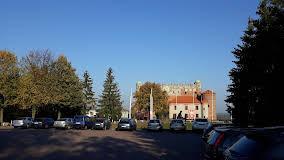
Paid, unstaffed car park by the castle: up to 10 minutes free of charge, 5 zł per hour, max. 20 zł per day; coaches or motorhomes 50 zł.
 Cuisine
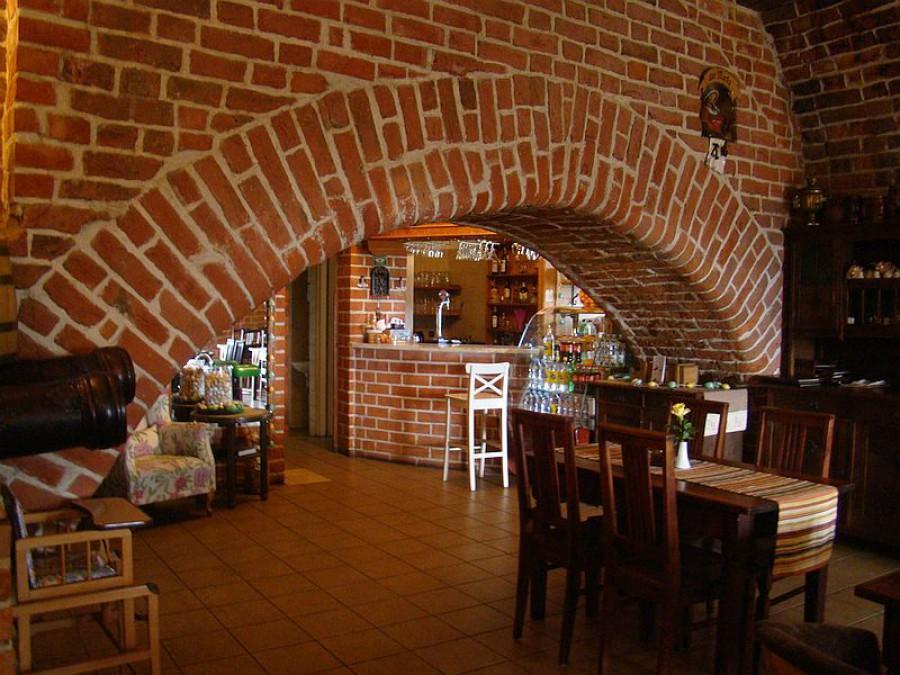
The castle is home to the „Herbarium” restaurant.
 Accommodation
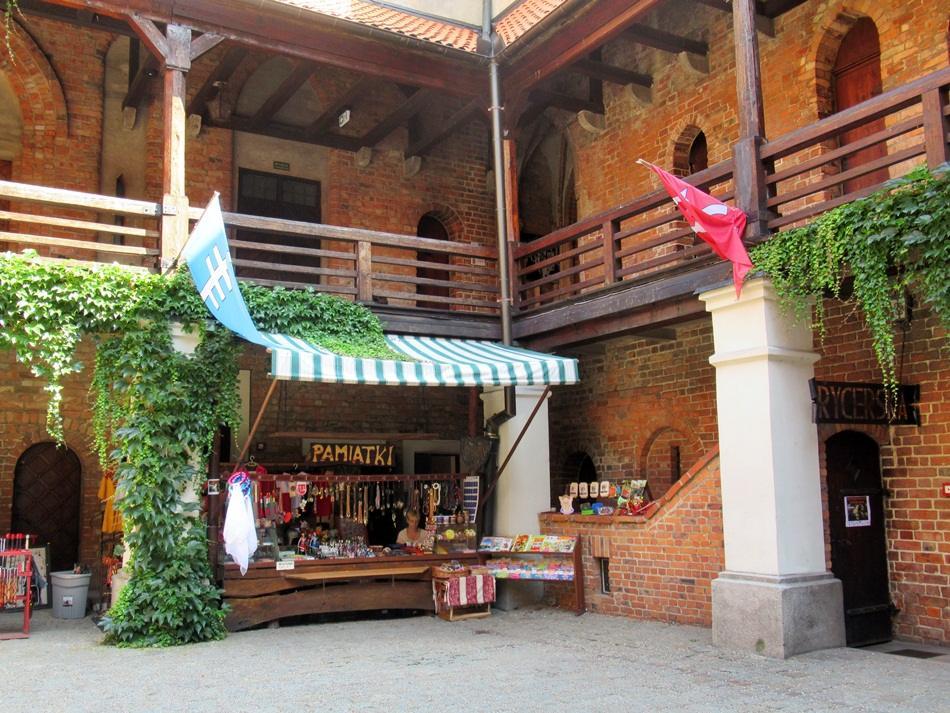
 in the rooms on the second floor of the castle – 72 beds; bookings can be made via the zamekgolub.pl website or by telephone.
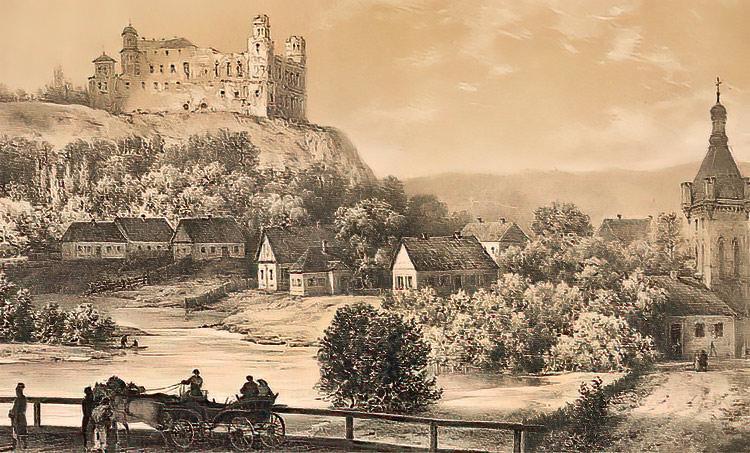
Golub Castle is a four-winged, conventual Teutonic castle dating from the turn of the 13th and 14th centuries, built on a hill overlooking the Drwęca River, within the boundaries of present-day Golub-Dobrzyń. In the 17th century, Renaissance attics were added to the Gothic structure, giving the castle its distinctive silhouette. Today, it houses a museum, a hotel and a restaurant run by the PTTK.
In 1258, the settlement of Golub (vila Golube) was granted to Wolimir, Bishop of Włocławek. By the end of the 13th century, a wooden stronghold stood here, guarding the crossing over the Drwęca. In 1293, as part of an exchange between the Bishopric of Włocławek and the Teutonic Order, Golub came to lie within the borders of the Order’s state.
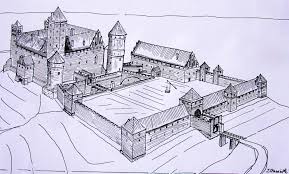
Construction of the stone castle began between 1304 and 1306 on the initiative of the provincial master, Konrad Sack. First, the perimeter walls were erected, and in subsequent stages the wings were added: the southern (main) wing with the Chapel of the Holy Cross and the refectory, the western wing, and finally the eastern and northern wings. Construction of the main tower was started but subsequently abandoned.
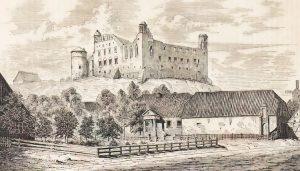
The castle has a layout typical of Teutonic Order settlements. The cellars and ground floor served as utility and storage areas, whilst the first floor was used for residential and ceremonial purposes: the south wing housed a chapel with an ornate portal, a refectory and an infirmary, the western wing was the commander’s residence, and the eastern wing housed the brothers’ dormitory. The top floor served as a granary and armoury, connected to a defensive gallery.
Cloisters ran around the courtyard of the wing. To the north, a gatehouse supported by an arcade was added. The castle was surrounded by a second ring of walls, reinforced by towers to the west. To the west of the castle lay a rectangular outer bailey measuring approximately 70 by 100 metres, separated by moats.
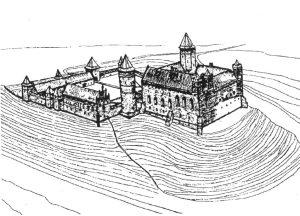
The stronghold at the crossing was besieged on numerous occasions. Between 1329 and 1333, Władysław Łokietek made three unsuccessful attempts to capture it. Between 1409 and 1410, part of the Teutonic Order’s forces gathered here, and Nicolaus Roder, the commander of Golub, was killed at Grunwald. After the battle, the castle was captured by the Poles, and King Władysław Jagiełło placed it under the command of Niemście of Szczytnik. It was soon taken by the forces of the Livonian branch of the Order, who were defeated in the autumn of 1410 near the castle by the troops of Dobiesław Puchała. Under the terms of the First Peace of Toruń (1411), the castle was returned to the Teutonic Knights.
During the Golub War in 1422, following a bombardment by 14 cannons which began on 20 August, Polish troops captured the town and, on 26 August, stormed the castle – the commander was killed in the battle. The Teutonic Knights continued to rebuild the destroyed stronghold between 1433 and 1449.
Following the outbreak of the Thirteen Years’ War in 1454, the castle was captured by the forces of the Prussian Union. In 1456, the Czech commander Ulryk Czerwonka was granted the castle by King Kazimierz Jagiellończyk. On 19 September 1460, the castle was besieged by mercenary troops of the Teutonic Order under the command of Bernard Szumborski; the garrison, led by Andrzej Puszkarz, repelled the attack. The Teutonic Knights captured the town but failed to take the castle, and Czerwonka recaptured the town in October 1462. Following the Second Peace of Toruń (1466), Golub became part of the Crown, and the castle became the seat of the starosts. In 1511, renovation work was carried out on the orders of Sigismund the Old.
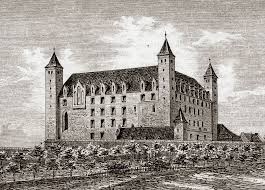
The greatest changes came at the start of the 17th century. Between 1616 and 1623, the castle was rebuilt on the orders of Anna Vasa, sister of King Sigismund III Vasa, who took up the post of starost of Golub. Late Renaissance attics, corner turrets and a building at the outer gate were added at that time, and the shape of the windows was also altered. According to tradition, it was in Golub that tobacco, imported from Turkey, was first cultivated in Poland. In 1623, King Sigismund III Vasa stayed here.
In 1655, during the Swedish Deluge, the castle was destroyed. In the early 18th century, the interiors were refurbished, and during the Napoleonic Wars it housed a military hospital. Further damage occurred in 1842 and 1867, when a gale caused part of the attic to collapse. In 1920, the Polish authorities established a museum in the castle, and in 1937 the roof and some of the rooms were renovated. After the Second World War, the castle was stabilised (1947–1953), and then rebuilt and restored between 1959 and 1966; further refurbishment work was carried out after 2006.
Local folklore tells of a secret passage beneath Drwęca, which is said to have led to the castle in Radziki Duże and to have been filled in during the Swedish invasion. This is a legend for which there is no corroborating evidence in the sources.
In 1977, one of Poland’s first jousting tournaments was organised at the castle. Today, the site is managed by the Zygmunt Kwiatkowski Branch of the Polish Tourist and Sightseeing Society (PTTK): it houses a museum, a hotel with rooms in the castle’s chambers, and the „Herbarium” restaurant. Individual visitors explore the castle on their own, whilst groups can book a guide.


