
Zamczyska.com · Foundation for the Development of Culture in Wrocław
Castle Lovers' Club
Castles have outlasted kings, states and political systems. Now they need us. Become a castle curator – point out what is worth restoring and decide with others what we rebuild first.
Mission and goals
We care for what has survived the centuries – and restore what time has taken
The Castle Lovers' Club brings together people for whom a castle is more than a day-trip destination. Together we identify missing and damaged features of Polish fortresses, check them against historical sources and then – through the Foundation – raise funds to put them back in place.
We don't rebuild castles from scratch or create fantasies. We restore parts of the whole: a tower spire, a drawbridge, a stretch of battlements, a stone portal, a coat of arms above a gate, a walled-up window. Small, specific works that can be documented, costed and completed. One after another, castle by castle.
We point out
Anyone can submit a feature that has disappeared or is decaying – with photos and a description of how it used to look.
We verify
The club community analyses the submission: adds sources, corrects errors, asks questions.
We fund
The Foundation consults, costs and runs a transparent fundraiser for the best-rated projects.
We restore
Professionals carry out the work under the conservator's supervision. We document every stage here.
Our goals
- Create a community map of needs – a public register of missing features of Polish castles, described and backed by sources.
- Restore at least several features a year – from a detail to a tower, always true to the site's history.
- Teach people how to look at a monument – show how to read walls, engravings and old photographs.
- Connect enthusiasts with castle owners – museums, municipalities and private custodians who need support.
- Account for every złoty publicly – for every project: cost estimate, donations, invoices and photos from the works.
Vision
Built for the ages
When the first stones of Wawel, Malbork or Czorsztyn were laid, nobody thought in terms of terms of office or years. People built for generations. The walls were meant to withstand sieges, fires and changes of power – and they did.
Polish castles saw the end of the Piasts and the Jagiellons, the Teutonic state and its fall, the Swedish Deluge, the partitions, two world wars and several regimes that were meant to last for ever. They outlived their builders, founders and enemies. Power passes, borders move, yet the castle stands – because it was conceived as something more lasting than the people who built it.
Yet this durability is not eternal by itself. Every castle we admire today has survived because in every generation someone patched it, roofed it and defended it from being pulled down for bricks. The ruins we see are places where that chain was broken.
We are not the owners of this heritage. We are its curators – for a moment, between those who built it and those who will come after us.
Become a castle curator
We imagine a Poland where the fate of a monument is decided not only by a municipal budget or by chance, but also by thousands of people who care about it. Where an enthusiast from Gdańsk can point out a damaged portal in a castle in Subcarpathia, a historian from Kraków can add a 17th-century engraving, and hundreds of club members can fund its restoration together.
We want every restored feature to bear the mark of this community: documentation open to all, the names of the project's curators and a story that can be told to visitors. So that in a hundred years someone standing by that tower will know it did not survive by chance.
How we work
From a photo of a ruin to a restored tower
- 1
Submission
Anyone – even without an account – submits a feature: photos of its current state, a description of how it looked, and sources. Show what and why.
- 2
Foundation verification
The Foundation checks the submission and approves it for publication. We send the decision by e-mail.
- 3
Community analysis
Club members comment, submit corrections, add sources and support the project. All in the open.
- 4
Consultations and costing
We talk to the castle's owner and the heritage conservator and commission a design and cost estimate.
- 5
Fundraiser
The Foundation opens a fundraiser for a specific, costed goal – in line with the law and with public accounting.
- 6
Restoration and documentation
Specialists carry out the work. We publish progress, invoices and “before and after” photos.
Restoration principles
- Historical truth. We restore only what can be documented: by an engraving, inventory, photograph or archaeological research.
- A part, not the whole. We recreate missing features; we don't rebuild castles from scratch or “from imagination”.
- Consent of the owner and the conservator. Without a permit from the regional heritage conservator and the consent of the site's custodian, we don't move a single stone.
- Traditional materials and craftsmanship wherever possible.
- The community decides the order. Members' support and the quality of the analysis set the priorities.
Club principles
- Any adult who gives their real name and confirms their e-mail can become a member.
- Anyone can browse projects and discussions. Confirmed members can comment, correct and support.
- We write to the point and respectfully. The Foundation removes offensive or promotional posts.
- Publicly we show only the first name and surname initial. Only the Foundation sees e-mail and phone.
- Membership is free. The first 100 members receive the title of Founding Member.
The Foundation organises the club and is the only body running fundraisers for projects. At this stage we are collecting submissions and community votes – donations for specific projects will start only after consultations and costing, always with public accounting.
Example submission
This is what your submission could look like
Below is a model project – from the photos and historical justification to the members' discussion. The historical facts come from the castle's description on our portal.
Działdowo Castle
Outline of the demolished side wings in the courtyard
- Community analysis
- Consultations and costing
- Fundraising
- Restoration in progress
- Completed
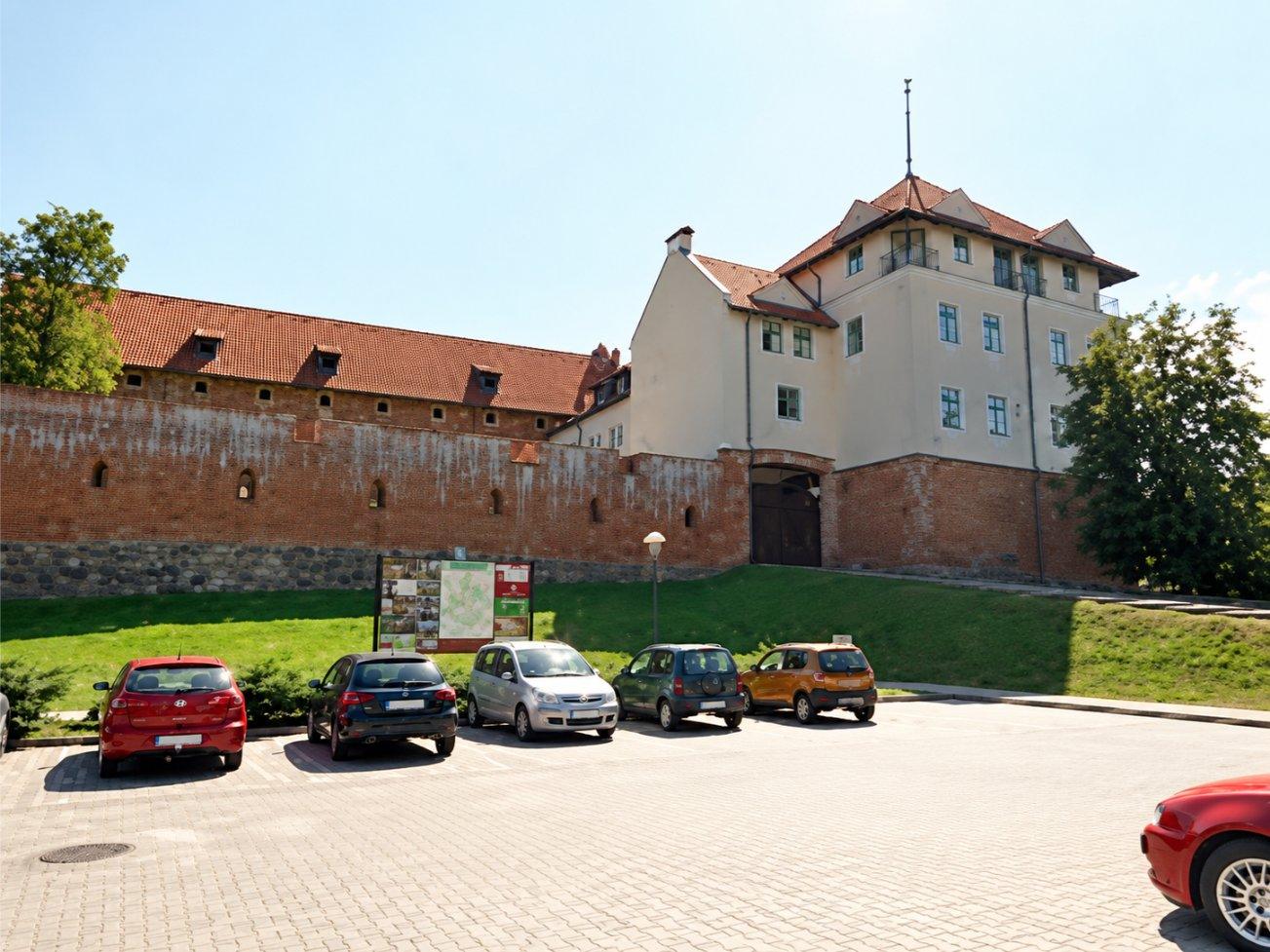
Current state
Of the castle's former quadrangle, it is mainly the Gothic Great House with its chapel, refectory and cloisters that survives, restored in 2017–2018. The two side wings are gone, and visitors in the courtyard have no way of seeing where they stood or how large the fortress once was.
What and why – history of the feature
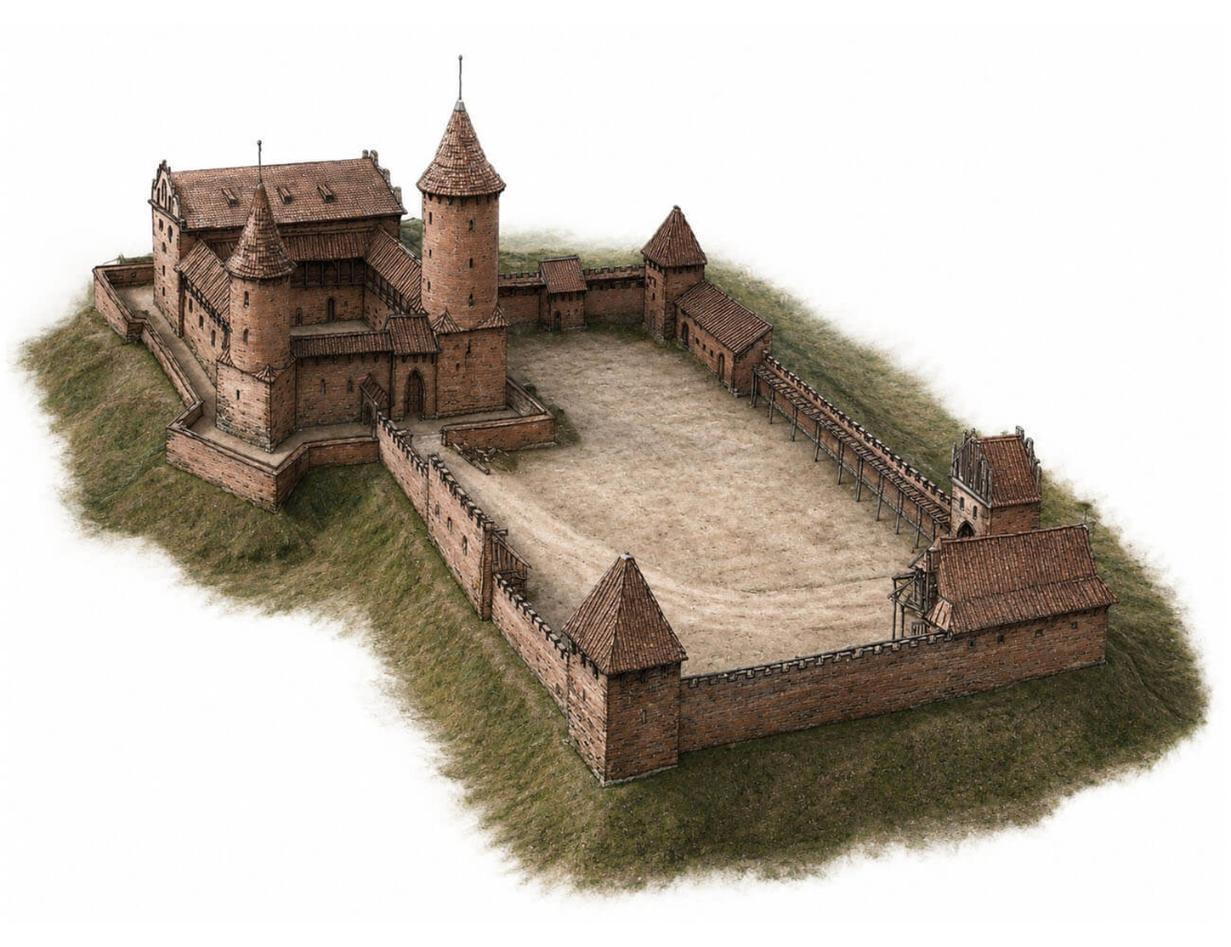
In the late 14th and early 15th century, after the castle was raised to the seat of an Order advocate (Vogt), further wings were added – with a bakery, brewery, pantry, salt chamber and quarters for the garrison. Before the Battle of Grunwald the buildings were raised by a granary storey.
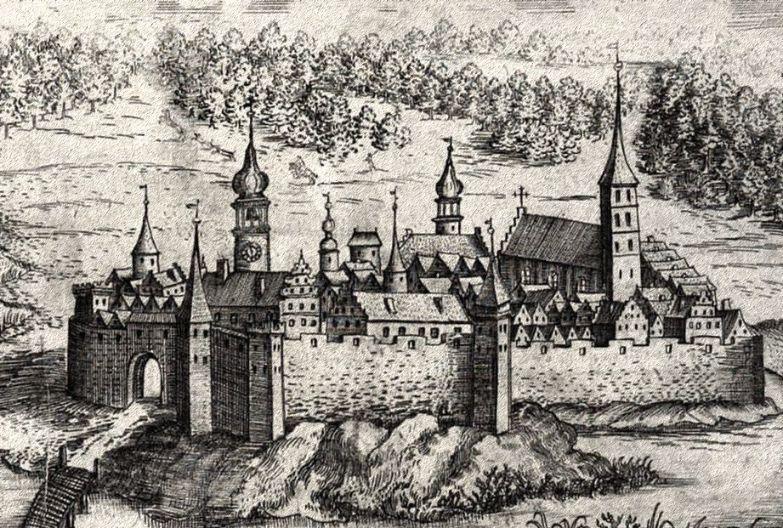
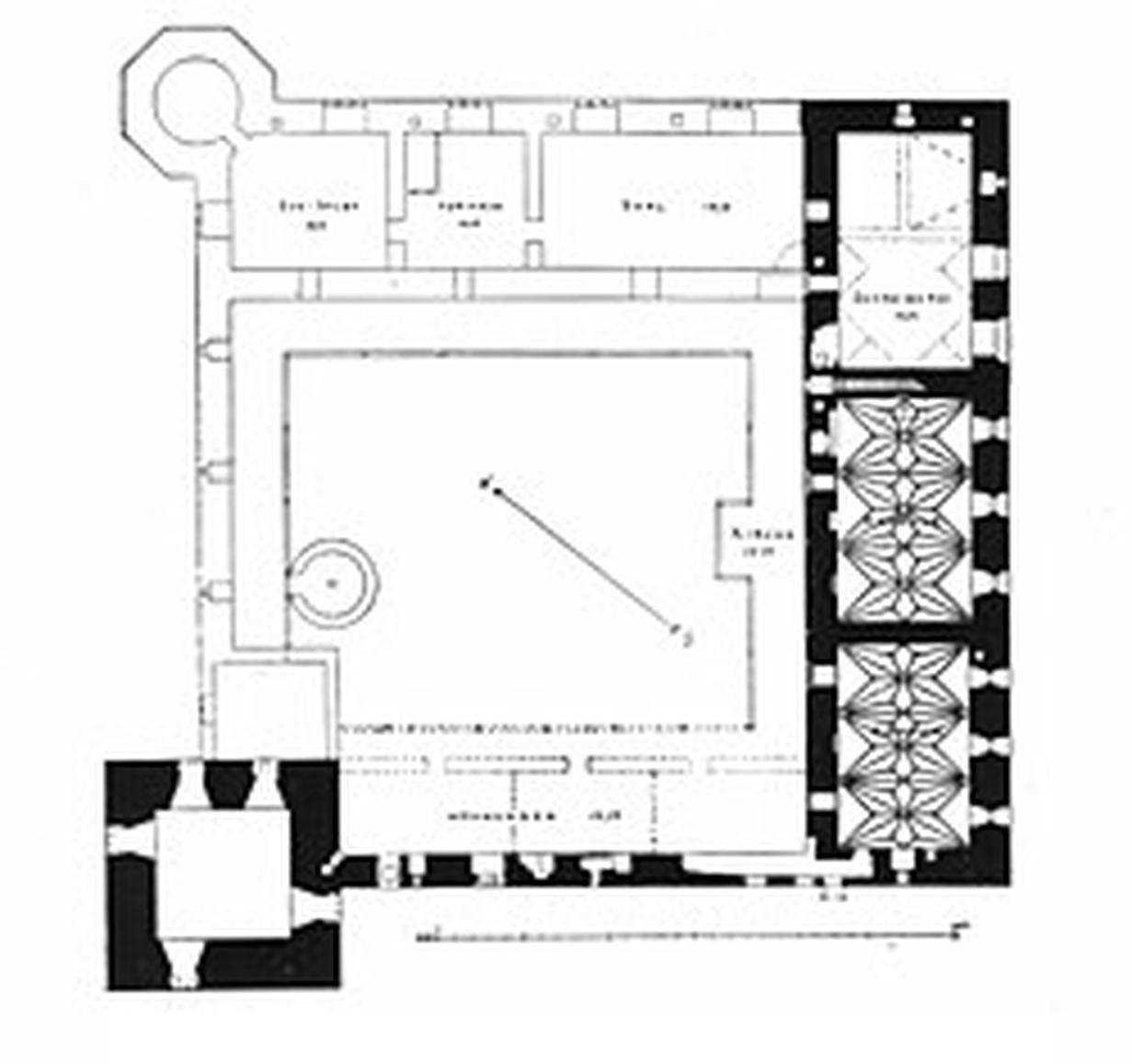
In the mid-19th century the two side wings were demolished and a salt store was set up in the courtyard. The castle's layout is shown by old plans and an engraving, and archaeological research in 1958 and the 1980s made it possible to identify the phases of its development more precisely.
Restoration vision
I propose not rebuilding the wings but showing their outline: marking the line of the former walls in the courtyard paving with a different material and putting up a board with the plan and a reconstruction. Visitors will immediately see how large the castle of the advocates was, and the monument will remain untouched.
Everything to be agreed with the Borderland Museum as the site's host and with the heritage conservator – the exact line of the foundations should follow from the research documentation.
Sources
- Borderland Museum in Działdowo – history of the castle
- The “Lage-Plan Schloss Soldau” plan and an old engraving of the town with the castle
- zamczyska.com/zamek-dzialdowo
Community analysis
Discussion and corrections
- AAnna W.KMZ-0012Correction / addition
It's worth clarifying in the description that the wings were demolished in the mid-19th century. The Napoleonic wars caused earlier damage – that is when the furnishings and documents were lost.
- PPiotr K.KMZ-0031Historical source
The exact line of the foundations should be in the documentation of the archaeological research from 1958 and the 1980s. I suggest asking the Borderland Museum for access.
- MMarek S.KMZ-0007Question
Won't marking in the paving get in the way of events in the courtyard? Maybe differently coloured paving would do instead of low walls?
- FFoundationOfficialComment
Thank you for the thorough analysis. Once the project gathers support, we will contact the Borderland Museum and the heritage conservator to ask whether it can be carried out.
Club projects
Submitted sites worth restoring
All submissions and discussions are public. Support the ones you consider most important – the community sets the order.
The first submission could be yours
Know a castle missing its gate, tower spire or coat of arms above the portal? Take a photo, describe how it used to look and send it. After the Foundation's verification the project will appear here and the community analysis will begin.
Submit the first siteSubmit a site worth funding
Show what and why
Point out a specific feature the castle once had that is missing or decaying today. The better you document it, the faster it will pass the analysis.
Enrich the portal
Your photos and discoveries – credited with your name
Got a great shot of a tower, an old postcard from your grandparents, a scan of an engraving, or spotted a mistake in a castle description? Send it in. Once checked by the Foundation, the material will appear on the castle's page on zamczyska.com – credited with your name and membership number.
Photos
Contemporary shots of castles, details, interiors and surroundings – taken by you.
Engravings and plans
Old prints, maps, plans and reconstructions with their source.
Old photographs
Postcards and photos from family archives – priceless for the history of castles.
Corrections
A wrong date, outdated opening hours, a missing fact – help us fix it.
Rules
Rights and rules for Club members
In short: membership is free, only the Foundation sees your contact details, your photos remain yours and are always credited with your name, and nothing happens to monuments without the conservator's consent.
§ 1. General provisions
- The Castle Lovers' Club (the “Club”) is a community of people caring for the heritage of Polish castles, operating alongside the zamczyska.com portal.
- The Club is organised by the Fundacja Rozwoju Kultury we Wrocławiu (KRS 0000489233, NIP 8992766122, ul. Orzechowa 45/12, 50-540 Wrocław, Poland) (the “Foundation”).
- Membership of the Club is voluntary and free. The Club is not an association in the legal sense – it is a programme of the Foundation.
§ 2. Membership
- Any adult may become a member by registering with their real first name and surname, e-mail address and phone number, and confirming the e-mail address.
- You can become a castle guardian in a simplified way – by giving a first name or nickname, an e-mail and one sentence of reasoning. After the e-mail is confirmed, a member account is created automatically and no phone number is required.
- Club ranks: Squire (new member), Knight (at least 3 posts or materials), Castellan (guardian of a specific castle). Ranks are awarded automatically.
- Every member receives a membership number (KMZ-…). The first 100 members receive the honorary title of Founding Member.
- A member may resign at any time by writing to fundacja@frk.wroclaw.pl. The account will be deleted and published posts – on request – anonymised or removed.
§ 3. Member's rights
- Comment on projects and submit corrections, sources and questions in the community analysis.
- Become the guardian of one or more castles – with their name shown on the castle's page – and receive curator missions once a month (which can be switched off).
- Support projects – one vote per project, which can be withdrawn at any time.
- Submit sites and features worth restoring and follow their status in the “My account” panel.
- Submit materials to the portal – photos, engravings, old photographs, plans and corrections – published with the author's credit.
- Have insight into every stage of projects, including cost estimates and fundraiser accounts.
- Receive news about new projects, fundraisers and Club events (if the member wishes).
§ 4. Member's obligations
- Provide true details and not share the account with others.
- Write to the point and respectfully – no offensive content, advertising or spam.
- Cite sources for historical information whenever possible.
- Submit only materials to which they hold the rights (§ 5).
- Respect monuments: do not carry out any work on sites on your own and do not enter areas closed to visitors. The Club acts only through the Foundation, with the consent of owners and the heritage conservator.
§ 5. Materials submitted by members
- The author retains copyright in their materials.
- By submitting material, the member grants the Foundation a free, non-exclusive licence, unlimited in territory and time, to publish it on zamczyska.com and in the Foundation's channels (including social media and materials promoting the Club), always crediting the author in the wording given by the member.
- Historical materials (e.g. old engravings) may be submitted if they are in the public domain or the member has the rights holder's permission – with the source stated.
- The member is responsible for the truthfulness of the statement about rights to the material.
- The Foundation may refuse publication without giving a reason. The author may request removal of their material at any time.
§ 6. Restoration projects and fundraisers
- The Foundation verifies every submission before publication. Publication does not mean a commitment to carry it out.
- The order of works is decided by members' support, the quality of the analysis and legal and technical feasibility.
- No work is undertaken without the consent of the owner of the site and the competent heritage conservator.
- Fundraisers are run exclusively by the Foundation, for a specific, costed purpose, in accordance with the Polish Public Collections Act. Every fundraiser is publicly accounted for.
- Supporting a project is not an obligation to donate.
§ 7. Moderation
- The Foundation may remove posts and materials that violate these rules, the law or common decency.
- In the event of serious or repeated violations, the Foundation may suspend or terminate membership. The member may appeal by writing to fundacja@frk.wroclaw.pl.
§ 8. Personal data
- The controller of the data of members and submitters is the Foundation. Contact: fundacja@frk.wroclaw.pl.
- We process the data (first name, surname, e-mail, phone, town) to manage membership, handle submissions and materials and to stay in contact – on the basis of consent and the membership agreement (Art. 6(1)(a) and (b) GDPR).
- Only the first name and surname initial, the membership number and the credit chosen for a material are public. Only the Foundation sees the e-mail and phone number.
- Everyone has the right to access, rectify and erase their data, restrict its processing, port it and withdraw consent, as well as to lodge a complaint with the Polish Data Protection Authority (UODO).
- We keep the data for the duration of membership and afterwards until any possible claims become time-barred.
§ 9. Final provisions
- The Foundation may amend these rules; members will be notified of changes by e-mail 14 days in advance.
- These rules apply from 30 September 2026.
Join the club
Become a castle curator
Membership is free. Once you confirm your e-mail, you can comment on, correct and support projects.
Already have an account?
- A voice in the discussion – comments, corrections and sources for every project.
- Supporting projects – your votes decide the order of restoration.
- Membership card with a number – the first 100 people become Founding Members.
- Insight into every stage – from the submission to invoices and photos from the works.


