Facilities
 Tickets and guided tours
The castle has no ticket office or fixed opening hours – the Diocesan Cultural Centre is based here. To enquire about viewing the interiors (including the chapel and the knights’ hall), it is best to call the office on 507 380 762.
 Parking
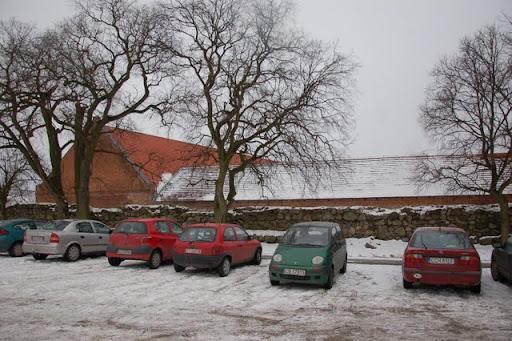
There is a large, free car park for visitors next to the castle.
 Cuisine
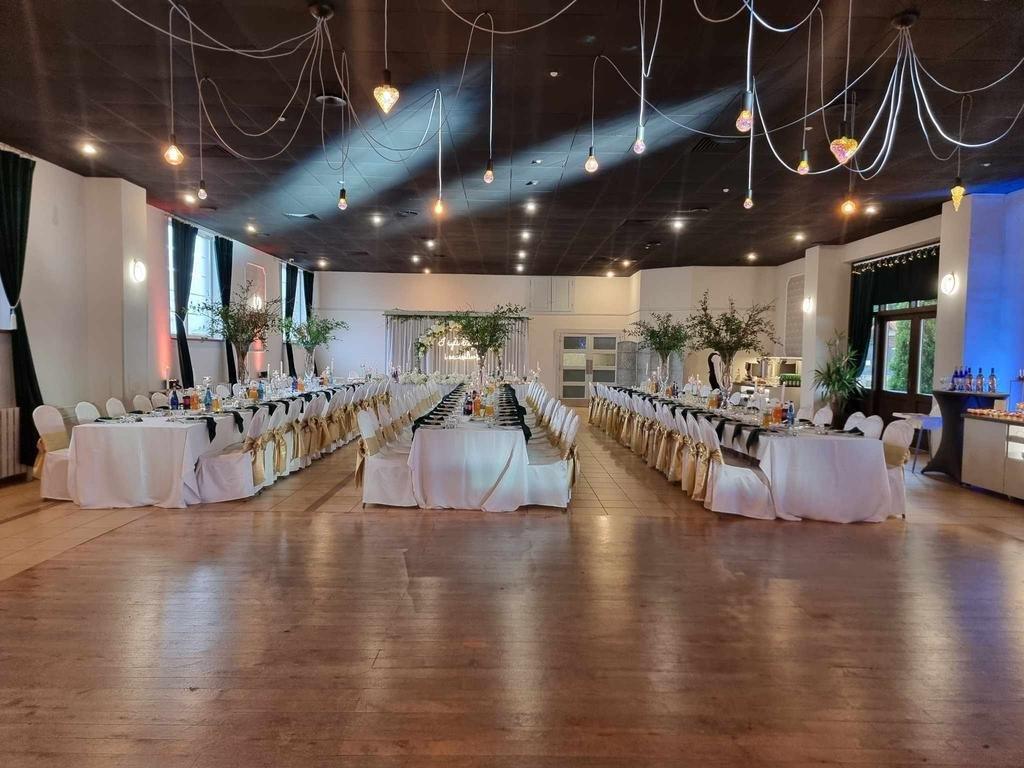
The castle kitchen serves meals to guests at the resort and Sunday lunches (13:00–18:00). During the season (May–September), there is also a seasonal food kiosk, open from 12:00 to 19:00.
 Accommodation
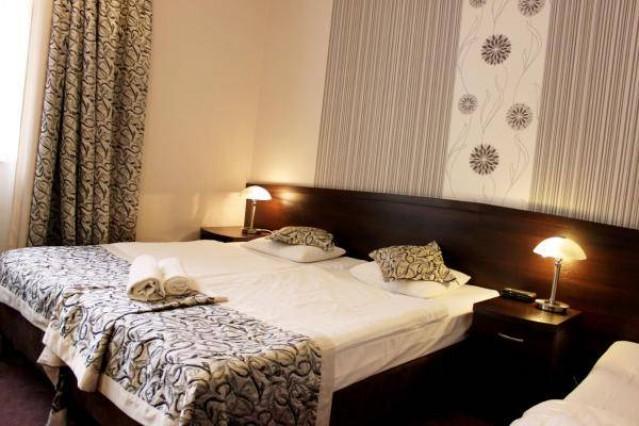
The centre has over 20 rooms for 2, 3, 4 and 6 people, all with en-suite bathrooms; bookings can be made by telephone or email.
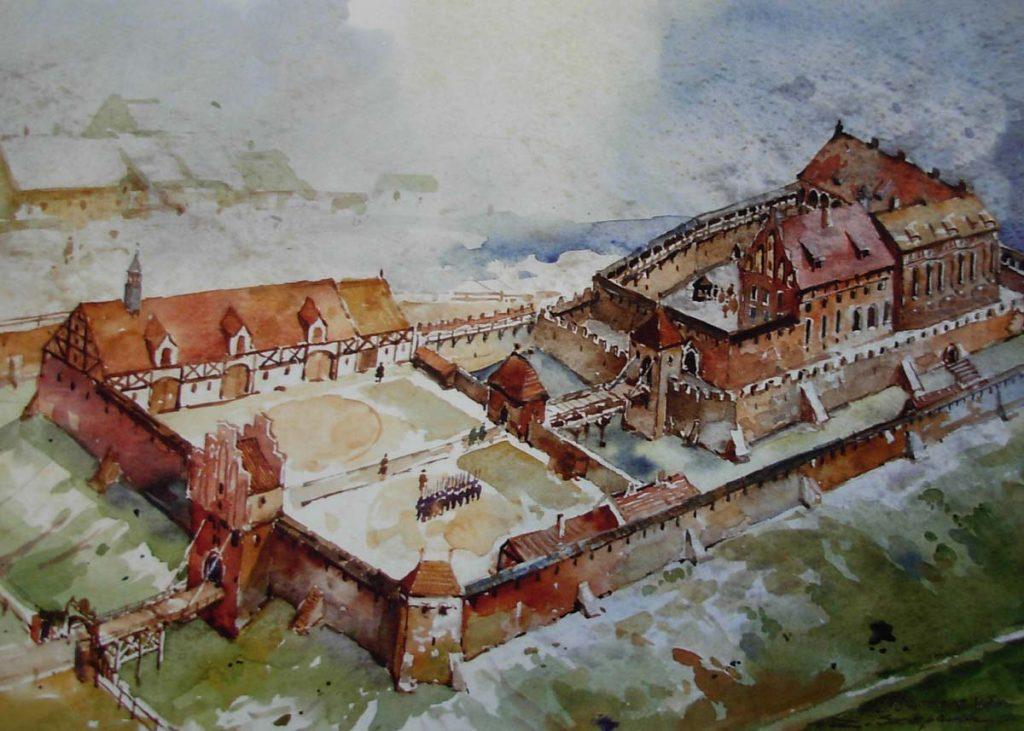
Bierzgłowski Castle is one of the oldest Teutonic castles in the Chełmno region. It stands on the slope of the Vistula’s glacial valley, in the village that takes its name from the castle – Bierzgłowski Castle in the municipality of Łubianka, about 15 km from Toruń. For over a century, it served as the seat of the commanders of the Teutonic Order; later it belonged to the city of Toruń, and since 2001 it has housed the Diocesan Cultural Centre of the Diocese of Toruń.
The origins of the stronghold
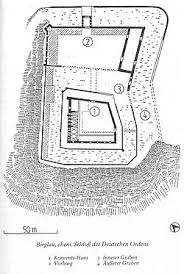
The Teutonic Order took control of the Chełmno region in the 1230s. After 1260, on the site of an earlier fortification, work began on erecting the main castle keep and a spacious outer bailey, serving both defensive and economic purposes, using fieldstones. The first mention of the castle – as ‘castrum Birgelow’ – dates from 1262 and relates to a raid by the Lithuanians led by Trojnat, whom the Teutonic Knights successfully repelled whilst defending themselves from within one of the towers.
The first known commander was Arnold Kropf, who held office from 1270 to 1276. Around 1270–1271, a battle took place below the castle against the Yotvingians led by Skomand. Around 1280, construction continued using brick; between 1300 and 1305, the castle was extended and raised, and around 1330 a second wall was added, forming a parapet.
The headquarters of the commanders and the wars with Poland
Bierzgłowo was the centre of a Teutonic Order commandery. Following the Battle of Grunwald in July 1410, the castle was captured by knights from the Chełmno region. In 1415, the commandery was abolished, and the castle became the seat of the Teutonic Order’s procurator. An inventory of the castle dating from that year lists, amongst other things, coverings for the wooden benches in the chapel.
In February 1454, at the start of the Thirteen Years’ War, the castle was captured by the forces of the Prussian Union, which had sided with Poland. On the orders of King Casimir Jagiellon, the stronghold was partially demolished so that it could not be used by the Teutonic Knights again.
Toruń’s property and its slow decline
From 1474 to 1840, the castle belonged to the authorities of the city of Toruń. Fires in 1520 and 1580 caused the building to fall into ruin – in 1733 it was described as dilapidated. In 1769, a skirmish took place below the castle between the Bar Confederates and the Toruń militia, supported by Russian troops, and in 1782 another fire caused further damage.
The 19th and 20th centuries
In 1840, the castle passed into private hands. The new owners rebuilt the south-west wing and the gate tower, and in 1860 the upper storey of the south wing was rebuilt in the Neo-Gothic style to a design by Olivier Pavelt. In 1903, the castle was taken over by the Prussian state. Following a fire on 3 November 1908, reconstruction work was carried out in 1911 to a design by Conrad Steinbrecht, including, amongst other things, new cross vaults in the refectory.
In 1929, the castle was leased, and in 1933 it was purchased for the diocese by Stanisław Okoniewski, Bishop of Chełmno. In 1936, a retreat centre was opened here. During the Second World War, the Germans set up an NSDAP training centre in the castle. Between 1945 and 1992, it housed a social welfare centre, and from 1946 to 1950, it was home to Adolf Piotr Szelążek, Bishop of Łuck and Servant of God, who had been exiled from Volhynia.
Architecture
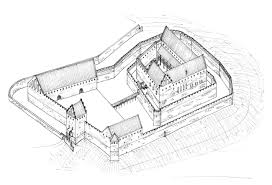
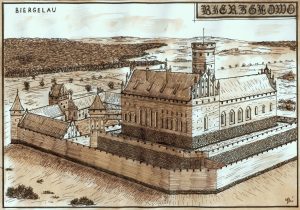
The main castle comprises two wings – the west and south wings – which meet at right angles; the remaining sides of the irregular quadrangle are enclosed by stone and brick walls. The west wing houses the former Teutonic Knights’ refectory, now the Knights’ Hall, with a cross vault dating from 1911, and the former chapter house, which has been converted into a chapel with preserved Gothic windows. The original Teutonic Order barrel vaults have survived in the cellars. The south wing was altered and extended in the 19th century.
The castle’s greatest treasure is the portal in the north wall, featuring a ceramic, three-panelled tympanum dating from the turn of the 13th and 14th centuries, depicting a horseman accompanied by two knights. It is the oldest surviving sculpture in the territory of former Prussia, regarded by some historians as one of the most valuable works of medieval ceramic art in Europe. The lower part of the gate tower, reinforced with granite arches, dates from the Middle Ages, whilst its upper section, with stepped gables, is a Neo-Gothic reconstruction from 1860. To the east, south and west, the castle was surrounded by a dry moat approximately 15 metres wide.
The castle today
Following the establishment of the Diocese of Toruń in 1992, the castle was handed over to the Church, and after several years of renovation, it has housed the Diocesan Cultural Centre since 2001. Since 2023, the centre has been managed by the „Nostra Cultura” Cultural Heritage Foundation. The castle welcomes retreat groups and individual visitors, and organises conferences, family celebrations and cultural events. Holy Mass is celebrated every Sunday in the castle chapel. As this is not a museum with regular guided tours, it is advisable to arrange your visit in advance by telephone.


