
Facilities
 Tickets and guided tours
Tickets can be purchased at the castle ticket office or online. Visitors can explore the castle with an audio guide or a guide (approx. 90 mins); the underground passages can only be visited with a guide. Night-time tours are also organised.
 Parking
There are car parks for visitors next to the castle complex, whilst hotel guests park next to the Książ Hotel buildings.

 Restaurant
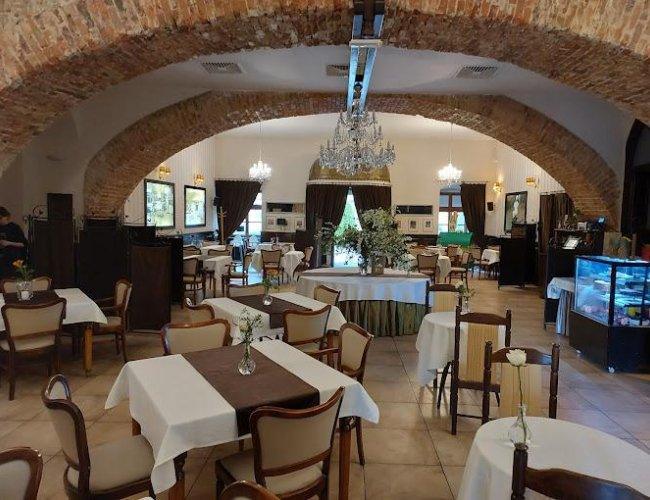
The complex is home to the Książęca Restaurant (serving Polish and European cuisine) and the Biblioteka Restaurant, both of which are also open to visitors.
 Hotel
The Hotel Książ (ksiazhotel.pl) is situated in the immediate vicinity of the castle.
 Souvenirs
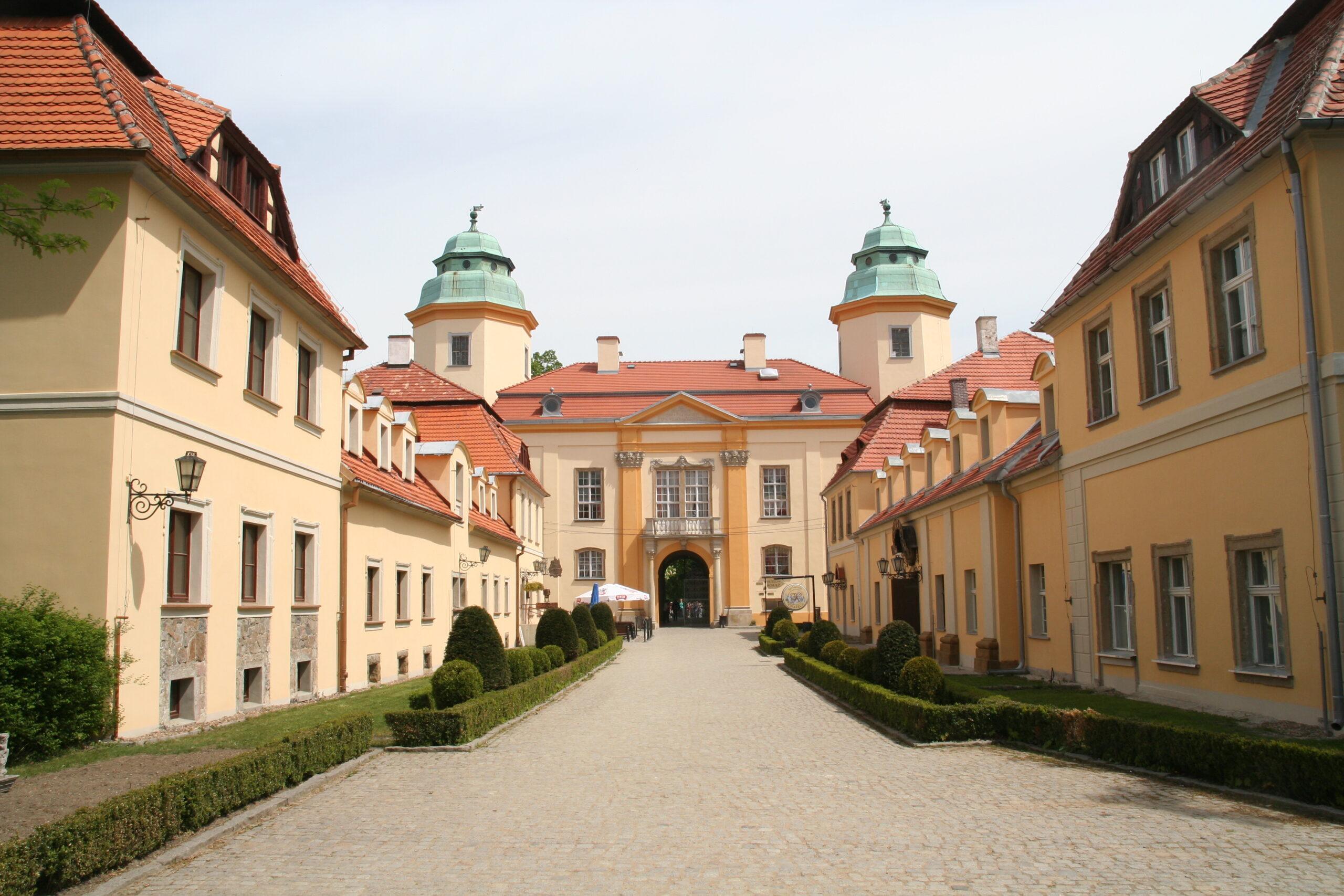
 from Książ can be bought, amongst other places, from the castle’s official online shop.
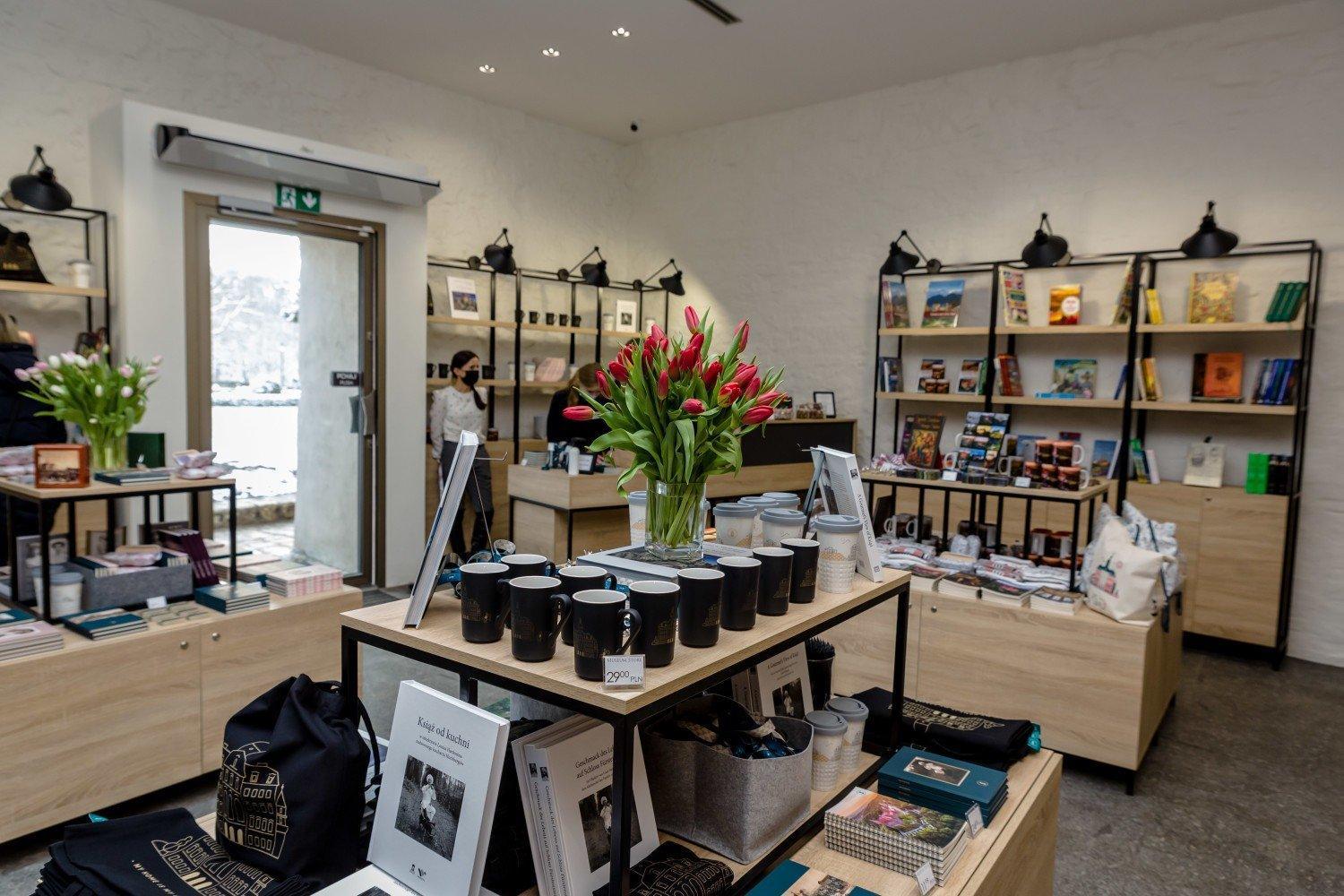
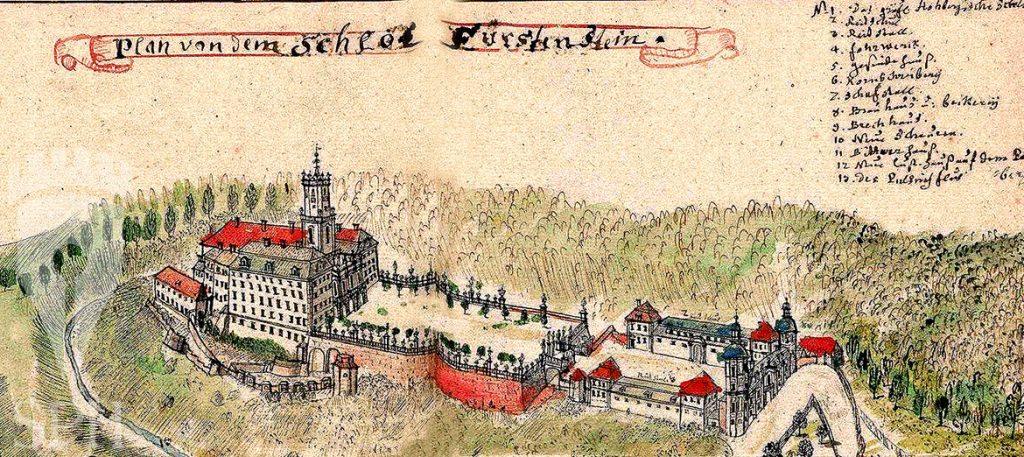
Książ Castle in Wałbrzych is one of the largest stately homes in Poland and the most recognisable historic monument in Lower Silesia. It stands on a rocky promontory overlooking the Pełcznica Valley, surrounded by the forests of the Książ Landscape Park. Over the course of more than seven centuries, it has evolved from a Piast stronghold, through a Baroque residence of one of Europe’s wealthiest families, to a secret facility rebuilt during the Second World War for the authorities of the Third Reich.
Genesis
On the site of today’s castle, there had previously stood a stronghold, which was destroyed in 1263 by the army of the Czech king Přemysl Ottokar II. A new stronghold was built by Prince Bolko I the Stern of the Piast dynasty, most likely between 1288 and 1292. The first definite mention of Książ dates from 25 February 1293, when the castle’s name appeared in the prince’s title. The stronghold guarded the borderlands and the route leading through the Pełcznica Valley. Following the extinction of the Świdnica branch of the Piast dynasty, the castle, like the entire duchy, came under the rule of the Bohemian Crown, and in the decades that followed, it changed hands between pledgees and tenants on numerous occasions.

The Hochbergs
In 1509, the Hochberg family purchased Książ from Piotr Haugwitz. Initially, the castle was held by them on a leasehold basis, but in 1605 Emperor Rudolf II granted them the Książ estate as hereditary property. The Hochbergs ruled the castle for around four hundred years, until their property was confiscated by the Nazis in 1941. During this time, they became one of the wealthiest aristocratic families in Germany, and Książ was the centre of their extensive estates.
Baroque reconstruction
The first major reconstruction, which gave the castle the character of a stately residence, took place between 1705 and 1732 on the initiative of Konrad Ernest Maximilian von Hochberg. The work was carried out by the architect Felix Antoni Hammerschmidt. A Baroque wing with stately interiors was built at that time, including the Maximilian Hall, the castle’s most famous room. The castle’s surroundings were also transformed during this period, as evidenced, amongst other things, by the gatehouse dating from 1718–1719.

Princess Daisy and the redevelopment, 1909–1923
On 8 December 1891, in London, Prince Jan Henryk XV von Hochberg married the Englishwoman Maria Teresa Cornwallis-West, known as Daisy. The marriage was blessed by Queen Victoria. Daisy gave birth to three sons at Książ and became the castle’s most famous lady. Her memoirs, published in Polish under the title *Lepiej przemilczeć* (*Better to Remain Silent*), are a valuable account of life at the Hochberg court. Jan Henryk XV carried out the second major reconstruction of the castle between 1909 and 1923. An eclectic façade with two cylindrical towers was added at that time, along with a 47-metre-high main tower, which still dominates the valley today.
The Second World War and the Riese project
In 1941, the Nazi authorities confiscated the Hochbergs’ estate, and in 1943 the castle became the property of the Third Reich. From 1944, the Organisation Todt converted it, as part of the Riese project, into one of Adolf Hitler’s headquarters. The interiors were partially destroyed, and tunnels and an underground bunker were excavated in the rock beneath the castle. Prisoners were put to work on the project, and in 1944 a branch of the Groß-Rosen concentration camp was established here. The purpose of the underground complex still raises many questions, and part of it can now be visited on a guided tour.
After 1945
Between 1945 and 1946, Soviet troops were stationed at the castle and caused extensive damage to the building. At that time, the furnishings and collections of the Książ Majorat Library, comprising over 64,000 volumes, were plundered. Over the following decades, the castle, now within Poland’s borders, was only partially used and fell into disrepair. Since 1991, it has been managed by the company Zamek Książ in Wałbrzych, which carries out renovation work and opens the castle to visitors.
Architecture and surroundings
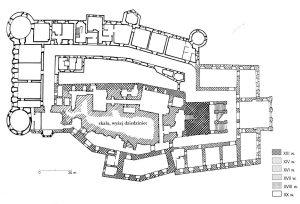
The present-day structure combines elements from various periods: a medieval core, a Baroque wing and eclectic extensions from the early 20th century, featuring a tall main tower. The castle is surrounded by garden terraces sloping down towards the valley. A romantic park stretches out around it, laid out to a design by Christian Wilhelm Tischbein between 1789 and 1833, into which the ruins of Stary Książ have been incorporated. A Japanese garden was also laid out before the First World War. The complex includes stables dating from 1844, which house a stud farm, and a palm house in Lubiechów, built before the First World War and situated approximately 2 km from the castle.
Legends and mysteries
Most of the stories associated with Książ relate to its recent history. The wartime tunnels of the Riese project, whose full extent and purpose have not been fully explained, have been capturing the imagination of explorers for years. Duchess Daisy and her famous jewellery remain a colourful figure in many of these stories.
The castle today
Książ Castle is one of the most popular attractions in Lower Silesia. Visitors can explore the castle with an audio guide or a guided tour, whilst the underground passages are only accessible with a guide. Visitors can also enjoy the terraces, the palm house, the Stud Farm, the mausoleum in the park and night-time tours. The Hotel Książ and several restaurants are located next to the castle, and the popular Flower Festival takes place here in spring.


