
Facilities
 Tickets and guided tours
Tickets for the Niepołomice Museum can be purchased at the museum ticket office in the castle. The estimated duration of the visit is around 1 hour.
 Parking
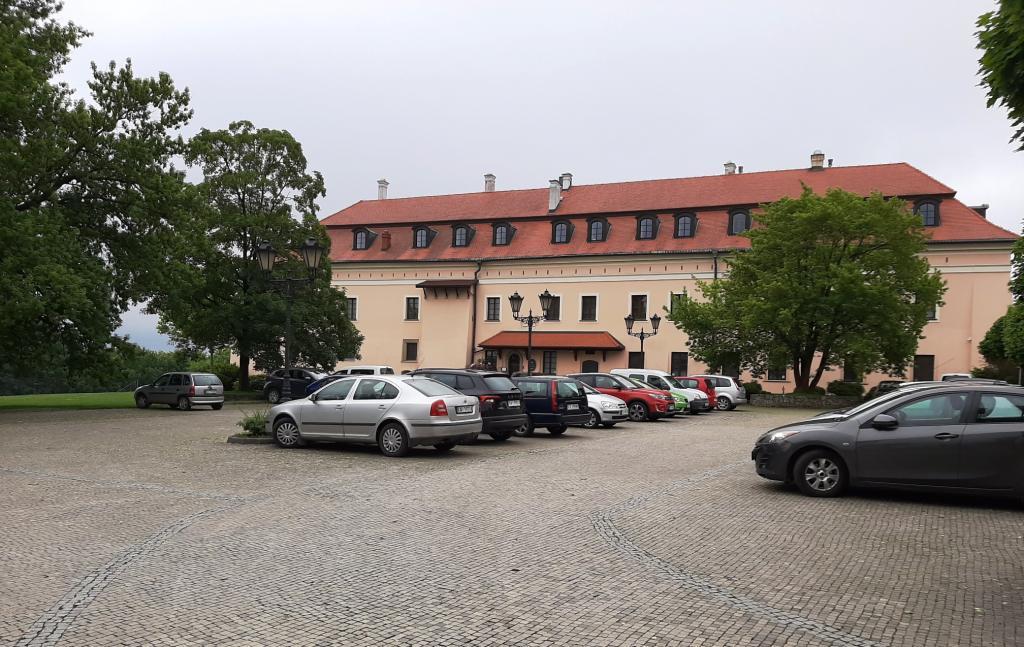
There is a car park for visitors at Niepołomice Castle, which is located a short distance from the main entrance gates.
 Restaurant
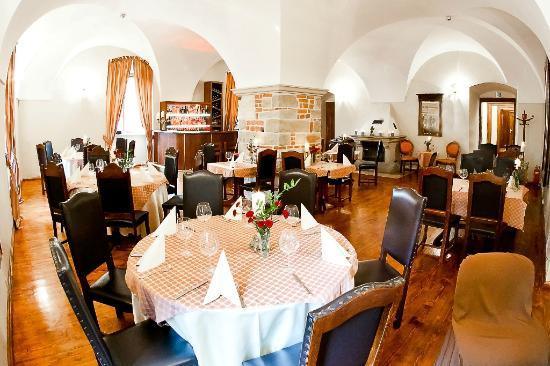
The castle is home to the „Queen Bona” restaurant, which is open to the public.
 Hotel
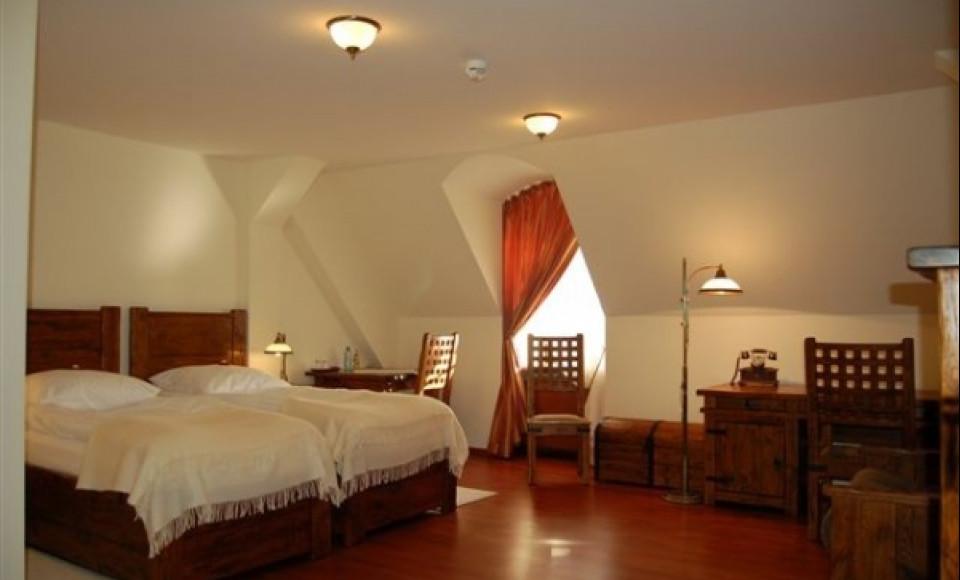
Within the castle walls, there is a hotel offering rooms and suites, as well as a conference centre.
 Souvenirs
It is worth enquiring about the availability of souvenirs and publications at the ticket office of the Niepołomice Museum.
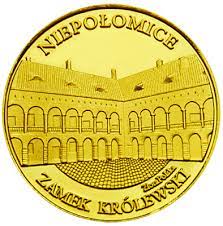
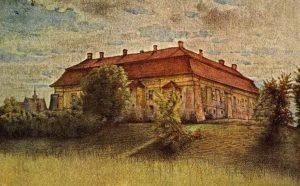

The Royal Castle in Niepołomice, often referred to as the „second Wawel”, stands in the centre of the town, on the escarpment of the Vistula’s glacial valley, some 25 kilometres from Kraków. Built on the orders of Casimir the Great, for two centuries it was the favourite hunting residence of Polish kings, who set out from here to hunt in the Niepołomice Forest. After centuries of decline and neglect, it has been thoroughly restored and today serves as a museum, hotel and cultural centre.
Casimir the Great’s Gothic castle
The castle was built in the mid-14th century. Casimir the Great constructed it on a escarpment overlooking the Vistula valley, giving it both a defensive and a residential function. The Gothic stronghold consisted of three towers, buildings in the south and east wings, and curtain walls surrounding the courtyard. The settlement of Niepołomice developed alongside the castle. The residence served primarily as a base for hunting expeditions into the forest.
The Jagiellonian Era
Władysław Jagiełło convened assemblies and courts in Niepołomice, and in November 1419 he formally received the Silesian dukes here. Sigismund I the Old rebuilt the castle into a quadrangle with an inner courtyard. In 1527, during the plague in Kraków, the royal court took refuge here. In 1550, a great fire destroyed the eastern and northern wings.
The Renaissance residence of Sigismund Augustus
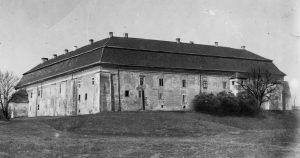
Sigismund II Augustus rebuilt and remodelled the castle between 1551 and 1568. The works were supervised by Tomasz Grzymała, whilst the sculptor Santi Gucci worked on the stone carvings. Staircases and colonnades supported by columns were added on the courtyard side. Italian gardens were laid out beside the south wing, the creation of which is attributed to Queen Bona. Since then, the castle has had the character of a Renaissance residence, often compared to Wawel.
Tenants, the Deluge and the Partitions
From the end of the 16th century, the castle was held by successive noble families – the Curyłows, the Branicks and the Lubomirskis – who mainly altered the interior décor, fireplaces and ceilings. Between 1635 and 1637, the cloisters were rebuilt in the early Baroque style. The Swedish Deluge brought an end to its heyday: in 1655, the Swedes turned the castle into a food store, plundered the town and destroyed the church. In the 18th century, during the reigns of Augustus II and Augustus III, only attempts at repairs were made. Following the First Partition in 1772, Niepołomice came under Austrian rule. The Austrians converted the castle into barracks, demolished the second floor and reinforced the walls with buttresses and struts.
The 20th century
Until the First World War, the castle served as a residence and storehouse; during the interwar period, it was used for public purposes. During the Second World War, it was taken over by the Germans, and after the war the building fell into disrepair. A turning point came in 1991, when the castle became the property of the Niepołomice Local Authority. Comprehensive restoration and refurbishment work then began, and was completed in 2007.
Architecture
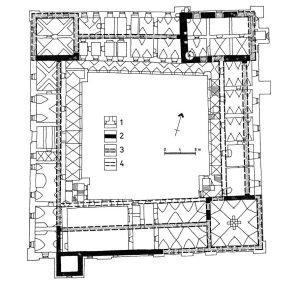
Today’s castle is a brick, four-winged structure surrounding a rectangular courtyard, with a Gothic core and a Renaissance character dating from the 16th century. On the courtyard side, the cloisters, which were rebuilt in the 17th century, have survived. The building is lower than it was in its royal days, as the Austrians demolished the second storey, and the outer walls are still reinforced by buttresses added by them. In the courtyard stands a modern monument to Stańczyk, designed by Agnieszka Świerzowicz-Maślaniec.
The castle today
The castle is managed by the local authority-owned company Zamek Królewski. Within its walls there is a hotel with a restaurant and a conference centre; concerts, recitals and performances are held here, and it is home to the „Cantata” choir. Since 2001, the castle has housed the Niepołomice Museum. It features a painting gallery with works from the collections of the National Museum in Kraków, the Hunting Halls, the study of Włodzimierz Puchalski – a pioneer of Polish nature photography – the exhibition „Treasures of the Niepołomice Parish” and a display on the town’s history. It is a good starting point for a stroll around the market square and a trip to the Niepołomice Forest.
The museum is open from Tuesday to Sunday, and tickets are available both as a combined ticket – covering all exhibitions – and for individual exhibitions. Museum lessons are available for school groups, whilst organised tours can enjoy guided walks around the town: a shorter one, lasting about an hour, covering the area around the castle and the market square, and a longer one, lasting several hours. It is worth bearing in mind that the castle also serves as a working hotel and an event venue, so parts of the courtyard and halls may be closed to visitors during events. The courtyard itself, with its cloisters, is best viewed on a clear day, when the contrast between the Gothic walls and the Renaissance and Baroque details is clearly visible.


