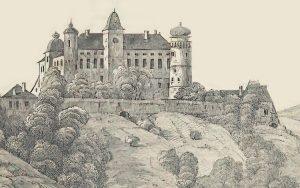

Wiśnicz Castle is a jewel of architecture and history intertwined in one charming place. When you first gaze upon its majestic walls, you'll feel like you've stepped back in time to an era full of knights, queens and mysterious tales. The castle rises proudly on a hill, surrounded by lush forests and picturesque gardens, creating an incredible contrast with the surrounding landscape. Its Renaissance architecture impresses with its precise details and varied form. The extensive courtyards surrounded by cloisters and towers exude dignity and history. The interiors of the castle conceal the secrets of the past. Each step along the stone corridors and staircases is like a journey through time. The ornate ceiling paintings, elaborately carved furniture and colourful stained glass windows evoke the spirit of bygone eras. There is also no shortage of interesting exhibitions to introduce you to the history and culture of the region. Strolling through the castle gardens, you can immerse yourself in the peaceful beauty of nature. The castle is surrounded by an aura of mystery and legends that captures the attention of everyone who visits the place. Whether it's ghost stories or the legendary tunnel passage to Opole, each story makes the castle even more fascinating. This place attracts lovers of history, culture and beauty. Wiśnicz Castle is a true treasure that enchants with its unique atmosphere and past, waiting for you to discover its secrets and mysteries.
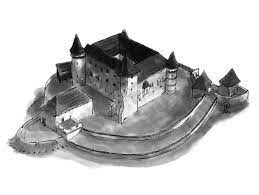
The origins of the castle: Situated on a hill above the Leksandrówka River in the Małopolska district of Bocheń, the castle in Wiśnicz is one of the largest castles in Poland. The origins of this monumental building date back to the late 13th century. The castle was originally built as a fortified defensive residence to protect the strategic trade routes through Malopolska. Over the centuries, its function and appearance have undergone significant changes, testifying to the turbulent history of the place and its inhabitants.
First settlements and beginnings (13th century): The origins of Wiśnicz Castle are linked to the Middle Ages. In the 13th century a settlement began to form in this area, located in the then Małopolska Senior Principality. On one of the hills in the area, a small defensive stronghold was erected as the first line of defence against the Tartar and Wallachian invasions.
Ownership of the Griffin family (14th-15th centuries): In 1356 Wiśnicz became the property of the Gryfit family, specifically Mikołaj Gryf. It was he who transformed the castle into a permanent fortress. During the time of the Griffins, Wisnicz Castle was an important defensive point on the so-called Tartar Route, leading from Hungary through Poland towards Prussia.
Renaissance period (16th century): In the 16th century, during the reign of King Sigismund the Old and Queen Bona Sforza, Wiśnicz Castle underwent a major reconstruction, adopting a Renaissance style. It then acquired the characteristic elements of the period, such as ornamental architectural details, courtyards, cloisters and gardens.
Ownership of the Lubomirski family (17th-18th centuries): In the 17th century Wiśnicz Castle became the property of the Lubomirski family, who added further Renaissance and Baroque architectural elements. During the period of this family, the castle became an important cultural and artistic centre, attracting numerous visitors and scholars.
Times of partition (18th-19th centuries): In the 18th century, Wisnicz Castle passed to successive owners and was repeatedly destroyed during various conflicts, including the Seven Years' War and the Napoleonic Wars. During the partition of Poland, the castle fell into disrepair.
Reconstruction and restoration (19th-20th century): In the 19th century, Wisnicz Castle was acquired by the Sierakowski family, who made efforts to rebuild it. Work continued for many years and the castle regained some of its former splendour. After World War II, the castle was nationalised and restoration work continued in later years.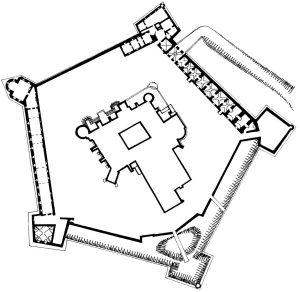
Architecture: The architecture of Wiśnicz Castle is an excellent example of the centuries-long evolution and stylistic transformation of the residence from the Middle Ages to modern times. Here is a detailed description of the architecture of Wiśnicz Castle:
Early foundation and original building (14th century): The first buildings on the site of Wisnicz Castle were wooden, erected in the 14th century. Originally it was a Gothic defensive castle, serving as a fortress. This building consisted of a rectangular courtyard, surrounded by wooden structures.
Renaissance reconstruction (16th century): The most important period in the architectural history of Wiśnicz Castle was the 16th century, when the castle gained its characteristic features as a result of Renaissance reconstruction. It was then that the castle received its characteristic Renaissance form with a magnificent courtyard surrounded by beautiful arcades, giving it a unique charm. The corner towers and towers were also rebuilt.
Baroque period (17th century): In the 17th century, during the reign of the Lubomirski family, the castle underwent another phase of reconstruction. Decorative elements and decoration, such as rich stucco, frescoes and stucco, referred to the Baroque style. The Baroque interiors gained magnificent stucco and stucco decorations. At the time, the castle served as an aristocratic residence, which influenced its decoration.
Ruin period (18th-19th century): During the wars and conflicts of the 18th century, Wisnicz Castle was repeatedly destroyed and captured by various armies. As a result of these events, the castle found itself in a state of considerable neglect and dilapidation in the 19th century.
Reconstruction and conservation (20th century - 21st century): In the twentieth century, work began on the restoration of Wiśnicz Castle, which continues to this day. Thanks to the efforts of conservators and art historians, many historical elements of the building have been restored, restoring it to its former splendour. The contemporary restoration focuses on the preservation and reconstruction of historical elements, such as vaults, ornaments, and furniture and decorations from different periods.
Current appearance: Today's appearance of Wiśnicz Castle combines elements of Gothic, Renaissance and Baroque. The magnificent courtyards, arcades, cloisters, staircases and towers show the variety of architectural styles that have influenced the development of the castle over the centuries. The interiors of the castle are beautifully decorated, with rich decoration, valuable works of art, furniture and stucco decorations.
Wisnicz Castle is a place with a rich history that is surrounded by many legends and curiosities. Here are a few of them that make the place even more fascinating:
The legend of the castle ghosts: One of the most famous legends connected with Wiśnicz Castle is the tale of ghosts. According to local accounts, the castle's cloisters and towers are where you can meet the ghosts of the castle's former inhabitants. The most recognisable is the ghost of the "White Lady", who is said to haunt the castle. It is said to be the soul of a certain Izabela Lubomirska, who died in tragic circumstances. These stories attract many lovers of paranormal phenomena.
Treasures of Wisnicz Castle: There are legends about hidden treasures in the castle grounds. One of them says that the treasure of Princess Izabela Lubomirska was hidden in one of the hidden rooms of the castle and was never found. Treasure hunters and adventurers occasionally try to find hidden riches in the castle's vaults.
The legend of the hidden passage to Opole: According to local stories, there is a secret passage or tunnel leading to Opole in the castle grounds. The Opole princesses allegedly used this passage to get to Wisnicz Castle safely. Although no confirmation of the existence of such a tunnel has yet been found, the story continues to fascinate locals and tourists.
History of the sundial: There is a sundial in the castle gardens that has its own legend. It is said that once, during a siege of the castle by Swedish troops, this sundial saved the castle. Supposedly, the Swedish commander saw the clock indicating the later time, which prompted him to abandon the siege and ultimately saved the castle.
Wanda's Mound: Near the castle is Wanda's Mound, which is a site associated with the legend of Princess Wanda. According to the story, Wanda was a princess who died defending her homeland against invaders. The mound is a symbol of her sacrifice and national pride.
Wisnicz Castle is therefore not only a place of architectural and historical beauty, but also a place full of mysteries and stories that attract both history lovers and those seeking an adventurous spirit. These legends add even more charm and mystery to the castle, making it an even more fascinating place to visit.

Today: Today, Wiśnicz Castle is an important cultural and tourist site in Poland. It serves as a museum and its interiors and exhibitions present the rich history of the region and the castle. In addition, the castle is a venue for various cultural events, concerts and art exhibitions.
Highlights include:
- Conducted tours through the historic interiors of the castle, with the opportunity to learn about its history and the history of its inhabitants.
- Permanent and temporary exhibitions, presenting art collections and memorabilia related to the history of the castle.
- Educational workshops for children and young people.
- Concerts, theatre performances and other cultural events organised in the castle grounds.
- Beautiful castle gardens, ideal for a walk or picnic.
Wiśnicz Castle, with its majestic silhouette and rich history, continues to enthral and attract crowds of tourists wishing to immerse themselves in the atmosphere of former centuries.