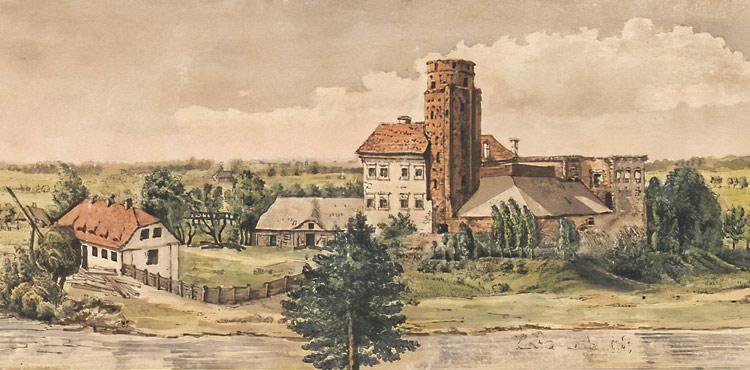
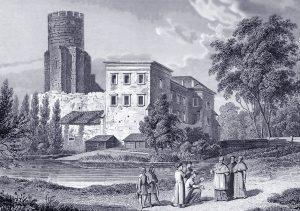
The construction of the Castle of the Archbishops of Gniezno in Uniejów dates back to the second half of the 14th century, when in the years 1360-1365 the Archbishop of Gniezno, Jarosław Bogoria Skotnicki, decided to erect a monumental brick fortress. The creation of the castle was a response to the tragic events at the beginning of the 14th century - in 1331 the Teutonic Knights completely destroyed an earlier wooden fortalice standing on a hill in Uniejów. This was a painful experience both from the point of view of defence and church prestige. Archbishop Skotnicki therefore decided to build a new castle, which was to act as a strong fortress, securing the eastern border of the Polish state against the expansion of the Teutonic Order.
From the beginning, the castle in Uniejów had a multifunctional character - it combined the features of a defensive stronghold, an administrative seat and an archbishop's residence. Its interiors were used to store bishop's treasures, documents, as well as weapons and food supplies. It was the venue for conventions of the clergy, synods and the deliberations of important ecclesiastical bodies, making it the centre of religious and political life in the region. In the Middle Ages, it also served as a strategic fortification, reinforced with a defensive wall and towers that gave an advantage over a potential attacker.
In the 16th century, the castle underwent significant changes in its form and function. After a fire in 1525, the effects of which severely damaged the original structure, the starosta Stanislaw of Gomolin initiated a thorough Renaissance reconstruction. As a result, the castle ceased to be just an austere fortress and acquired the features of a representative residence. New architectural elements were then introduced - decorative cloisters, attics and stonework details, which gave the building an elegant character, in line with the spirit of the Renaissance era. At that time the castle in Uniejów became a symbol of the power and status of the archbishops of Gniezno, being one of the most important ecclesiastical centres in Poland.
In the 18th century, the castle continued to play an important role, although its military significance was declining. Bishop Krzysztof Antoni Szembek then carried out minor renovation work to improve the functionality of the building. These works included restoring the walls, repairing damaged elements and strengthening the defensive structures, which continued to act as security for the bishop's residence.
In the 19th century, the castle underwent further transformations, which had to do with political and social changes. In 1836, Tsar Nicholas I granted it the title of Count, a distinction that emphasised the castle's importance in the administrative system of the time. In 1848, Alexander Toll from Estonia became the owner of the castle and carried out extensive reconstruction in the classicist style with romantic elements. As part of these works, the castle gained modern architectural forms - the layout of the rooms was changed, the facades were refreshed and decorative details were introduced to give it a romantic feel. The Toll family ruled the castle until the end of the First World War, taking care of its maintenance and functionality.
After the First World War, the castle went through turbulent periods - in the inter-war period it changed owners, and after the Second World War its fate was associated with numerous changes. The building served various functions: from a hotel, to a school, to the seat of the administration. Between 1957 and 1967, extensive restoration work was carried out to restore the historic character of the castle, preserve the medieval walls and protect the structure from further deterioration.
In 1995, the castle was handed over for management to the Supreme Council of the Polish Students' Union, becoming a conference and training centre. This was the next stage in its life - a venue for meetings, workshops and cultural events. Today, the castle is owned by the complex Uniejów Thermal Bathswhich exploited its historical potential by combining it with a tourist and recreational offer. Today, the castle functions as a luxury hotel where guests can not only feel the atmosphere of a medieval fortress, but also enjoy modern amenities. It is a place where history meets the present, and every stone of the walls tells a centuries-old tale of power, faith and the art of building.
Castle architecture
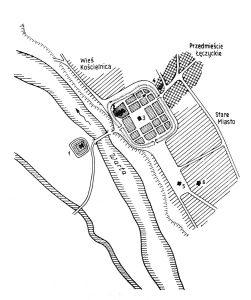
The castle in Uniejów was built on a quadrilateral plan with an extensive rectangular inner courtyard, which served as the central place of castle life and was the heart of the defensive fortress. Its spatial layout is an example of typical medieval defensive architecture, but over the centuries it has acquired many representative features through successive reconstructions. A characteristic feature of the castle is the massive stool tower, a circular tower some 25 metres high, which served both a defensive and representative function, dominating the skyline and serving as a symbol of power.
In addition to the stool tower, the castle was equipped with two quadrilateral residential towersThe towers were connected by residential wings, which formed a compact and coherent architectural unit. These towers were equipped with living quarters, chapels and staterooms, and their construction allowed for effective defence.
To the castle led drawbridgewhich had both a defensive function, allowing access to be cut off in the event of an attack, and a decorative function - it was one of the first elements to welcome visitors. This bridge led over a dry moat or defensive ditch, which further emphasised the medieval character of the building.
Important architectural accents are also coats of arms of archbishopswhich decorate the entrance portal and the walls of the courtyard. Above the entrance there are coats of arms Hose i Pomianand on the courtyard wall the coat of arms Intestines, symbolising the former owners and their historical significance.
The architecture of the Uniejów castle is the result of centuries of transformation, thanks to which the building combines features of Gothic, Renaissance and Classicism. The Gothic foundations and defensive walls retained their medieval character, while Renaissance elements, introduced in the 16th century, added elegance and functionality to the building. Reconstructions in the 19th century in the classicist style gave the castle a romantic character, making it not only a fortress, but also a representative residence of high aesthetic value.
The whole forms a harmonious architectural composition, which is a unique example of the combination of defensive and representative functions, while being a testimony to the rich history and changing needs of its inhabitants. Today, the castle is not only a historical monument, but also an important cultural and tourist element of the region, attracting visitors with its unique architecture and stories from the past.
The castle has long fascinated artists and travellers. Already in the 19th century, during the Romantic era, its ruins attracted attention as a symbol of former splendour and transience. It was then that the famous lithographs by Adam Gorczyński and Maciej Bogusz-Stęczyński appeared, depicting Czchów as a place full of melancholy, wild beauty and steeped in history. Their works not only immortalised the castle in the artistic canon of Poland, but also contributed to its recognition among art lovers and sightseers.
The geographical location of the castle is also not without significance. It is located at a point where three important and symbolic historical paths cross. The first is the medieval trade route, which led from Krakow through the Dunajec Valley towards Hungary and was one of the main merchant routes in this part of Europe. The second is the modern route, linked to the Partition period and the subsequent administrative actions of the Austrians. The third is connected with the dramatic events of the 20th century, as there are visible remnants of World War II, including trenches and fortifications of the "Kochbunker" type, which were part of the German defence system.
The presence of these historical layers in one place makes Czchów not only a point on the tourist map, but also a space of memory, where the history of the Middle Ages, modern times and the present day intertwine. The castle, although small, tells a story much broader than just its own - it becomes a witness to the fate of the whole region and its inhabitants over the centuries.

Castle Today
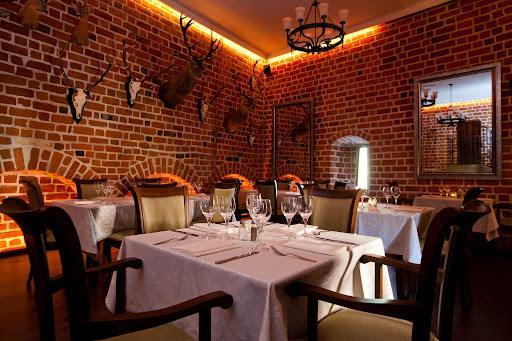
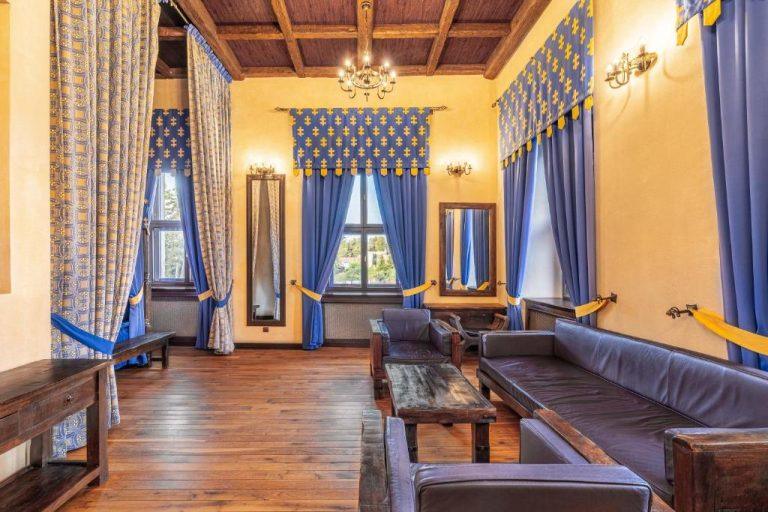
Currently the Castle of the Archbishops of Gniezno in Uniejów serves as a modern hotel and conference centrebeing an important element of the Uniejów Thermal Baths complex, which combines historical values with a modern tourist and recreational infrastructure. The castle offers its guests not only comfortable accommodation in elegantly furnished interiors maintained in a style referring to the historical atmosphere of the object, but also the possibility of organising business meetings, trainings, banquets and cultural events in the unique scenery of the medieval fortress.
Visitors can enjoy the many attractions that have been prepared in and around the castle. A visit to the castle is not only a journey through time, but also an opportunity to discover fascinating architectural elements and learn about the rich history of the place. One of the highlights of the tour is the entrance to the stool towerfrom where there is an impressive panorama of Uniejów's picturesque surroundings, including the Warta River valley and the town's historic buildings.
The surroundings of the castle have been carefully landscaped - a distinctive drawbridgewhich is not only a functional defensive element, but also one of the castle's greatest visual attractions. The whole is surrounded by a well-maintained park, which invites visitors to stroll and relax in the shade of the greenery. During the season, numerous cultural events, historical festivals and thematic workshops take place here, making the castle alive not only with history, but also with the contemporary cultural life of the region.
The castle in Uniejów has become an important point on the tourist map of Poland, attracting both history lovers and people looking for unique places to relax or organise events. Thanks to the harmonious combination of historical buildings with modern amenities, the castle is an excellent example of how historic buildings can fulfil utilitarian functions while retaining their historical character and cultural significance.