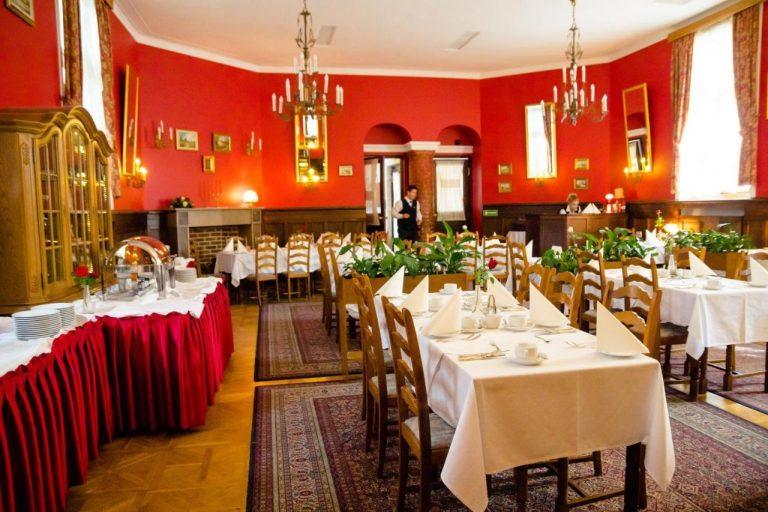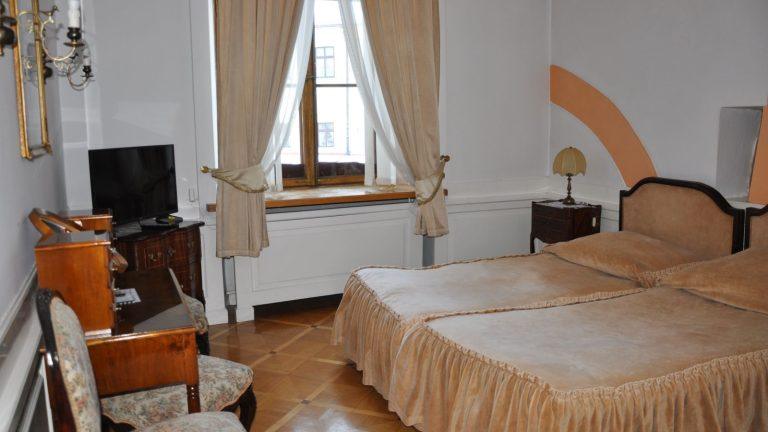
Pultusk Castle, picturesquely situated on the banks of the Narew River, is one of the most important monuments in Mazovia. Its history dates back to the Middle Ages and is closely linked to the fate of the Bishopric of Plock, as well as to the turbulent history of Poland. The castle has witnessed numerous architectural transformations, reflecting the various styles and eras that have left their mark on it. From its original wooden fortress, to its Renaissance residence, to its contemporary function as a hotel, the castle exemplifies the continuity of history and adaptation. This impressive complex, which has witnessed many important events, is today an important point on the tourist map of the region. Its setting, overlooking the picturesque Narew valley, attracts tourists eager for both contact with nature and an exploration of Poland's historical heritage. A walk through the castle courtyard allows one to feel the atmosphere of past centuries, while the presence of numerous cultural events and celebrations adds a modern dimension to the place.
Genesis
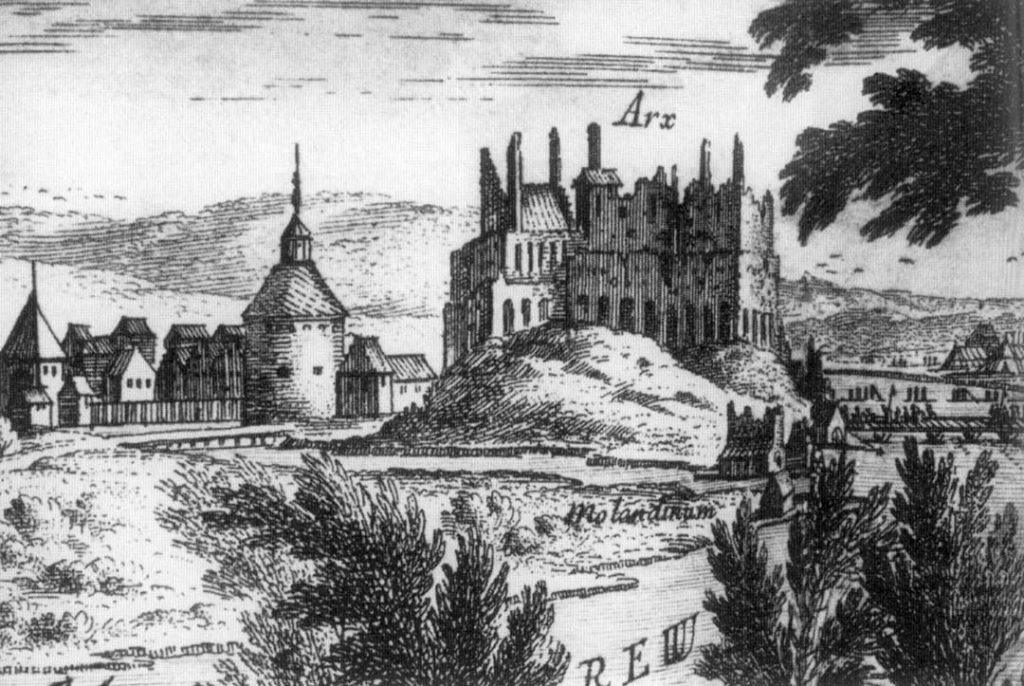
The first mention of a stronghold in Pułtusk dates back to the 14th century, when the dukes of Mazovia, noticing the strategic location of the town, started to build a wooden and earth fortification. Their aim was to protect an important trade route that ran along the Narew River, connecting Masovia with the northern and eastern regions of the country. The fortification was not only of military importance, but also of economic significance, as it provided security for merchants and travellers, contributing to the development of the local community. In 1449 the castle passed into the hands of the Bishops of Plock, which initiated its intensive development. The bishops of Plock, considering Pułtusk as one of the key places of their administration, transformed the original wooden foundation into a solid brick residence. Thanks to their investments the castle became not only an administrative centre but also an important cultural and scientific centre, where distinguished guests were received and political and religious events were organised. Under the care of the bishops, Pultusk grew into one of the most important centres of Mazovia. The castle became a symbol of power and wealth of the clergy, which attracted the attention not only of the magnates but also of the artists and scholars who found here a place for their work and development. It was in this period that Pultusk gained the name of "little Cracow", which proves its prestige on a national scale.
Medieval period (14th-15th centuries): Origins and consolidation of position
The castle was first mentioned in the 14th century, when the dukes of Mazovia erected a wooden and earthen fortress at a strategic point on the Narew River. The castle was intended to protect the trade route that connected Masovia with the northern and eastern areas of Poland. It was a defensive structure typical of the period, consisting of wooden structures and earth ramparts surrounded by a moat. At first it served mainly military functions, but also administrative functions, as the seat of the ducal official managing the surrounding lands. In 1449, the castle passed into the hands of the Plock bishops, which marked the beginning of a new stage in its history. The bishops made Pultusk their main residence in Mazovia, which significantly influenced the development of both the castle and the town. The wooden structure was replaced by a masonry building in the Gothic style, with solid defensive walls and a watchtower, which was the central point of the fortress. This expansion was not only an expression of the power of the bishops, but also a response to growing external threats.
Renaissance period (16th century): The golden age of the castle
The Pultusk Castle experienced its greatest heyday in the 16th century, during the reign of Bishop Andrzej Noskowski. It was the period when the Gothic fortress was transformed into a Renaissance residence, referring to Italian patterns. The castle then became not only a place of defence, but also a centre of intellectual and cultural life. Bishop Noskowski initiated the expansion of the castle, adding cloisters and decorative architectural details that emphasised its representative character. The castle was the venue for numerous political meetings and ceremonies. In 1530, a reception of the envoy of King Sigismund the Old was held here, which testified to the high rank of the castle in the political life of the Republic. At that time, Pultusk also became a centre of science and culture, where prominent intellectuals and artists of the Renaissance gathered. The castle library was one of the richest in the region and its resources were used for both administrative and scientific activities.
The 17th-18th centuries: Destruction and reconstruction
The turbulent times of the 17th century brought numerous destructions to the castle. During the Swedish Deluge in 1655-1660, the castle was plundered and severely damaged. The Swedes, notorious for their brutality towards Polish monuments, destroyed a significant part of the castle's buildings and took away valuable interior furnishings. After the end of hostilities, the Plock bishops attempted to rebuild the castle, introducing Baroque elements to emphasise its monumental character. In the 18th century, the castle suffered again, this time as a result of wars with Russia. Despite this, it managed to be partially rebuilt, although it never again regained its former glory. The castle gradually lost its importance, both as a bishop's residence and as a political centre. With the fall of the Republic and the partitions of Poland, it was transformed into the seat of the partitioning administration.
Napoleonic period (19th century): Symbol of military strategy
In 1806, Pultusk and the castle became the arena of one of the most important events in the city's history - the Battle of Pultusk. During Napoleon Bonaparte's campaign against Prussia the castle served as a strategic defence point and military headquarters. These events permanently inscribed Pułtusk in the history of Europe and the castle became a symbol of resistance and strategic importance. Unfortunately, the 19th century also brought a gradual decline of the castle. After passing into the hands of the Russian partitioners, the building was used for administrative and military purposes, which led to its devastation. The castle fell into disrepair and many of its elements were demolished or neglected.
The contemporary period (20th to 21st century): Reconstruction and new functions
It was not until the 20th century, in the interwar period, that the first attempts were made to reconstruct the castle. Thanks to the commitment of historians and conservators, it was possible to partially restore the building and return it to its former glory. After the Second World War, work continued, giving the castle the function of a hotel and conference centre. The interiors were adapted to the new needs, preserving, however, many historical elements. Today, the Pultusk Castle is one of the most important monuments of Mazovia. Its architecture combines Gothic, Renaissance and Baroque elements, which testifies to the rich history of the place. The castle is not only a tourist attraction, but also an important venue for cultural and social events that attract visitors from all over Poland and abroad. Thanks to efforts to protect and promote it, the castle remains a living testimony to the centuries-old history of Mazovia.

Architecture
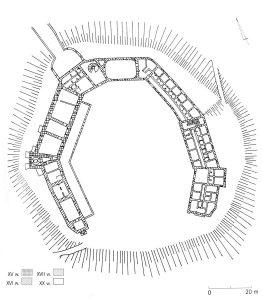
The architecture of the Pultusk Castle is a testimony to its turbulent history and the transformations that have taken place over the centuries. Initially erected as a wooden and earthen fortress in the 14th century, the castle was defensive in nature, reflecting its strategic location on the Narew River. The wooden structure was surrounded by earth ramparts and a moat, which provided the primary line of defence against potential invaders. It was a typical form of building for medieval fortresses, which combined military and administrative functions. A breakthrough in the castle's architecture came in the 15th century, when it came into the hands of the Plock bishops. At that time, it was transformed into a masonry residence, which significantly raised its status. Solid brick walls were erected, which were more resistant to military action. The building took the form of a quadrangle with an inner courtyard, which was characteristic of Gothic castles. The central element was the defence tower, which served as an observation point and was the last bastion in case of a siege. The castle was surrounded by a moat and was accessed via a bridge and a massive entrance gate. The most spectacular reconstruction of the castle took place in the 16th century thanks to Bishop Andrzej Noskowski. It was he who initiated the transformation of the Gothic fortress into a Renaissance residence, giving the castle a more representative character. During this time, decorative cloisters were added around the courtyard, which became the castle's trademark. These cloisters not only served a communicative function, allowing comfortable movement between different parts of the building, but were also an aesthetic element, modelled on Italian Renaissance palaces. The interiors of the castle were rebuilt in the Renaissance style - the windows were enlarged, increasing the access of light, and the rooms gained a more spacious and comfortable character. Decorations in the form of paintings and stuccowork emphasised the prestige of the building and its owners.
In the following centuries, the castle was destroyed and rebuilt several times, which influenced the variety of architectural styles that can be seen in its current appearance. Many Baroque elements date from the 17th century, such as the decorative portals and façade details, which were introduced during the reconstruction after the destruction of the Swedish Deluge. However, these Baroque touches did not dominate the original Renaissance character of the castle, which is still evident in its structure. Today's castle has retained much of its original layout, although its architecture has been adapted to suit modern functions. The 20th-century reconstruction focused on recreating the historic appearance, with details characteristic of the Renaissance and Baroque stages of the building's development. The cloisters were exposed, the tower restored and the facades renovated to bring them back to their former splendour. The interiors of the castle were adapted for hotel and conference use, but retained their historic character, integrating historical elements with modern amenities. The whole is surrounded by a picturesque park, which emphasises the representative character of the castle. This park, full of centuries-old trees and well-kept alleys, perfectly complements the architecture, inscribing the castle into the natural landscape of the Narew River valley. Thanks to this, Pultusk Castle not only delights with its architecture, but also forms a harmonious part of the surrounding environment.
The castle today
Today, Pultusk Castle serves as a luxury hotel and conference centre, managed by the Dom Polonii. It is also a popular venue for weddings, concerts and cultural events. Thanks to careful restoration work, the building combines historical character with modern amenities. The park that surrounds the castle is also worth a visit, with its stunning greenery and picturesque views of the Narew River. The castle is open to tourists, who can not only admire its architecture, but also learn about the rich history of the place during organised tours. Pultusk Castle is a remarkable place that delights with its history, architecture and contemporary significance. Its turbulent history and numerous transformations make it a living monument to the history of Poland and, at the same time, an excellent example of adaptation of monuments to modern needs